
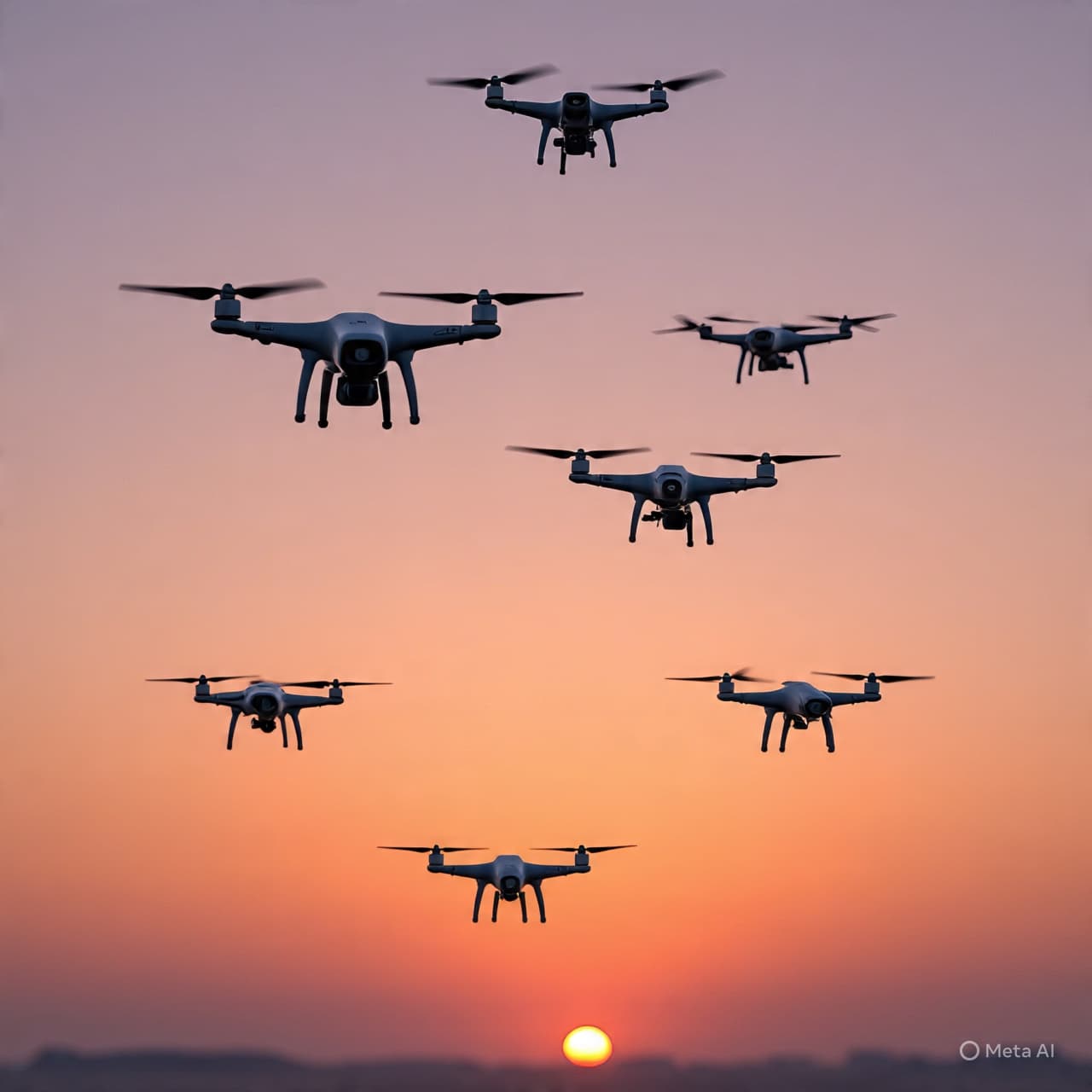
Key Highlights
- Nearly 400 Ukrainian drones intercepted over Moscow in recent days.
- The aerial conflict is reshaping urban life and military strategy.
- Drones are becoming key instruments in the ongoing Russia-Ukraine war.
The night sky over Moscow has transformed into a theater of vigilance, where silence is punctuated by the unseen movements of drones. Recent reports indicate that Russian authorities have intercepted nearly 400 drones launched from Ukraine, marking a significant escalation in aerial activity since the onset of the conflict. This surge in drone operations not only highlights the evolving nature of warfare but also alters the daily lives of those living beneath the flight paths.
The intensity of aerial exchanges has shifted the battlefield from traditional ground engagements to the skies above. Where once the front lines were clearly defined on the ground, they now extend into the airspace, connecting cities and infrastructure with unprecedented speed. Drones, often small and difficult to detect, have emerged as pivotal tools in this new form of warfare, reshaping perceptions of distance and engagement in conflict.
Moscow officials have reported a high success rate in intercepting these drones, attributing their effectiveness to advanced air defense systems. However, the consequences of these interceptions are felt far beyond the military sphere. Airports have experienced disruptions, with flights delayed and operations paused, reminding civilians that the conflict, while originating from afar, has immediate repercussions on their daily lives.
Ukrainian officials have framed their drone operations as a necessary response to Russian military pressure, particularly in regions where ground fighting remains fierce. This aerial domain has become a critical space for signaling intentions and capabilities, with each drone launch and interception carrying broader implications for both sides of the conflict.
The recent uptick in drone activity suggests not just a tactical shift but a strategic recalibration in how both nations engage in warfare. The coordinated patterns of drone movements reflect advancements in technology and military strategy, prompting a corresponding response from defense systems. This cycle of aerial engagement unfolds largely unseen, yet its impact is profoundly felt across urban landscapes.
For residents beneath these flight paths, the experience is one of heightened awareness. Daily routines persist—commuters navigate through bustling stations, lights flicker on in homes—but they do so under a sky that has become an integral part of their reality. The distance between civilian life and the conflict has narrowed, not merely through proximity but through the repetitive nature of these aerial exchanges.
As the situation continues to evolve, the stark facts remain: Russia claims to have intercepted nearly 400 drones in a recent surge, while Ukraine maintains that these operations are part of a broader strategic initiative. The airspace above Moscow has become a critical battleground, reshaping the contours of conflict and the experiences of those who live beneath it.
Published by Banx Network. This article is part of the Banx decentralized media programme, powered by the BXE token on the XRP Ledger.



