Exploration, like reflection, often begins with a pause. On Mars, that pause stretches across millions of kilometers, where every decision must be made in advance, and every movement carries consequence. For decades, the Red Planet has been crossed by human intention sent from afar, careful and cautious, step by step.
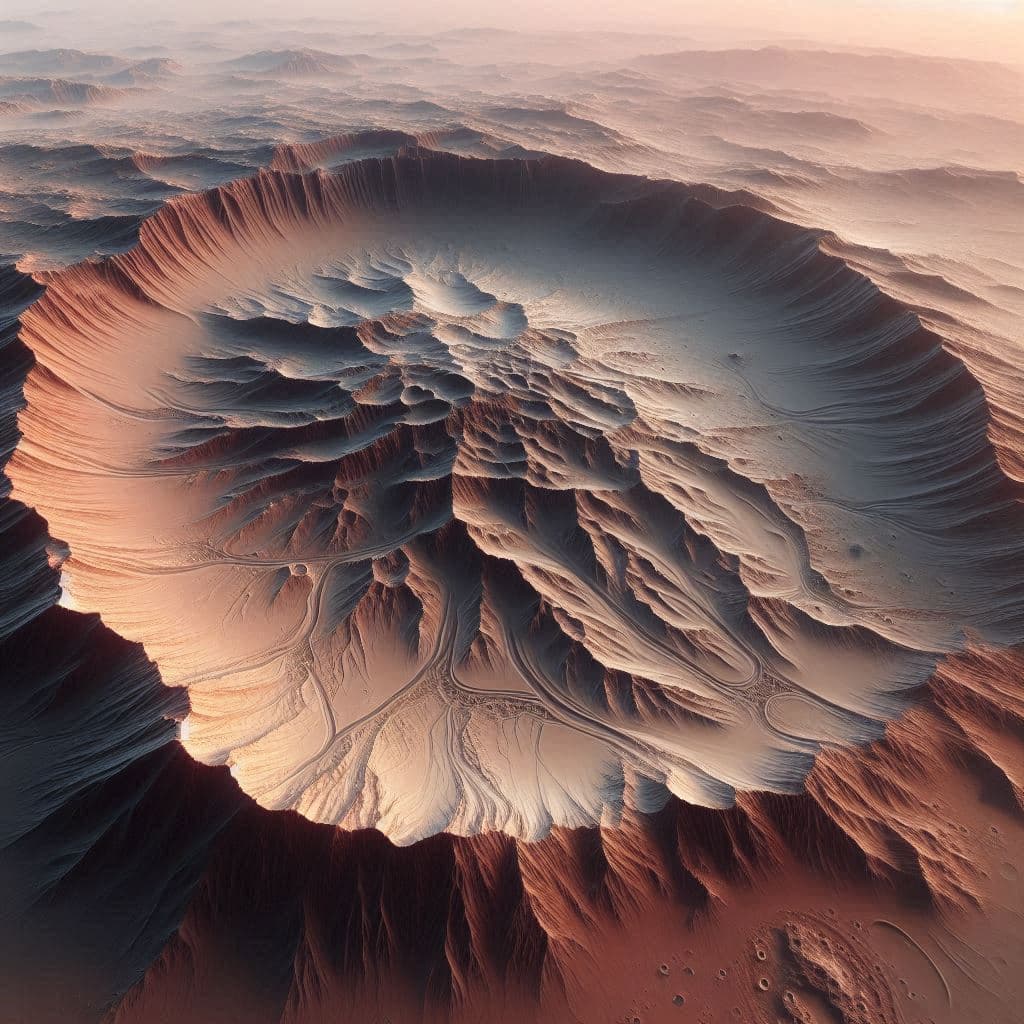
Now, a subtle shift is taking place. NASA has begun to entrust part of that quiet decision-making to artificial intelligence developed by Anthropic, allowing a machine to study the Martian surface and suggest safer paths forward. The Perseverance rover, moving along the rim of Jezero Crater, recently followed routes shaped not by human hands, but by an AI model trained to read terrain, recognize hazards, and weigh risk with patient precision.
This change does not signal haste, nor does it replace human judgment. Instead, it reflects a response to distance itself. Mars is far enough that instructions arrive late, and the landscape is complex enough that hesitation costs time. By letting AI assist in route planning, NASA reduces the burden on Earth-based teams while allowing the rover to move with greater confidence between communication windows.
The AI examines images and data already familiar to mission planners—rocks, slopes, shadows, and sand—and turns them into navigable choices. It does not improvise wildly; it follows carefully tested parameters, validated through simulations before being trusted with real movement. The result is not speed for its own sake, but steadiness.
In this approach, technology becomes less a leap and more a companion. Each successful drive suggests a future where exploration continues even when silence stretches between planets. AI does not replace the human story of space travel, but quietly extends it.
NASA has emphasized that the technology will be used thoughtfully, with humans remaining responsible for oversight and intent. The recent drives mark a milestone, not a conclusion. Perseverance continues its mission, now with an additional tool to help it avoid danger and conserve time, as it searches for clues about Mars’ ancient past.
AI Image Disclaimer (Rotated Wording)
Visuals in this article are created with AI tools and are intended as conceptual representations, not real photographs.
Source Check (Credible Media Scan)
NASA Jet Propulsion Laboratory
Reuters
Bloomberg
Space.com
ScienceDaily
Published by Banx Network. This article is part of the Banx decentralized media programme, powered by the BXE token on the XRP Ledger.