There are times in international affairs when even the most powerful nations discover that influence has a horizon — a place where the reach of policy, pressure, or military might begins to fade against the weight of history, identity, and resilience. The United States’ ongoing engagement with Iran has become one such story: a testament to the fact that in geopolitics, strength is necessary but not always sufficient, and that power — even when global in scale — can find its limits in unexpected places.
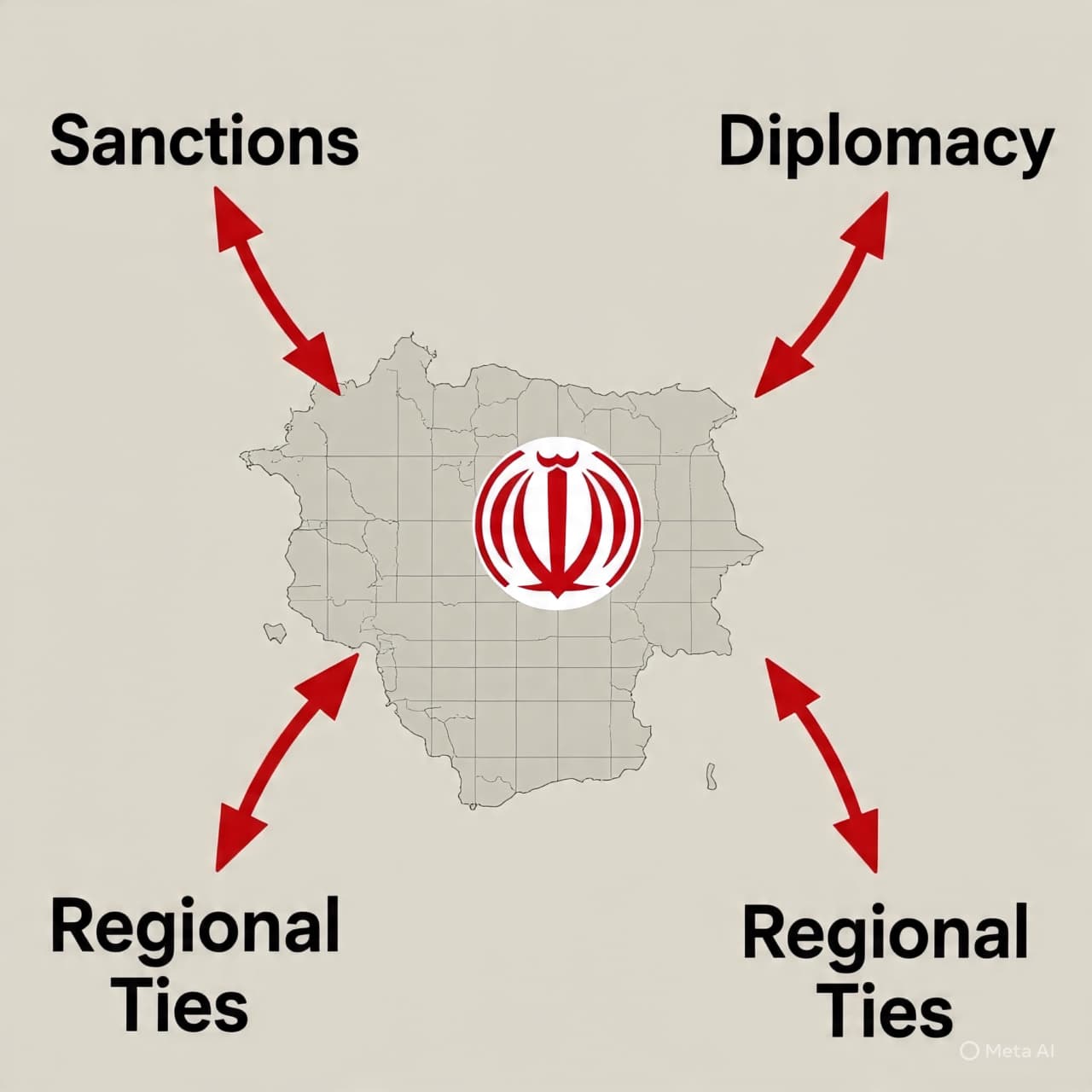
In recent weeks, the U.S. has taken a range of actions intended to pressure Iran over its crackdown on massive nationwide protests and long‑running disputes over its strategic ambitions. Washington has imposed new sanctions on senior Iranian officials and entities tied to the suppression of demonstrators, targeting those it says have overseen violent repression. U.S. Treasury officials emphasized that these measures aim to hold Iranian leaders accountable and support the Iranian people’s calls for freedom and justice. Meanwhile, President Donald Trump’s administration has sought to maintain a “maximum pressure” campaign, combining economic penalties with condemnations of Tehran’s domestic conduct.
Yet Iran has repeatedly shown that outward pressure does not automatically translate into compliance or transformation. Decades of U.S. sanctions — from the post‑1979 era to renewed maximum‑pressure directives in the mid‑2020s — have worn on the Iranian economy but not compelled Tehran to abandon core policies or yield fundamental strategic objectives. A longstanding analysis of this dynamic argues that Washington’s approaches often underestimate the structural resilience of the Islamic Republic, including its ideological cohesion and ability to withstand external coercion.
Part of this resilience lies in Iran’s national narrative and regional role. Since the 1979 Islamic Revolution, Iran has cultivated a worldview of resistance against foreign domination, enshrined in public rhetoric and domestic politics. This historical context — rooted in long memories of foreign interventions and a self‑image of defiance — means that foreign pressure can sometimes reinforce internal unity rather than weaken resolve. Tehran’s political leadership, including senior diplomats, has explicitly stated that it will “never yield” to external demands, framing such positions as assertions of sovereignty rather than stubbornness.
Another constraint on U.S. influence is the multipolar nature of global geopolitics. Russia, China, and other regional powers maintain relationships with Iran that blunt the effectiveness of unilateral American moves. These partnerships provide Tehran with economic relief, diplomatic support, and an alternative to complete isolation — demonstrating that power contests today are rarely bilateral but are shaped by broader networks of interest and alliance.
Even as protests over economic hardship, water scarcity, and political repression roil Iranian cities — with crowds demanding change and clashing with state forces — the limits of external power are apparent. Domestic discontent and geopolitical isolation do not automatically invite foreign solutions, and attempts to link internal dissent with outside influence can backfire politically. U.S. policymakers have acknowledged that direct intervention may carry high costs, including the risk of escalation or unintended consequences.
In this unfolding narrative, Iran becomes a mirror reflecting both the potency and the boundaries of American strategy. The United States retains formidable tools — economic sanctions, diplomatic pressure, and global alliances — but Tehran’s endurance highlights a simple but enduring lesson: power is not simply about capacity, but about context, legitimacy, and the unpredictable interplay of domestic and international forces. In a world in which influence is multipolar and local agency matters, limits — like landscapes — are as real as the ambitions that confront them.
AI Image Disclaimer “Visuals are created with AI tools and are not real photographs.”
Sources
• New U.S. sanctions on Iranian officials over protest crackdowns - Reuters
• Policy analysis on U.S. maximum pressure campaigns and limits - SpecialEurasia
• Commentary on structural limits of U.S. approach to Iran and lessons on power - Doha institute.org
• Iranian envoy statements about resisting U.S. pressure - The news
• Analysis of how U.S. pressure and Iranian geopolitics intersect - Vocal
Published by Banx Network. This article is part of the Banx decentralized media programme, powered by the BXE token on the XRP Ledger.