In the Persian Gulf, the water carries a stillness that seems older than the conflicts that rise and fall along its shores. Tankers glide slowly through the narrow sea, their heavy hulls tracing routes that have long connected oil fields to distant continents. From afar, the islands scattered across these waters appear quiet and remote, small points of land resting between desert and tide.
Yet in times of tension, such places gather meaning.
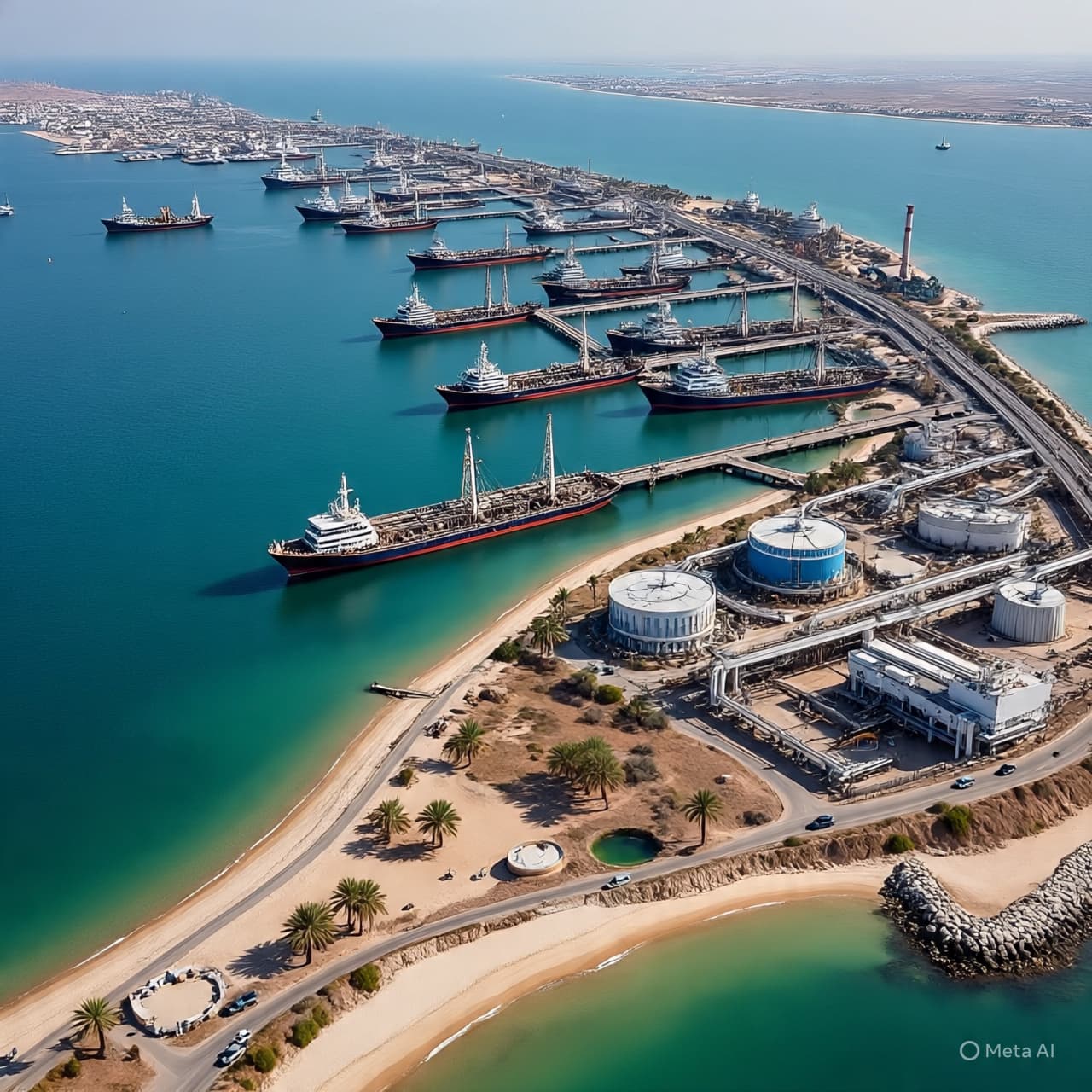
One of these islands — Kharg Island — lies just off Iran’s southern coast. It is not widely known outside the circles of energy markets and maritime navigation, but within those worlds its importance has long been understood. The island hosts Iran’s primary oil export terminals, a network of storage tanks, pipelines, and loading facilities through which much of the country’s crude oil reaches international markets.
For decades, the movement has followed a steady rhythm. Oil flows through pipelines to the island’s terminals, tankers approach in careful sequence, and shipments depart toward Asia and beyond. The process is industrial and precise, forming a central pillar of Iran’s economic lifeline.
But war has a way of redrawing the meaning of geography.
As tensions between the United States and Iran have intensified, strategic planners and analysts have begun to look again at Kharg Island. Its location and role in Iran’s energy infrastructure have placed it quietly within the wider conversation about how pressure might be applied in a conflict that remains uncertain in both direction and scale.
The island is believed to handle a large share of Iran’s crude oil exports. Because of this concentration, any disruption to its operations could have significant economic consequences for the country. In strategic terms, a single point through which so much energy passes becomes more than an industrial hub; it becomes a potential lever.
Some analysts have suggested that control of the surrounding waters or restrictions on tanker movement could affect Iran’s oil trade without requiring a large-scale ground invasion. Such ideas remain within the realm of military planning and speculation, but they illustrate how geography can shape the language of strategy.
The wider region adds another layer to the calculation. Nearby lies the Strait of Hormuz, a narrow maritime corridor through which a large portion of the world’s oil supply travels. Events in this area rarely remain local for long. Even modest disruptions can ripple outward through global energy markets and diplomatic relationships.
For American policymakers considering their options, the challenge has been how to apply pressure while avoiding a broader regional war. Military officials have spoken about targeting infrastructure linked to Iran’s capabilities while seeking to limit escalation. In that context, places like Kharg Island appear on maps not simply as territory, but as nodes within a larger network of energy, trade, and security.
Still, strategy drawn on paper often meets the unpredictability of reality. Any attempt to blockade or seize such a site could provoke retaliation and widen the conflict beyond its current boundaries. The waters around the island are narrow, the political consequences potentially wide.
So the island remains where it has always been — a rocky outcrop in warm Gulf waters, its oil terminals standing against the horizon while tankers approach and depart in slow procession.
For now, Kharg Island continues to operate under Iranian control. Analysts say its role in the country’s oil exports ensures that it will remain a point of attention as developments in the conflict between Iran and the United States continue to unfold.
Visuals are AI-generated and serve as conceptual representations.
Source Check
Reuters PBS NewsHour The Washington Post Bloomberg New York Post
Published by Banx Network. This article is part of the Banx decentralized media programme, powered by the BXE token on the XRP Ledger.