
Key Highlights
- The Strait of Hormuz is a vital maritime corridor for global oil supply.
- Recent U.S. and Israeli strikes have led to shipping disruptions.
- Increased freight costs and insurance premiums are affecting global trade.
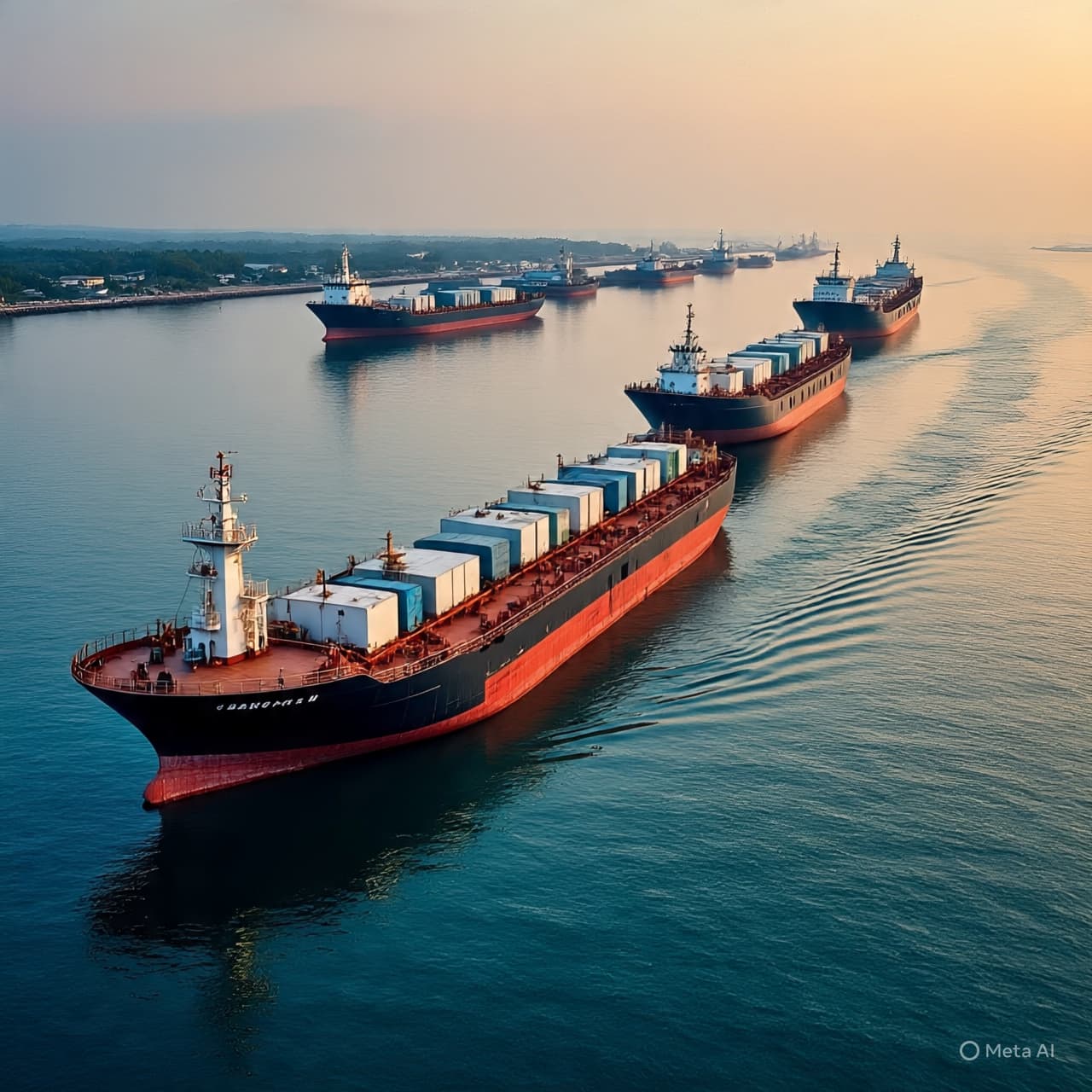
The Strait of Hormuz, a narrow yet critical maritime passage, serves as a lifeline for global oil and gas supplies. This slender corridor, linking the Persian Gulf to the open sea, is responsible for transporting approximately one-fifth of the world's oil supply. As morning breaks over these waters, tankers typically navigate in a well-orchestrated manner, ensuring that fuel reaches ports and markets remain stable. However, recent geopolitical tensions have cast a shadow over this vital route.
In the wake of escalating hostilities between the United States and Iran, shipping activity through the Strait of Hormuz has been significantly disrupted. Following targeted strikes by U.S. and Israeli forces on Iranian positions, Iranian retaliation has prompted shipping companies to reconsider their operations. Many vessels have either slowed their transit or suspended it altogether, with some opting to turn back or remain in holding patterns offshore. This disruption has occurred without a formal closure of the strait, yet the effects are palpable.
Maritime insurers have responded to the heightened risks by reassessing their coverage policies, with some suspending war-risk insurance altogether. This leaves shipowners grappling with not only safety concerns but also financial implications. The ripple effects of these disruptions extend beyond immediate shipping delays; they impact the broader global supply chain. Industry executives report that a significant portion of the global container fleet, which carries everything from automotive parts to consumer goods, has faced delays or has been rerouted, leading to longer transit times and increased costs.
The energy markets, sensitive to fluctuations in supply routes, have reacted with volatility. Oil prices have experienced notable fluctuations as traders factor in risk premiums for shipments expected to leave Gulf terminals. Economies that rely heavily on oil imports are closely monitoring the situation, while manufacturers and retailers are adjusting their inventory strategies to accommodate the uncertainty in shipping timelines.
Geographically, the Strait of Hormuz's significance is underscored by its narrowest point, where shipping lanes compress into a channel just a few miles wide. With Iran to the north and Oman and the United Arab Emirates to the south, the strait's vulnerability lies in its proximity to geopolitical tensions rather than mere distance. This reality creates a precarious balance for global trade, where any disruption can have far-reaching consequences.
The current situation is not only a logistical challenge but also a psychological one for the global cargo industry. While ships delayed today may still arrive tomorrow, the predictability that underpins contracts, insurance frameworks, and freight futures is now in jeopardy. As uncertainty looms, costs are likely to multiply through higher premiums, fuel surcharges, and extended charter times.
In response to the escalating tensions, diplomatic efforts are underway, with international actors urging restraint and the protection of maritime navigation. Naval forces in the region have increased their patrols, and shipping advisories are being updated as risk assessments evolve. While trade has not ceased entirely, the system is operating under significant strain, highlighting the fragility of one of the world's most critical shipping lanes.
As the situation develops, the implications for global trade, energy markets, and geopolitical stability remain profound. The Strait of Hormuz continues to be a focal point of international attention, with the potential for further disruptions looming as governments and maritime authorities work to navigate these turbulent waters.
Published by Banx Network. This article is part of the Banx decentralized media programme, powered by the BXE token on the XRP Ledger.



