There is a particular stillness that settles over uncertainty—not the calm of resolution, but the quiet tension of something unresolved. In places designed for motion, like airports where time is measured in departures and arrivals, even the suggestion of interruption can feel like a ripple across an otherwise steady surface.
As a funding standoff over the Department of Homeland Security stretches into its fortieth day, that ripple has begun to take clearer shape. The head of the Transportation Security Administration has warned that prolonged uncertainty could lead to airport disruptions, even the possibility of partial shutdowns, if a resolution is not reached. The statement does not declare an immediate halt, but it introduces a note of caution into a system built on continuity.
The funding impasse, rooted in broader political negotiations, has left key agencies operating without a long-term financial agreement. For the TSA, whose role is central to maintaining the flow and safety of air travel, the effects of such a situation are not always immediate, but they can accumulate over time. Staffing challenges, operational strain, and resource limitations may begin to surface gradually, rather than all at once.
In this context, the warning from agency leadership appears less as an alarm and more as a reflection of practical realities. Airports depend on a precise coordination of personnel and processes. Security screening, often taken for granted in its routine, relies on a workforce that must remain both present and supported. When funding uncertainty persists, maintaining that balance becomes more complex.
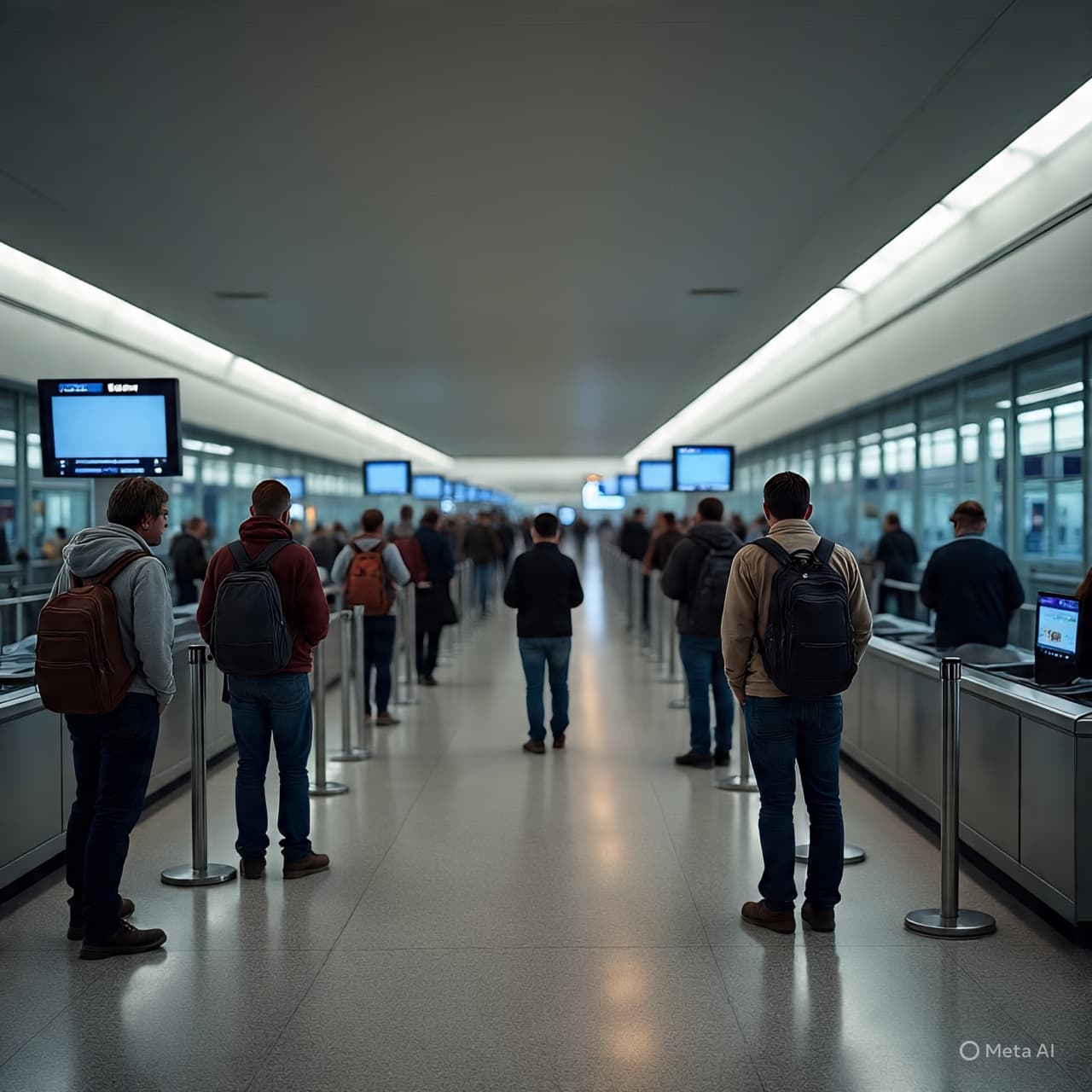
Travelers, moving through terminals with familiar rhythms, may not yet feel the full weight of these behind-the-scenes dynamics. Flights continue to depart, security lines continue to move, and the visible structure of air travel remains intact. Yet beneath this surface, conversations about contingency planning and operational resilience are quietly unfolding.
The broader funding dispute extends beyond aviation, touching multiple components of the Department of Homeland Security. Negotiations, shaped by competing priorities and policy considerations, have yet to yield a resolution. In the meantime, agencies continue to operate under temporary measures, navigating a landscape defined by short-term extensions rather than long-term certainty.
Observers note that such standoffs are not unprecedented, though each carries its own context and consequences. The longer the uncertainty persists, the more attention shifts from abstract policy debates to tangible impacts—how services are maintained, how personnel are supported, and how public confidence is preserved.
For the TSA, the message appears measured: a recognition of potential strain rather than an immediate crisis. The warning serves as a reminder that even systems designed for resilience have limits, particularly when foundational support remains unsettled.
As negotiations continue, the outcome remains open. Lawmakers on all sides are engaged in discussions aimed at reaching an agreement, though timing remains uncertain. Until then, the machinery of travel continues to operate, guided by routines that have not yet been interrupted.
In the steady flow of passengers and planes, the possibility of disruption lingers quietly—unseen, but not entirely absent. For now, airports remain open, lines continue to move, and the broader resolution waits, just beyond the present moment.
AI Image Disclaimer Graphics are AI-generated and intended for representation, not reality.
Source Check (Credible Media Outlets): Reuters Associated Press CNN The Washington Post Politico
Published by Banx Network. This article is part of the Banx decentralized media programme, powered by the BXE token on the XRP Ledger.