
Key Highlights
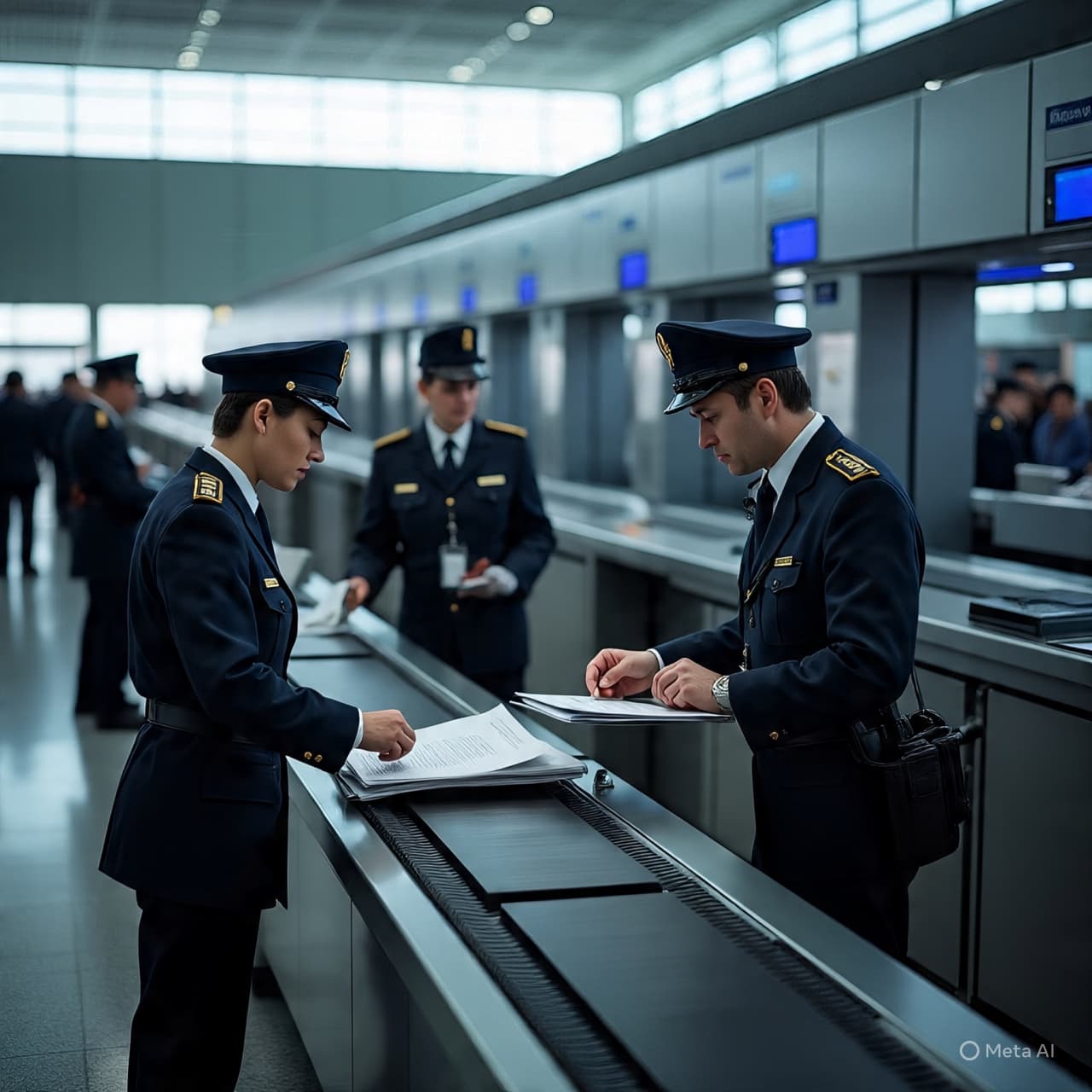
- ICE agents will assist at U.S. airport security checkpoints.
- The decision addresses staffing shortages within the TSA.
- The presence of ICE agents may alter perceptions of airport authority.
The morning at the airport unfolds in a series of quiet moments—rolling suitcases glide across polished floors, departure boards flicker with destinations, and the low hum of conversations fills the high-ceilinged spaces. In these transit hubs, time seems to pause, allowing travelers to exist in a liminal state, detached from their origins and destinations. Security lines form like gentle currents, guiding passengers through a routine that has become both familiar and ritualistic.
A significant shift is underway as a directive from former President Donald Trump mandates that agents from U.S. Immigration and Customs Enforcement (ICE) assist in staffing airport security checkpoints across the nation. This decision emerges during a period when the travel system is grappling with increased demand and operational challenges, striving to balance security with efficiency.
The integration of ICE personnel into airport security roles introduces a nuanced change in the atmosphere. Traditionally associated with immigration enforcement, their presence at security checkpoints suggests a merging of functions, blurring the lines between different forms of oversight. Airports have always been spaces where identity is scrutinized, and the addition of ICE agents may alter the perception of these thresholds, transforming them from neutral passages into areas where various layers of authority intersect.
Officials have framed this move as a necessary response to staffing shortages within the Transportation Security Administration (TSA), the agency responsible for passenger screening. The intention is to maintain operational efficiency in an environment where delays can have cascading effects on travel schedules and connections. However, the implications of this shift extend beyond mere logistics.
Airports serve as microcosms of broader societal issues, reflecting ongoing debates about immigration policy and federal resource allocation. The decision to deploy ICE agents at security checkpoints is part of a larger trend where institutional roles adapt and overlap in response to evolving priorities. This transformation invites travelers to reconsider how they perceive the spaces they navigate, as the airport becomes a site where policy and everyday experiences converge.
As the day progresses and flights ascend into the skies, the facts of this new directive settle into the daily rhythm of airport life. ICE agents are now positioned to support TSA operations, addressing immediate staffing concerns while simultaneously reshaping the dynamics of authority within these transit spaces. Although the change may initially go unnoticed by many travelers, the implications of such adjustments often unfold gradually, revealing deeper meanings over time.
Passengers continue to move through the familiar processes: removing shoes, placing belongings in bins, and stepping forward when called. Yet beneath this routine, there is a subtle recalibration occurring, as the architecture of movement within the airport is gently redefined. The presence of ICE agents may introduce a new layer of scrutiny, prompting travelers to reflect on the implications of their surroundings and the systems that govern them.
In the soft echoes of announcements and the steady flow of queues, a persistent question lingers: how do the spaces we traverse reflect the systems that shape them, and how do those systems continue to evolve? As airports adapt to new realities, the intersection of authority and transit becomes increasingly complex, inviting ongoing dialogue about the nature of movement in contemporary society.
Published by Banx Network. This article is part of the Banx decentralized media programme, powered by the BXE token on the XRP Ledger.



