In the quiet corridors of global finance, where currencies rise and fall like tides under the influence of unseen winds, a new chapter is being written in the long story of monetary power. The euro — once viewed in some circles as a shy contender on the world stage — now finds itself nudged forward by shifting geopolitical currents, and enriched by a world order shaped in part by the economic policies of the United States under President Donald Trump. It is a narrative marked not by abrupt upheaval, but by a steady and contemplative rebalancing of influence, as Europe seeks to carve a more prominent role for its single currency in international finance.
At the heart of this unfolding scene is a significant evolution in policy by the European Central Bank (ECB) — a decision to expand access to its euro liquidity backstop, making it a global fixture rather than a regional afterthought. By allowing central banks around the world to borrow euros through a permanent standing facility, the ECB is weaving deeper financial ties with monetary authorities far beyond the eurozone, in essence offering a beacon of stability in times of stress and widening the currency’s reach. This step represents more than a technical adjustment; it is a conscious effort to strengthen the euro’s international appeal and resilience.
This strategy plays out against a backdrop of global financial and political recalibration. With U.S. economic policy often perceived as unpredictable — a reflection of tariff pressures and trade skirmishes — some international investors and policymakers have begun reassessing longstanding assumptions about the dollar’s undisputed supremacy. Europe’s efforts, in this context, signal an acknowledgment that financial influence is neither static nor guaranteed, but rather shaped by confidence, cooperation, and the structures that underpin cross‑border finance.
Yet this is not a tale of rivalry alone. Conversations at diplomatic venues like the Munich Security Conference reveal that leaders on both sides of the Atlantic recognize the value of a resilient trans‑Atlantic partnership even as they navigate differences. European leaders have called for renewed trust and cooperation, noting that economic autonomy need not imply opposition to longstanding alliances — but rather a more balanced and adaptive set of relations for an era of great‑power competition and economic complexity.
In this evolving landscape, Europe’s measured steps toward enhancing the euro’s global role reflect both strategic patience and an admirable recognition of interdependence. There is no grand declaration of dominance, no sweeping attempt to displace the dollar overnight. Instead, there are small but meaningful reinforcements — a broader liquidity backstop here, a deeper engagement with global partners there — that, over time, may gradually broaden the euro’s footprint in international finance.
For the United States, these developments serve as a gentle reminder that financial leadership is nurtured through reliability, cooperation, and a commitment to shared economic frameworks. And for Europe, the moment represents an opportunity to deepen its contribution to global monetary stability, taking into account both the challenges and opportunities of a “Trump‑shaped world order.” The ebb and flow of currency influence, it seems, will continue to be shaped not just by geopolitics, but by the deeper rhythms of trust, resilience, and collaboration between nations whose destinies remain closely intertwined.
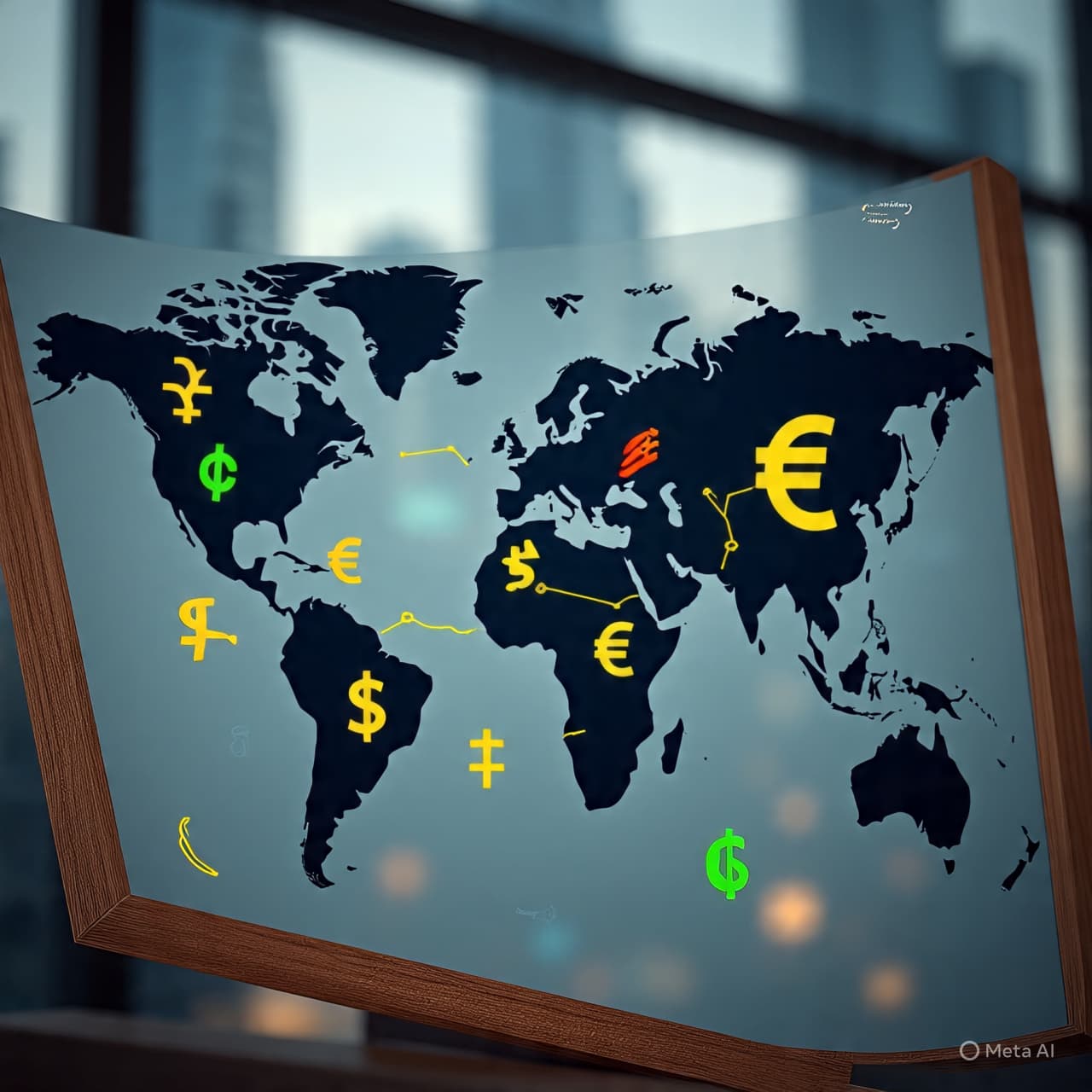
AI Image Disclaimer “Images in this article are AI‑generated illustrations, meant for concept only.”
📌 Sources
• European efforts to increase the euro’s global role and chip away at U.S. financial influence.
• ECB’s expanded euro liquidity facility to strengthen global currency use.
• European leaders call for trans‑Atlantic trust amid changing global order.
• Commentary on geopolitical relations between Europe and the United States.
Published by Banx Network. This article is part of the Banx decentralized media programme, powered by the BXE token on the XRP Ledger.