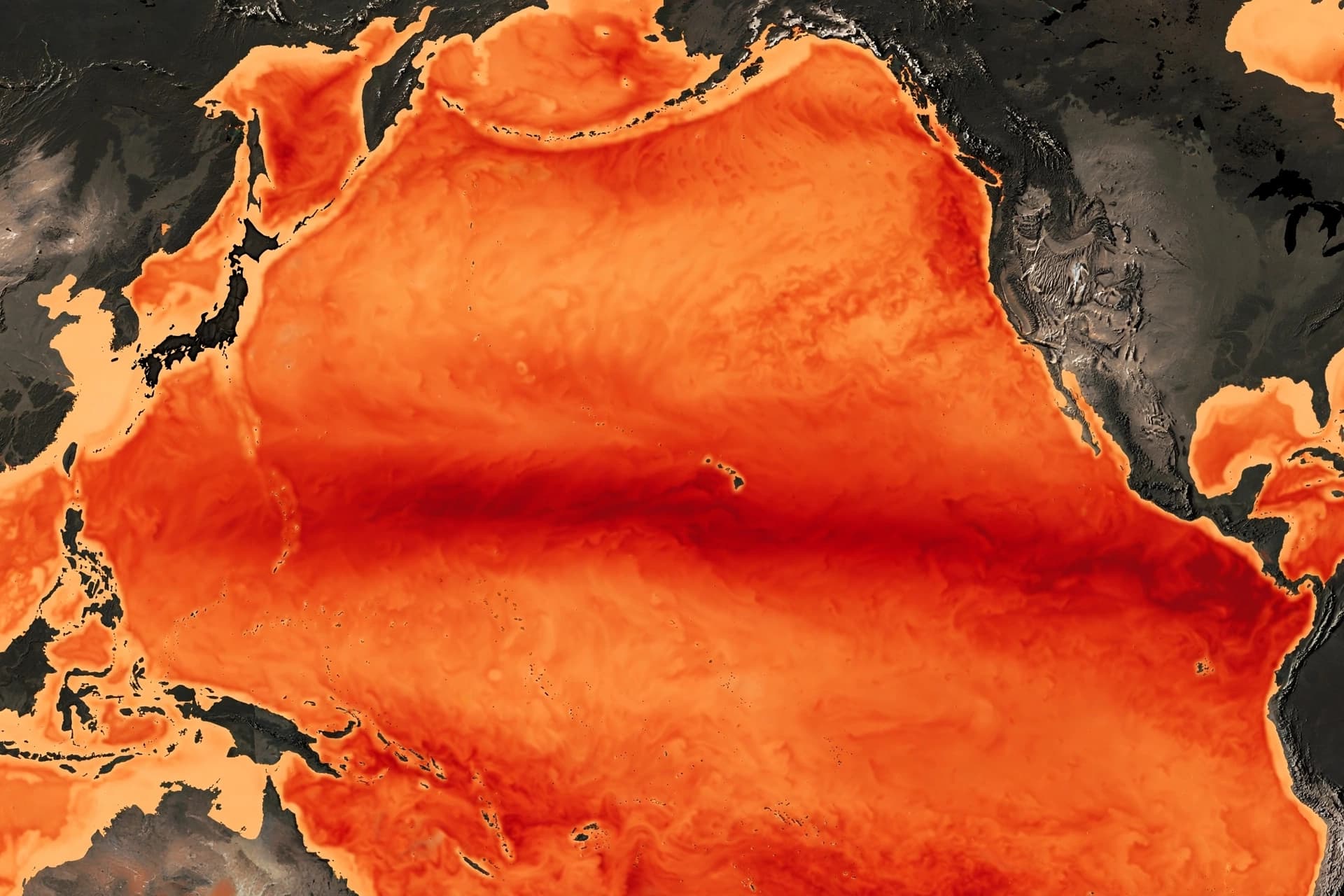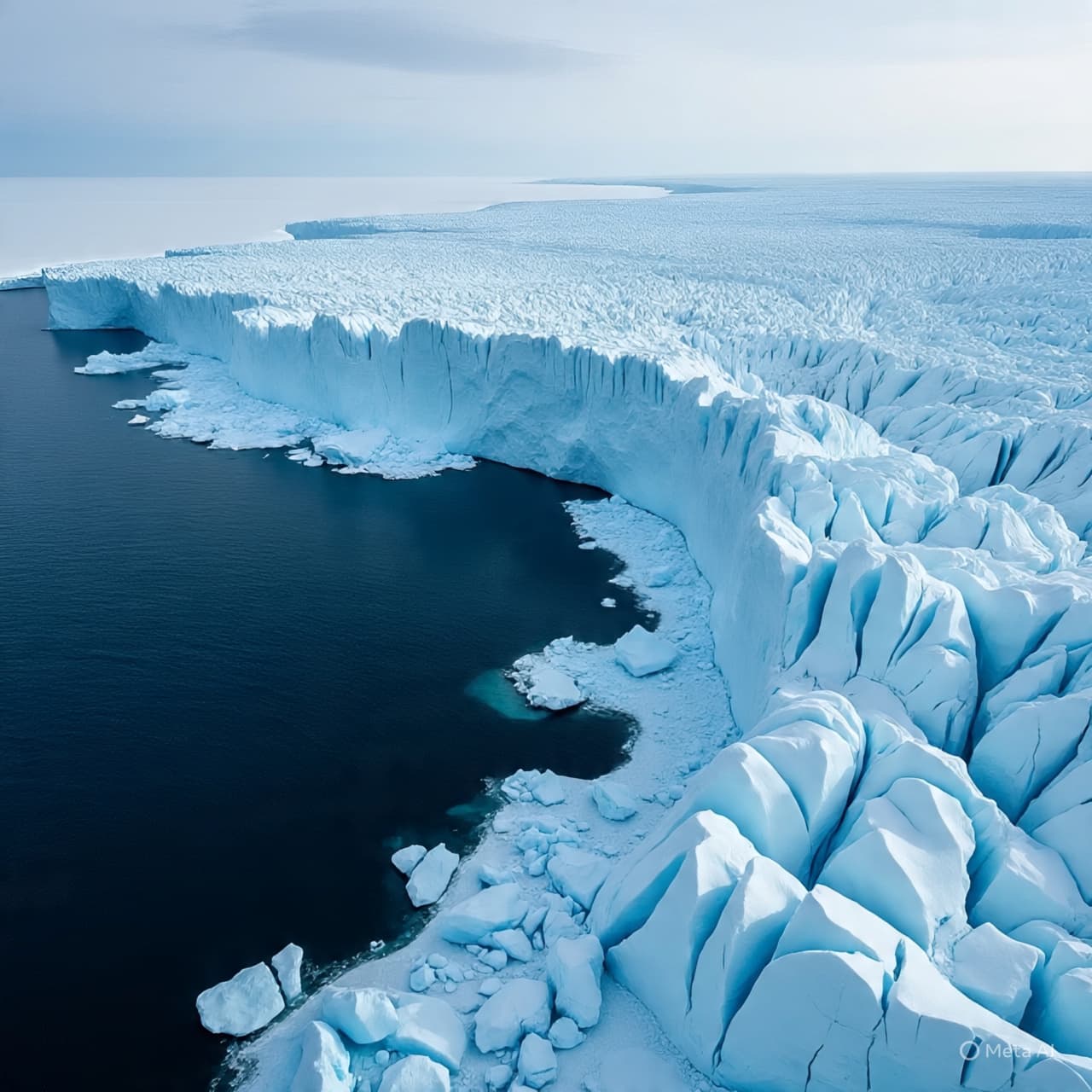
At the far end of the world, where maps thin into white and silence dominates the horizon, a glacier the size of Florida is slowly loosening its grip. Thwaites Glacier, often called the “Doomsday Glacier,” does not crack loudly or collapse all at once. It yields incrementally, pressed from below by warming ocean water, inch by inch altering the future coastline of the planet.
The concern surrounding Thwaites is not exaggeration. Anchored to the bedrock of West Antarctica, it acts as a stopper for neighboring ice. If it gives way entirely, it could accelerate the loss of surrounding glaciers, committing the world to sea-level rise measured not in centimeters, but meters—enough to redraw coastlines and displace millions.
Faced with this prospect, an idea once confined to speculative thought experiments has surfaced with new urgency: could engineering intervene? One proposal imagines an underwater barrier—roughly 50 miles long—built along the seabed to block warm ocean currents from reaching the glacier’s base. The concept is audacious, bordering on implausible, yet it reflects the scale of anxiety surrounding Thwaites’ retreat.
Supporters argue the wall would not need to stop melting entirely, only slow it. Even a delay of decades could buy time for coastal adaptation and emissions reduction. In theory, reducing heat flow beneath the ice could stabilize the glacier long enough to prevent runaway collapse.
But Antarctica resists easy solutions. The environment is remote, hostile, and politically delicate. Constructing such a barrier would require unprecedented logistics, vast resources, and technologies not yet proven at that scale. There are also risks: altering ocean circulation could produce unintended consequences, shifting stresses to other ice shelves or ecosystems.
More fundamentally, the proposal raises a philosophical question. Should humanity attempt to physically restrain the consequences of climate change, or focus entirely on reducing the forces that caused it? A wall may address a symptom, but it does not cool the ocean, slow emissions, or reverse atmospheric warming.
Scientists caution that geoengineering ideas like this must not become distractions. Thwaites’ instability is driven by global temperature rise, not local design failure. Without rapid emissions cuts, any intervention risks becoming a temporary brace against an accelerating problem.
Still, the idea persists because it captures a collective unease. Thwaites is not just a glacier; it is a deadline. Its slow unraveling confronts humanity with limits—of control, of foresight, of time. The question is not only whether a 50-mile wall could be built, but what it says about a world contemplating such measures at all.
At the edge of Antarctica, the ice continues to thin. Whether the future holds walls, withdrawal, or restraint may depend on how seriously the warning embedded in that melting is taken—long before the water reaches the doorsteps it threatens.
AI Image Disclaimer Illustrations were created using AI tools and serve as conceptual representations.
Sources National Snow and Ice Data Center Nature Climate Change Science Proceedings of the National Academy of Sciences British Antarctic Survey
Published by Banx Network. This article is part of the Banx decentralized media programme, powered by the BXE token on the XRP Ledger.