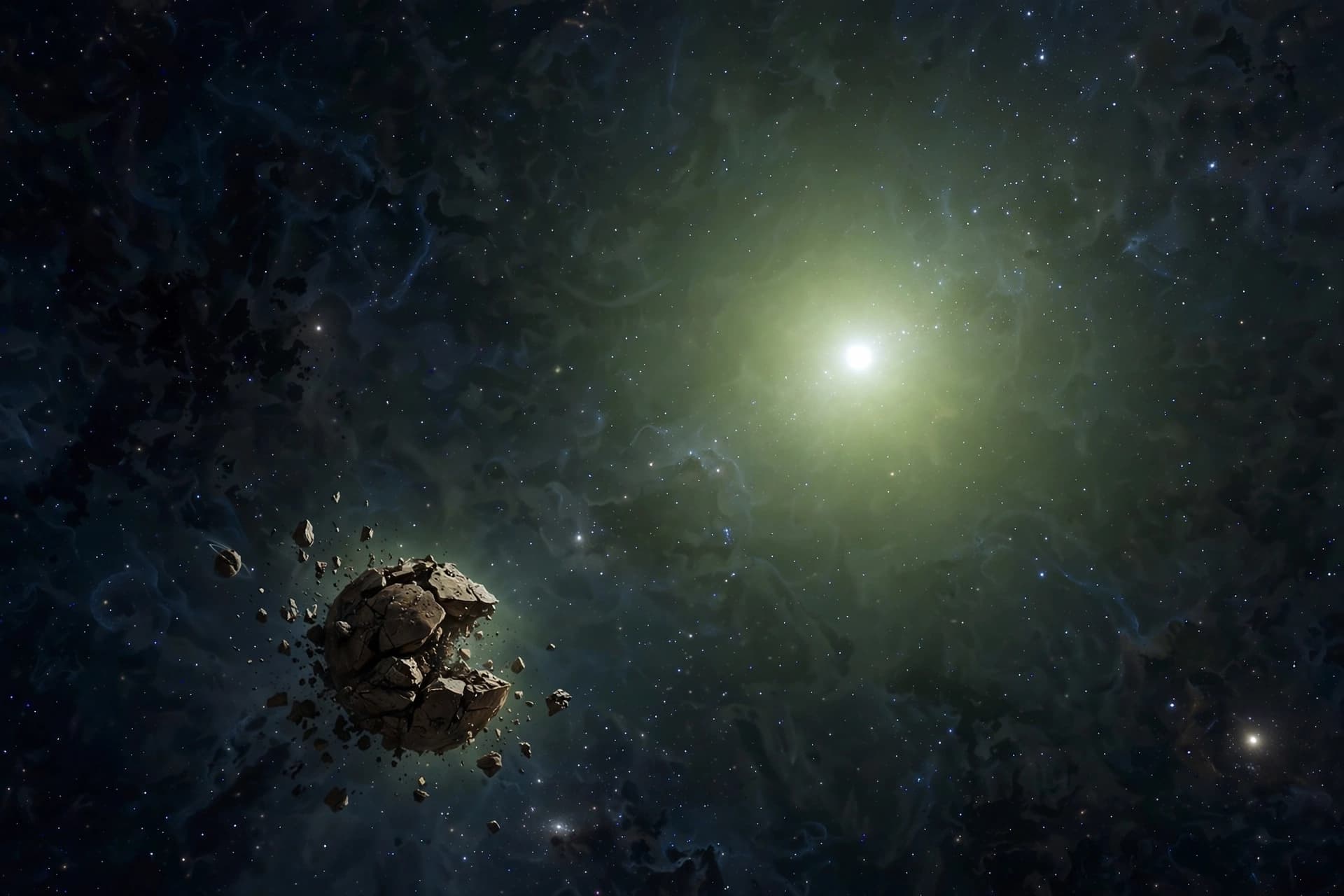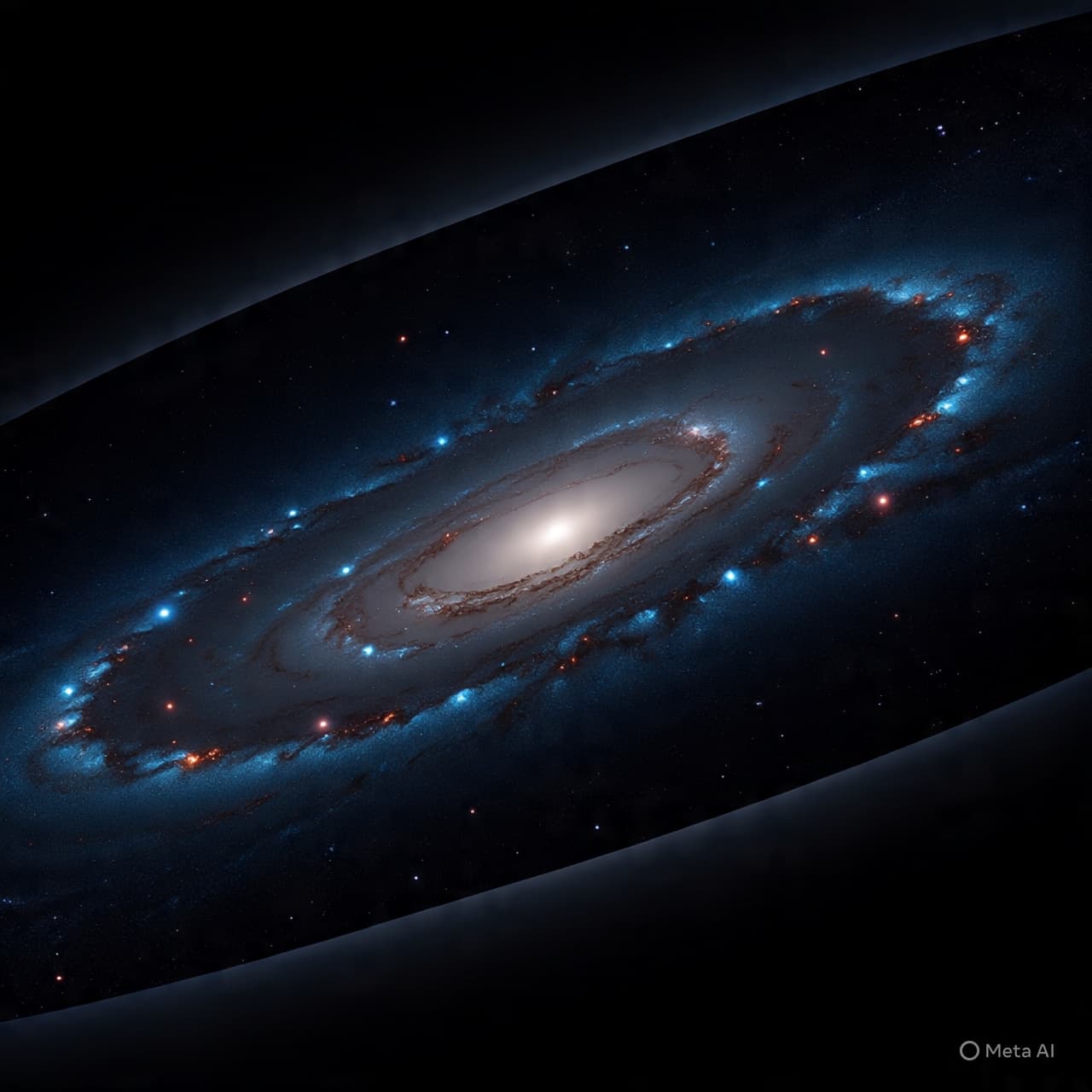
There are places in the universe where the light barely dares to tread, cosmic realms where the familiar glow of stars gives way to something far more mysterious. Imagine a galaxy so faint, so obscure, that it hides in plain sight — not blazing with starlight like our Milky Way, but held together by an unseen force that outweighs anything visible by nearly a hundred to one. This is the remarkable story emerging from a new discovery in the Perseus galaxy cluster, where astronomers have identified a galaxy that appears composed almost entirely of dark matter.
While most galaxies announce themselves with the shimmering brilliance of billions of stars, the object known as Candidate Dark Galaxy‑2, or CDG‑2, barely glimmers at all. It was detected not by the glow of stars, but by the presence of just four ancient globular star clusters — tight spherical groupings of stars that often orbit larger galaxies and can act as signposts for hidden structures. Using an innovative approach, researchers first flagged these clusters and then searched for a faint diffuse glow around them. The result: evidence of a galaxy so faint that it might otherwise have remained invisible to even the most powerful telescopes.
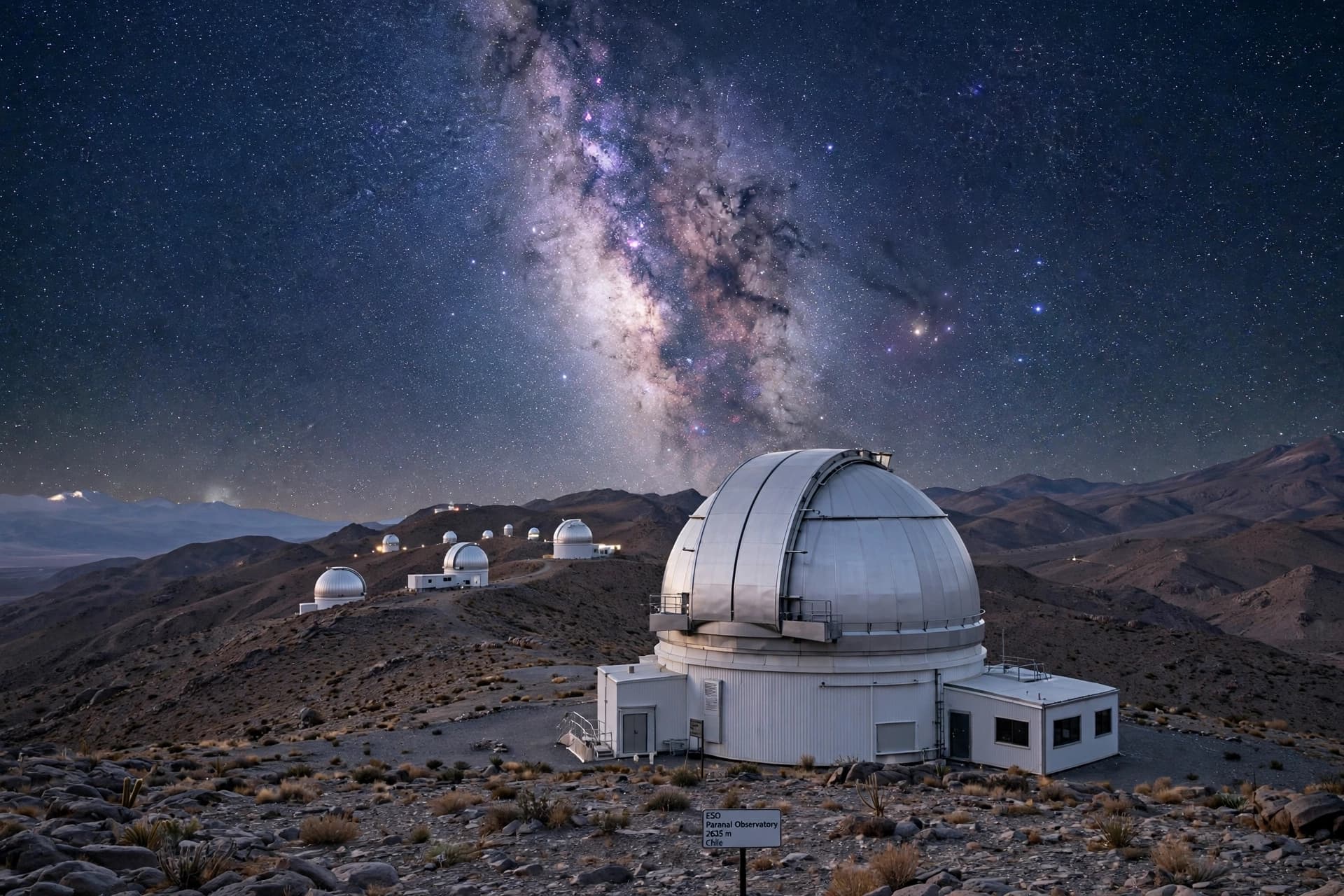
To tease out this cosmic ghost, scientists combined data from three of humanity’s most capable observatories: NASA’s Hubble Space Telescope, the European Space Agency’s Euclid mission, and the ground‑based Subaru Telescope in Hawaii. Each brought its unique strengths — Hubble’s sharp imaging to pinpoint the clusters, Euclid’s sensitivity to faint, diffuse light, and Subaru’s deep wide‑field view to help confirm the galaxy’s presence. The collaboration underscores how modern astronomy increasingly depends on synergy between multiple instruments and international cooperation.
What makes CDG‑2 stand out is not just its faintness, but its composition. Preliminary analyses suggest that roughly 99 % of the galaxy’s total mass is dark matter, with the tiny fraction of visible matter — stars and clusters — accounting for an exceptionally small part of its gravitational heft. By comparison, ordinary galaxies like our own contain far more stars and gas, with dark matter making up a substantial but not overwhelming fraction of their mass. In CDG‑2, the opposite is true: the invisible dominates, shaping the galaxy’s structure and existence.
Why would a galaxy have so little normal matter? One possibility is that gravitational interactions with other galaxies in the busy Perseus cluster stripped away much of the gas that would otherwise have formed stars. Another is that conditions in the early universe allowed dark matter halos to grow while regular matter never fully settled into the galaxy’s potential well. In either case, the very faintness of CDG‑2 hints at a class of galactic objects that have long been predicted by models of dark matter‑dominated systems but rarely seen directly.
Dark matter itself remains one of the biggest enigmas in modern physics. Though it makes up about 85 % of all matter in the universe and exerts a profound gravitational influence on cosmic structures, it does not emit, reflect, or absorb light, rendering it invisible to conventional telescopes. Its presence is inferred from the motions of stars and galaxies, gravitational lensing, and the large‑scale structure of the cosmos. Discoveries like CDG‑2 — where dark matter’s role is so pronounced — help scientists test theories of how galaxies form and how dark matter behaves on smaller scales.
CDG‑2’s discovery also introduces a subtle shift in how astronomers search for the universe’s most elusive objects. Instead of relying solely on visible light, researchers are turning to indirect tracers — like globular clusters — to guide them to galaxies that are dim by ordinary standards but rich in dark matter. This technique might reveal more such objects lurking undetected in galaxy clusters or even in the vicinity of the Milky Way, reshaping our inventory of cosmic structures.
As telescopes and data‑processing methods grow ever more sophisticated, the cosmos continues to surprise us with structures that challenge our assumptions. Galaxies like CDG‑2 — nearly invisible yet gravitationally significant — serve as reminders that much of the universe’s architecture is hidden beneath the surface of starlight. Whether more of these dark galaxies await discovery is now an open question, one that future surveys and observatories are poised to explore.
In the meantime, CDG‑2 stands as a testament to both the ingenuity of astronomers and the enduring mystery of dark matter — a substance that binds galaxies together even when the galaxies themselves barely shine.
AI Image Disclaimer Visuals are created with AI tools and intended for representation, not reality.
Sources BBC Sky at Night Magazine NASA/ESA Hubble Space Telescope press release (ESA/Hubble) Science Minimalist news aggregation Phys.org science report Earth.com science coverage
Published by Banx Network. This article is part of the Banx decentralized media programme, powered by the BXE token on the XRP Ledger.