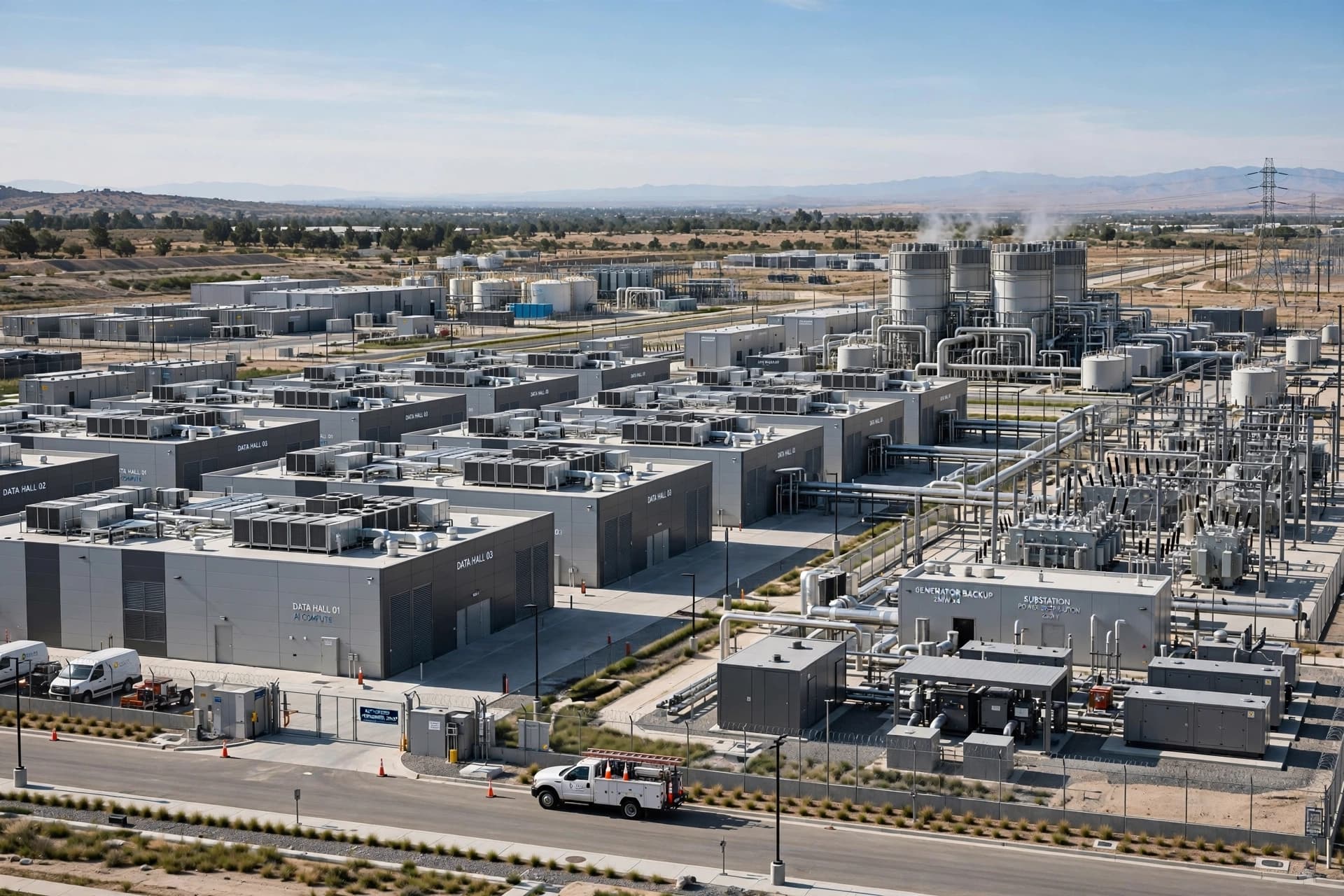
Artificial intelligence is often imagined through the glow of a screen, a sentence appearing in an instant or a machine answering a question. Yet beneath that digital surface lies a physical world of chips, electricity, data centers and enormous financial commitments. This week, that hidden infrastructure moved closer to Wall Street.
Nvidia announced a partnership with six major financial institutions to establish financing platforms aimed at mobilizing more than $500 billion in third-party capital for artificial intelligence computing infrastructure. The initiative brings the technology industry and major financial institutions together around the expanding demand for AI capacity.
The participating financial groups include Apollo, BlackRock, Blackstone, Brookfield, Goldman Sachs and KKR. Their involvement reflects how the financing of AI infrastructure is increasingly reaching beyond traditional technology investment and into the broader world of institutional capital.
The scale of the proposed capital mobilization is striking. AI companies and cloud providers are building increasingly large computing facilities, while the electricity and hardware needed to operate those facilities add another layer of cost. Financing has therefore become an important part of the infrastructure race.
For Nvidia, the development reaches beyond its familiar role as a supplier of advanced processors. Its chips sit at the center of many AI computing systems, and helping customers secure financing for infrastructure could support a larger ecosystem in which those processors are deployed.
The initiative also illustrates the changing character of the AI economy. What once appeared primarily as a software story is now increasingly connected to construction, energy, telecommunications and finance. The intelligence generated by machines may appear intangible, but the infrastructure supporting it is deeply physical.
The participation of major asset managers and financial firms gives the expansion another dimension. Institutional investors have access to pools of capital large enough to support projects that can require substantial long-term commitments, particularly data centers and energy infrastructure.
At the same time, the scale of the initiative places greater attention on the economics of AI. Building infrastructure ahead of demand requires confidence that companies will continue to need enormous quantities of computing capacity in the years ahead.
For now, the partnership represents an effort to create financing channels rather than a single investment of $500 billion by Nvidia itself. The company and its financial partners are seeking to mobilize third-party capital through new platforms designed around AI computing infrastructure.
The movement of capital therefore follows the movement of technology. As AI systems grow more capable and more widely used, the foundations beneath them are becoming larger, more expensive and more closely connected to global finance.
Nvidia's announcement marks another stage in that evolution, bringing six major financial institutions into a framework intended to mobilize more than $500 billion for AI infrastructure. The effort underscores how the next chapter of artificial intelligence is increasingly being built not only by engineers, but also through the long corridors of global capital.
AI Image Disclaimer: Visuals are AI-generated conceptual illustrations created to represent the reported development and are not real photographs.
Sources: Reuters Nvidia
Published by Banx Network. This article is part of the Banx decentralized media programme, powered by the BXE token on the XRP Ledger.