For a child living with type 1 diabetes, the rhythm of everyday life can include blood-sugar checks, insulin, meals, school, family routines, and regular medical visits. What may look like a simple day from the outside can require careful attention from both the child and those who care for them.
In Cambodia, health organisations and government partners have been working to make that daily care more accessible. The effort includes medical supplies, insulin, glucose monitoring, healthcare-worker training, patient education, and support for families living with the condition.
Type 1 diabetes is a lifelong condition in which the body does not produce enough insulin. Safe management requires regular monitoring, insulin treatment, appropriate nutrition, and continuing medical support. Without access to those essentials, children can face serious health complications.
The Changing Diabetes in Children programme, implemented in Cambodia with partners including PSI Cambodia and the Ministry of Health, has worked to strengthen care through hospitals across the country. PSI reported that the programme had supported children and young people through 14 hospitals in 11 provinces.
The programme has also provided insulin, syringes, glucometers, and test strips. More than 1,000 children and young people up to age 25 have received free diabetes medicine and supplies through partner hospitals, according to PSI.
Healthcare workers are another important part of the system. Doctors and nurses at partner hospitals have received training related to paediatric diabetes diagnosis, treatment, emergency management, and patient support. The aim is to strengthen care not only through medicine, but also through the knowledge needed to manage a chronic condition over many years.
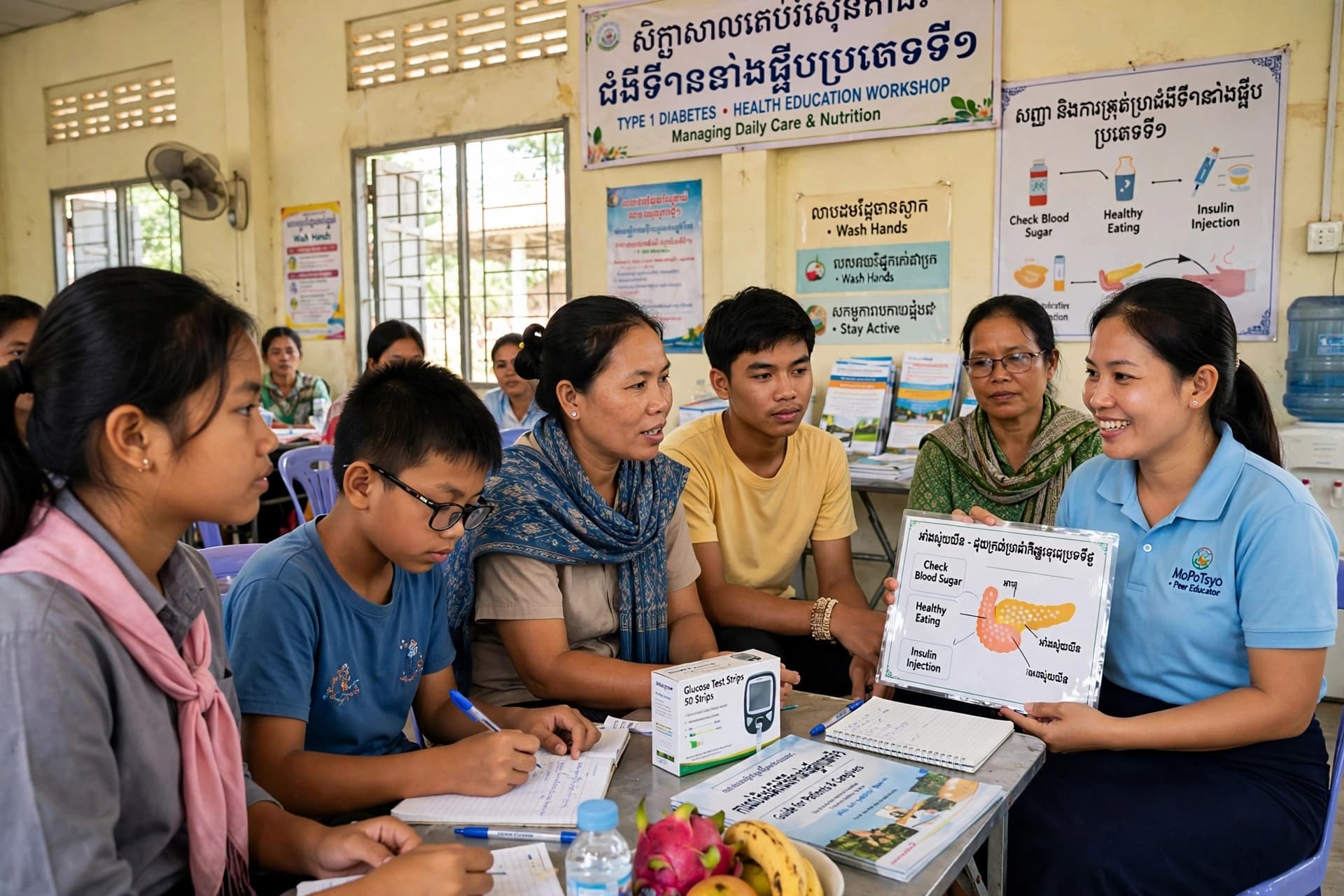
For families, treatment also continues after leaving the hospital. PSI has supported education sessions where children and caregivers learn about nutrition, daily diabetes management, blood-sugar levels, and warning signs that may require medical attention. In 2025, these sessions reached more than 2,300 children, young people, and caregivers, according to the organisation.
Community awareness is another part of the effort. In several provinces, trained nurses have conducted activities focused on recognising symptoms, understanding blood-sugar changes, and encouraging families to seek medical assessment when concerns arise. Such information can be particularly important where awareness of type 1 diabetes remains limited.
Access can still be difficult outside major urban centres. PSI has noted that specialised diabetes services have historically been concentrated in Phnom Penh and private clinics, meaning some families have had to travel considerable distances for treatment. The organisation's programmes seek to bring more services and supplies closer to provincial communities.
Support also extends beyond the clinic. Type 1 diabetes camps and peer-support activities give young people and families opportunities to meet others living with the condition. Organisations working in Cambodia describe these programmes as a way to combine medical education with practical experience and social support.
The broader picture is one of a health system gradually building support around a condition that does not end when a medical appointment does. For Cambodian children and young people living with type 1 diabetes, access to insulin, monitoring equipment, trained healthcare workers, reliable information, and family support all form part of the continuing path of care.
Image Disclaimer:
The accompanying visuals are AI-generated conceptual illustrations and are not real photographs of patients, hospitals, or medical programmes.
Sources:
PSI Cambodia Ministry of Health Cambodia Action4Diabetes International Diabetes Federation
Published by Banx Network. This article is part of the Banx decentralized media programme, powered by the BXE token on the XRP Ledger.