In the early February sun, Caracas’s broad avenues seemed to carry more than footsteps — they carried echoes of memory and hope, voices weaving together like threads in a long‑unfinished tapestry. When people gather in the streets, the rhythm of their chants becomes almost a language of its own, a collective breath in the vast conversation of a nation. This week, as Venezuelans took to the avenues to call for “Maduro libre,” the air in the capital seemed to hold both the weight of recent history and a quiet yearning for what might come next in the country’s unfolding story.
For many marchers, the act of coming together was as much about presence as protest — a way of letting the world see that in the heart of Venezuela’s political landscape, sentiment still flows strongly and visibly. Their voices stitched through the air, weaving a tapestry of slogans and banners, reminding onlookers that decisions made far from these streets still resonate deep within them. Some held photos of Nicolás Maduro and his wife, Cilia Flores, a pair separated from their homeland and now the subject of international legal proceedings.
This mobilization — thousands strong — marked a moment that felt both familiar and striking in its intensity, marking exactly one month since a dramatic turn of events brought Venezuela to a pivotal juncture. Chanting “Venezuela needs Nicolás,” supporters marched in unity, their footsteps a steady pulse under the Caribbean sun, an affirmation of identity and loyalty that seemed woven into every raised fist and banner.
Yet these demonstrations reflected more than a single message about a political figure. They also carried the weight of collective emotion — sadness, confusion, steadfast support — mirrored in the faces of workers, university students, and ordinary citizens who moved in unison toward a shared destination. Through the streets, the cadence of “Maduro libre” became a refrain, touching on complex feelings about sovereignty, justice, and belonging in a moment that feels both tumultuous and transformative.
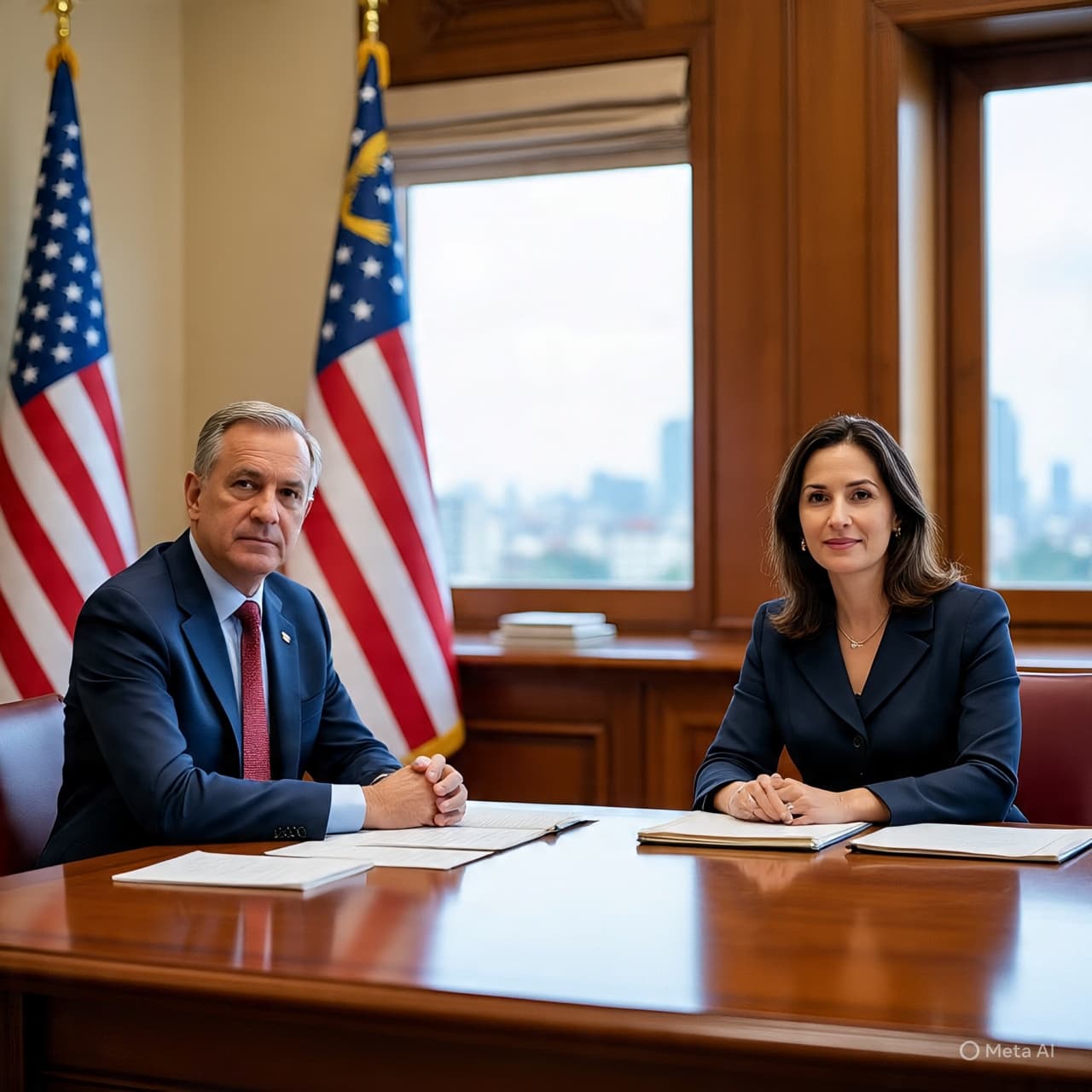
At the heart of the capital, interim President Delcy Rodríguez walked a careful line between honoring these public sentiments and steering the country’s dialogue with external partners. In a room far from the chants, Rodríguez met with the incoming U.S. envoy to Caracas, a meeting that spoke of diplomatic bridges amid political crosswinds. Topics of discussion spanned economic cooperation, energy and trade, and a pathway toward stabilization and recovery — a reminder that leadership, whether on the streets or in the halls of power, unfolds through parallel currents of emotion and negotiation.
This confluence of voices — on the avenues and in diplomatic chambers — seemed to reflect a nation navigating a moment of both reflection and decision. The streets spoke with fervor and passion, and the rooms of governance carried measured inquiry and mutual interest, together shaping the unfolding chapter of Venezuelan life. As the rhythm of boots and slogans softened into weary evening, both expressions underscored how, in times of change, the pulse of the people and the course of policy continually converse.
In this quiet weaving of public voice and official outreach, Caracas became a mirror of Venezuela’s complex, unfolding story — not a chorus of certainty, but a mosaic of determination and cautious hope, echoed by the multitude who marched and the leaders who met, each in their own space, each crafting the next lines of a chapter still in progress.
AI Image Disclaimer
Graphics are AI‑generated and intended for representation, not reality.
---
Sources
Reuters
TRT Español News
Agence France‑Presse (via international outlets)
IANS reporting
CiberCuba (and related coverage)
نُشر بواسطة Banx Network. هذا المقال جزء من برنامج الوسائط اللامركزية من Banx، مدعومًا برمز BXE على شبكة XRP Ledger.