
Key Highlights
- Incident:A violent attack occurred near the parliamentary complex in Serbia.
- Response:Authorities labeled the event as terrorism, prompting urgent security measures.
- Implications:The attack has reignited discussions about political and social tensions in the country.
In the quiet rhythm of Serbia's capital, moments of tranquility can quickly shift to chaos, as evidenced by a recent violent incident that unfolded outside the parliament building. This event, marked by gunfire and flames, has left a lingering sense of unease among citizens, highlighting the fragile balance between stability and unrest in a nation with a complex history.
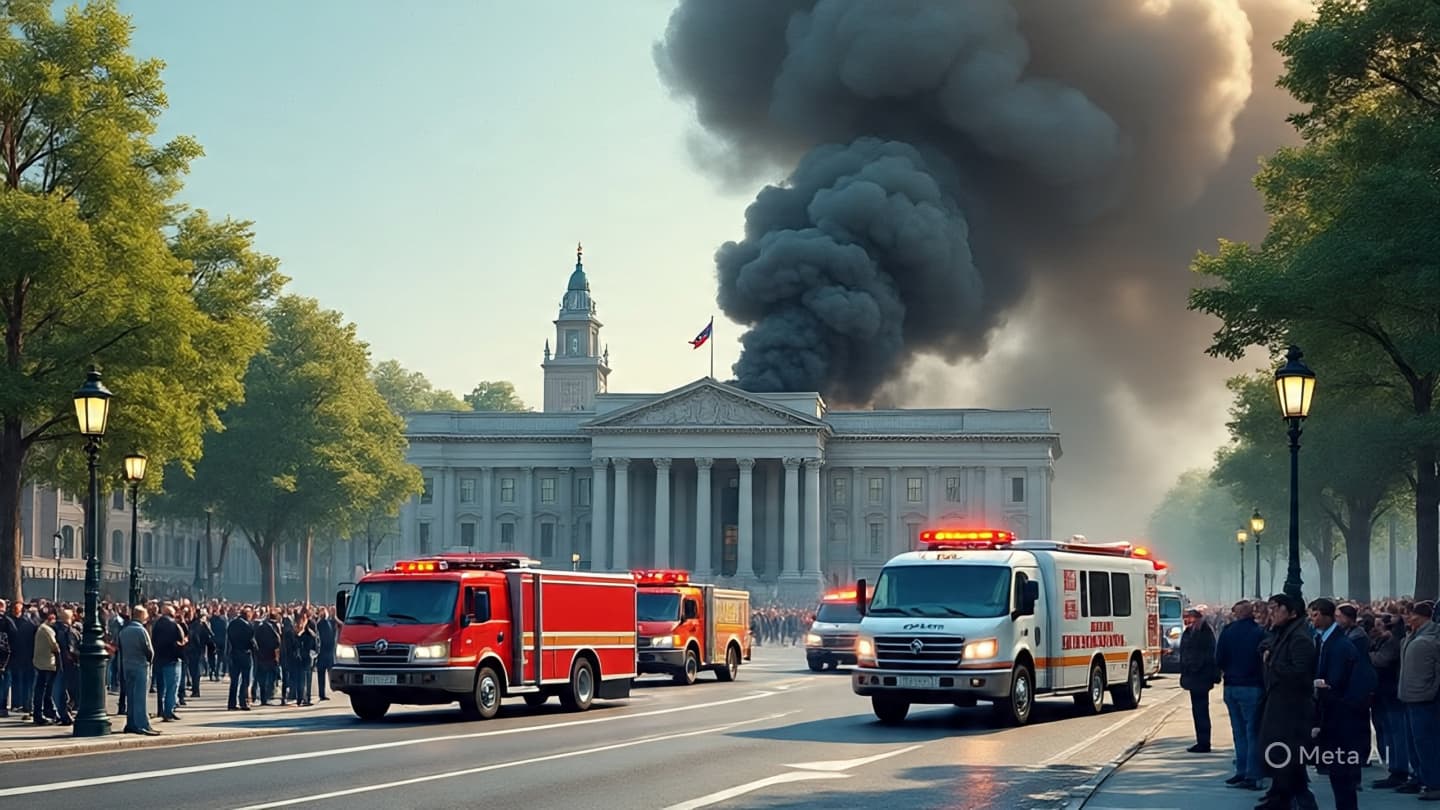
Authorities swiftly classified the incident as an act of terrorism, where a man opened fire and subsequently set a vehicle ablaze near the parliamentary complex. This rapid escalation prompted a significant security response, with law enforcement agencies securing the area and launching an investigation into the motives behind the attack. As details continue to emerge, the implications of this violence extend beyond immediate safety concerns, touching on deeper societal issues.
Witnesses described the scene as chaotic, with the usual hum of daily life disrupted by emergency sirens and the hurried movements of law enforcement. The stark contrast between normalcy and crisis serves as a reminder of the vulnerabilities that exist within urban environments. Officials have emphasized that such acts not only threaten public safety but also undermine the trust that is essential for civic life.
In response to the attack, President [Name] condemned the violence and called for national unity. His remarks, while firm, also conveyed a sense of caution, acknowledging that stability is not guaranteed and must be actively maintained. The government has pledged to enhance security measures around key institutions, reflecting a heightened awareness of potential threats in the current political climate.
This incident has reignited discussions about the underlying tensions that shape modern Serbia. Observers note that while violent attacks are infrequent, they often reveal deeper fractures within society, including political divisions and social anxieties. The attack serves as a mirror, reflecting both the vulnerabilities and the resilience of a nation grappling with its identity and future.
As investigations continue, the focus shifts towards restoring a sense of normalcy in public spaces. While life gradually returns to its usual pace, the memory of the attack remains a poignant reminder of the challenges faced by the nation. The path forward involves not only addressing the immediate aftermath but also understanding and mitigating the conditions that allowed such violence to occur.
In the measured cadence of official statements and ongoing inquiries, there is a collective recognition that moments like these test the resilience of a nation. Serbia, with its rich history and evolving identity, continues to navigate the delicate balance between vigilance and hope, striving to foster a society that can withstand the pressures of both internal and external challenges.
Published by Banx Network. This article is part of the Banx decentralized media programme, powered by the BXE token on the XRP Ledger.



