
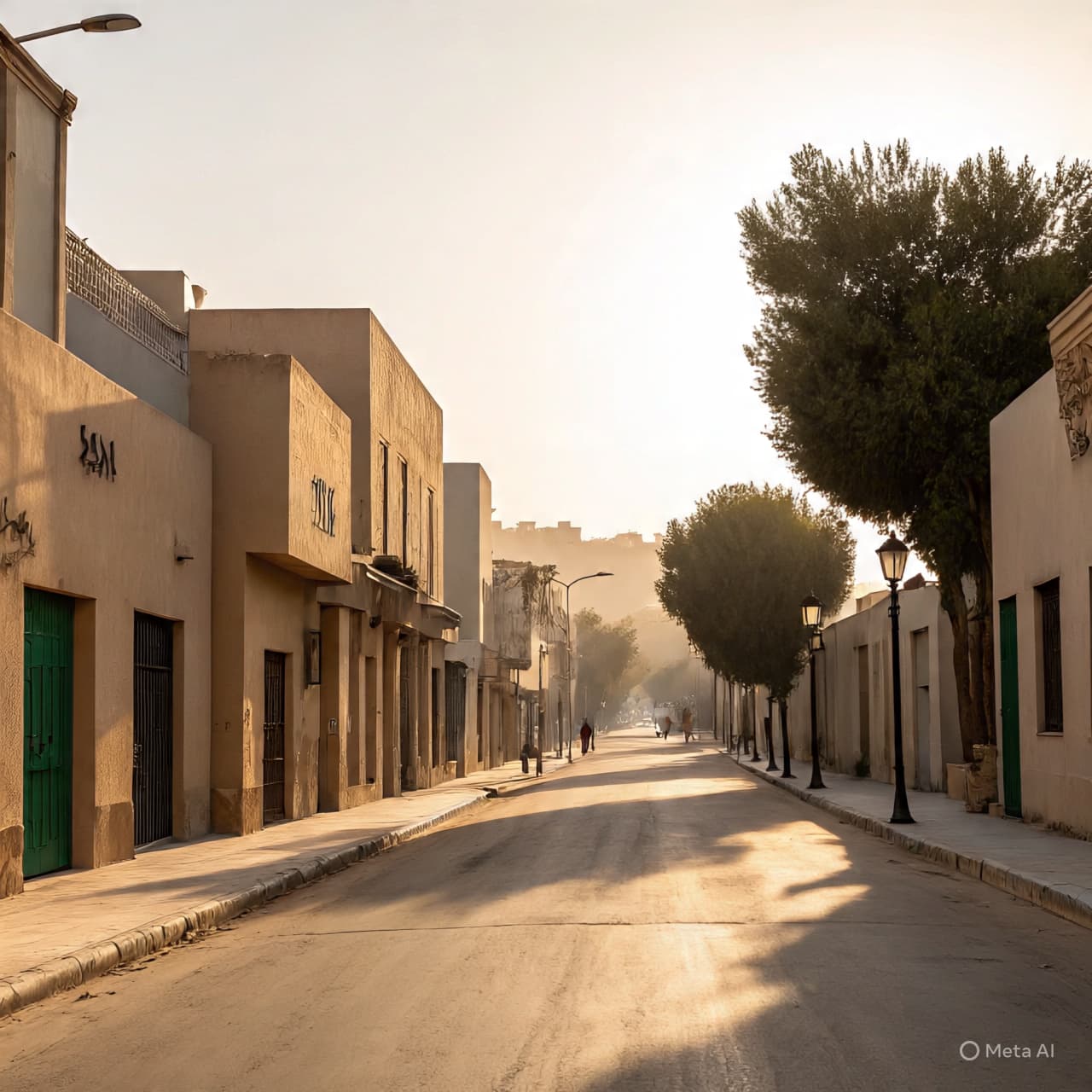
There are moments in the soft, tremulous light before sunrise when the air over a land feels poised between two breaths — one recalling the quiet of night, the other bracing for the day’s first stirrings. Over the narrow length of Gaza, that threshold has grown thin, like a membrane stretched against the memory of days past. In the early hours after a night that seemed to breathe longer than usual, the sky bore the faint glow of distant flashes, and once again the everyday was marked by the motion of conflict.
Israeli forces said they carried out a series of strikes across the Gaza Strip after reporting that militants had fired upon their soldiers, wounding at least one reserve service member. This sequence of action and response unfolded amid the persistence of a ceasefire that was meant to soften the cadence of war but instead has often felt like a fragile promise caught in the breath between tides.
In neighbourhoods now familiar with the sound of distant rumble and sudden shock, the morning found families gathering where shadows of buildings stood uneven against the muted light. Health officials in Gaza reported that at least two dozen people were killed in the overnight strikes, with women, children, and a medic among the dead. Such numbers, spoken in subdued tones by hospital staff, carry a weight not just of loss but of interrupted days and nights that have become indistinguishable in their strain.
On the roofs and narrow lanes of Gaza City and Khan Younis, the hush between explosions felt thick with unasked questions. Parents held small children close, as though the simple act of holding might shield against the memory of the blast. Medical teams, already acquainted with the urgency of chaos, worked under the dim glow of emergency lights, their movements steady yet imbued with the quiet gravity of repetition.
The strike that wounded an Israeli reservist was described in military statements as an act of hostile fire from within Gaza’s borders. In this landscape where each account carries the friction of narrative and counter‑narrative, the sequence of cause and effect seems to ripple outward like waves across still water — the disturbance felt far from its point of origin.
For communities on both sides, the rhythm of tension and tentative calm has become a pattern woven into the fabric of daily life. Families in Gaza navigate a terrain where ceaseless uncertainty has shaped the way light enters a room or the way footsteps sound on a dusty street. And across border lines, soldiers and citizens alike measure each night against the hope that dawn may break without sudden disturbance.
In the careful peace between one rising sun and the next, the events of early morning now settle into memory with a quiet persistence. That hush, brief and fragile, holds the residues of loss and the continuous motion of human lives seeking stability amid the motion of larger forces. When day fully unfolds, the accounts of night’s exchanges will be carried forward in voices measured against the vastness of shared sky and the land that bears their stories.
Illustrations are AI‑generated and serve as conceptual representations.
Sources (Media Names Only)
Associated Press The Guardian WFTV / Boston25 News
Published by Banx Network. This article is part of the Banx decentralized media programme, powered by the BXE token on the XRP Ledger.

.jpg&w=3840&q=75 "Convicted War Criminal Ratko Mladić to Be Buried With Full State Honors")
