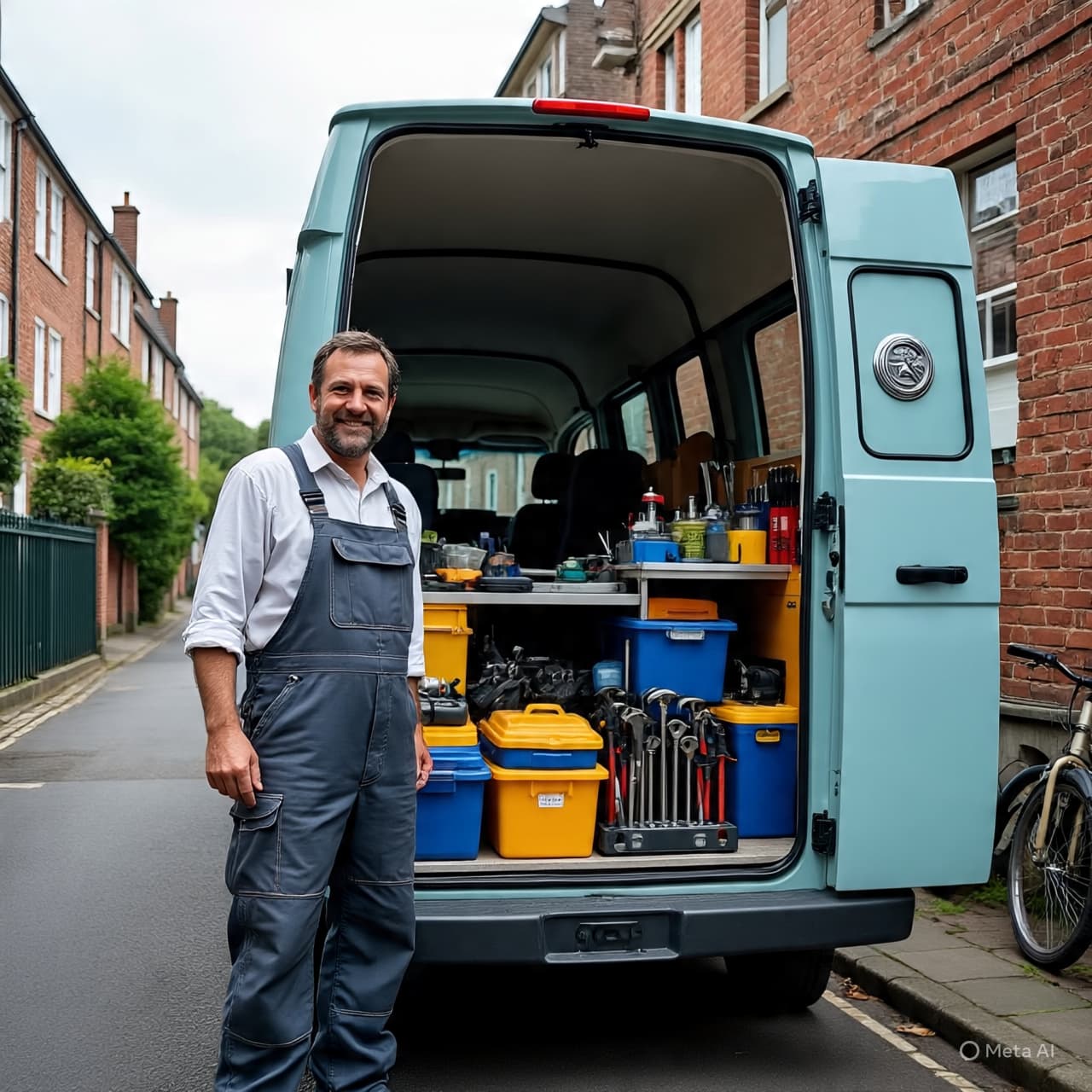
On certain mornings in Britain’s market towns, the day begins not with speeches but with the hiss of a kettle and the clink of tools laid out in the back of a van. Frost gathers along brick terraces; shop shutters rise in patient rhythm. Politics, in these places, tends to travel quietly—through conversations over counters, through handwritten signs in windows, through the steady hands of people who fix what leaks and mend what falters.
It was from this unvarnished corner of daily life that an unexpected figure stepped into the wider current of national debate. A working-class plumber—boots still dusted from crawl spaces and kitchen floors—found himself speaking not only about pipes and pressure valves but about pressures of another kind: energy bills that climbed like ivy, contracts that thinned, the arithmetic of wages and rent that no longer balanced at month’s end. His words did not carry the polish of Westminster, but they carried the weight of familiarity. And that, for a season, proved enough to bend attention.
The moment arrived as Keir Starmer and the Labour Party sought to steady their path toward the next election. After years of recalibration—tempering language, revising pledges, promising fiscal restraint—the party aimed to present itself as a calm alternative to the turbulence that had marked recent Conservative governments. Yet calm can feel distant from the draught in a living room or the invoice on a kitchen table. In radio interviews and community meetings, the plumber’s plainspoken criticism—about taxation, small-business strain, and the cost of living—cut across carefully scripted messages.
He did not arrive alone. The atmosphere was already charged by restlessness: lingering inflation, industrial disputes, and a public weariness with political choreography. Across social media, short videos of his remarks traveled quickly—filmed beside tool racks and half-finished sinks—gathering nods from some and rebuttals from others. What mattered was not only agreement or dissent, but recognition. He sounded like someone who knew the inside of British homes because he had knelt on their floors.
For Labour strategists, the episode was less about one tradesman than about a mood. The party had worked to reclaim trust among working voters who had drifted in recent elections, some toward the Conservatives, others toward smaller parties or abstention. The plumber’s intervention, amplified by talk radio and tabloid headlines, suggested that skepticism still ran along the grain of everyday life. It was a reminder that electoral math is often scribbled in pencil on the backs of receipts.
In response, Labour figures reiterated plans to support small businesses, invest in public services, and manage public finances with what Starmer calls “iron discipline.” They spoke of growth as a tide that should lift high streets as well as financial districts, of stability as a virtue earned through consistency rather than spectacle. Yet the plumber’s critique lingered like a draft under a door—subtle, persistent, impossible to ignore.
There is something archetypal in the image: a tradesman stepping into the civic square, wrench in hand, not to dismantle but to question the fittings of policy. British politics has long drawn energy from such crossings between the practical and the parliamentary. The country’s democratic rituals depend, after all, on the friction between lived experience and legislative design.
As the election approaches, the scene widens. Party buses will roll past industrial estates and seaside piers; candidates will knock on doors beneath slate-gray skies. In the quiet intervals between rallies, vans will continue to idle outside terraced houses, and plumbers will continue to trace the hidden lines that keep water moving. Whether or not this particular tradesman remains a headline, the sentiment he voiced will hover in the background—an insistence that policy be measured against the feel of a monthly bill, the steadiness of a job, the simple dignity of work.
And so, in a season of speeches and manifestos, it was a wrench—raised not in anger but in emphasis—that briefly shifted the balance of attention. Elections are rarely decided by a single voice. Yet sometimes a voice, roughened by honest labor, can remind a nation that its politics runs through kitchens and boiler rooms as surely as through the corridors of Westminster.
AI Image Disclaimer Illustrations were created using AI tools and are not real photographs.
Sources BBC News The Guardian Financial Times Sky News Reuters
Published by Banx Network. This article is part of the Banx decentralized media programme, powered by the BXE token on the XRP Ledger.