There are mornings in a greenhouse when the first light drifts through glass panes and rests upon petals like soft dew, and in those moments one reflects on the delicate balance that allows beauty to flourish. A gerbera’s bright bloom, cheerful and bold, hides within its veins a history written on evolutionary winds — forces of sun and soil, water and breeze, and the unseen challenge of microscopic invaders that test life’s resilience.
Among these unseen challenges is powdery mildew, a persistent fungal disease that drapes plants in a white, powder‑like veil, slowing growth and dimming the radiance of blossoms. For growers and breeders alike, this disease has long been a thorn in the side of gerbera cultivation, necessitating frequent fungicide applications and relentless vigilance and adding cost and labor to the nurture of these beloved flowers. Traditional breeding for resistance can take years and often struggles to keep pace with the myriad of fungal pressures.
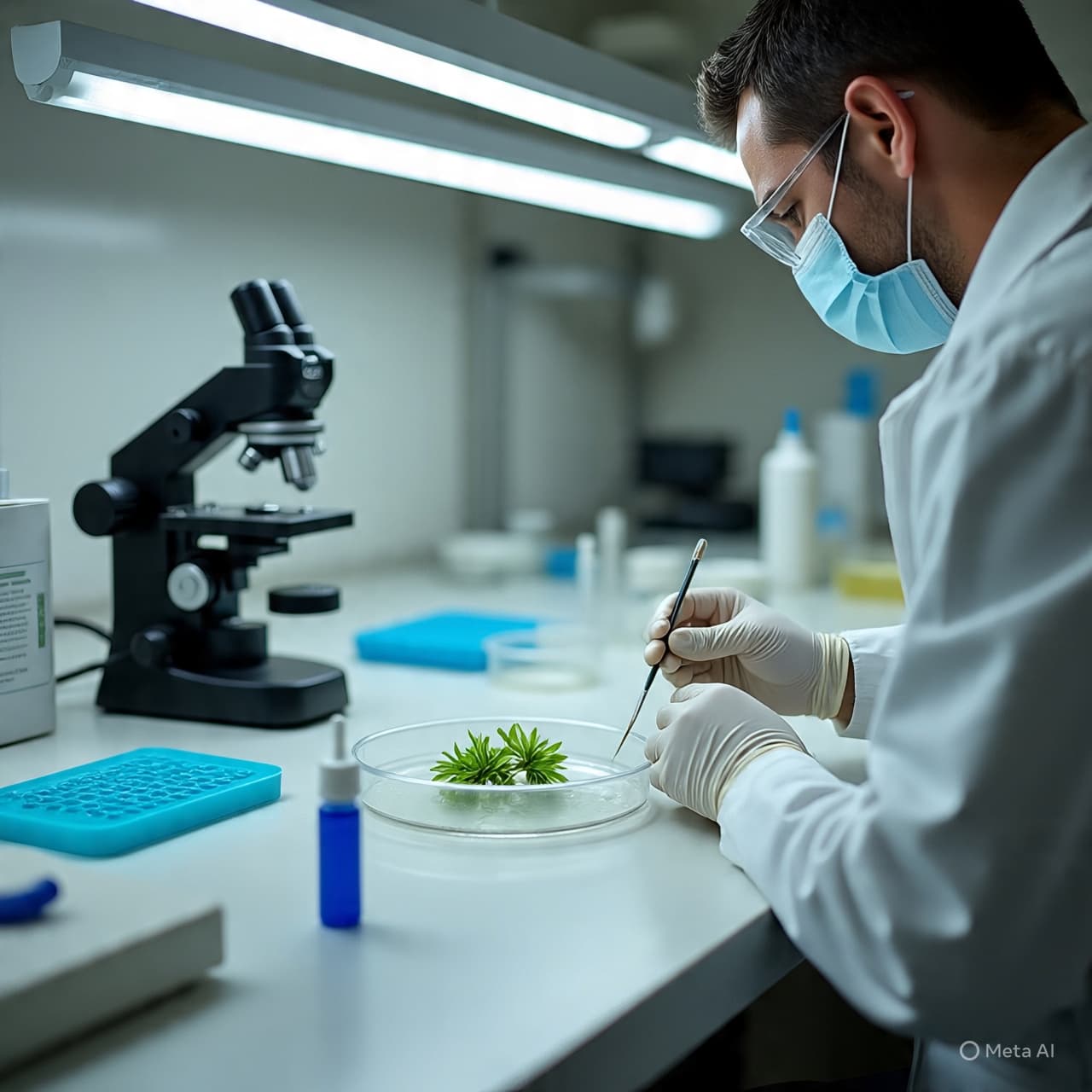
In recent years, however, scientists led by Dr. Dayton Wilde at the University of Georgia — in a project supported by the American Floral Endowment — took a different path, one that bridges the traditions of plant culture with the precision of modern molecular tools. They turned to CRISPR gene editing, a method that allows researchers to make finely targeted changes to a plant’s own genome without introducing foreign genes. First, they laid important groundwork, refining tissue culture and transformation systems for multiple gerbera cultivars to ensure that the delicate process of gene editing could take root in this beloved ornamental. To confirm that CRISPR technology indeed worked in these plants, the team disrupted a model gene, producing albino plantlets that demonstrated visible evidence of successful editing.
With that proof of concept accomplished, researchers focused their attention on the plant’s own susceptibility to powdery mildew. They identified MLO genes in gerbera — genes known in other species, such as tomato and wheat, to render plants more susceptible to powdery mildew infection when functional, and to confer resistance when disrupted. Using CRISPR/Cas9 constructs designed to target these genes, the scientists initiated lines of gene‑edited gerbera. Though these lines are still under development and the full evaluation of mildew resistance remains ongoing, the foundational steps have been taken to bring this approach toward fruition.
This quiet work — of cultivating cells in culture, of guiding molecular scissors to precise locations in the genome, of patiently raising edited plants for assessment — reflects a broader shift in how horticultural challenges can be met. CRISPR gene editing does not “invent” resistance out of whole cloth but enables nature’s own genetic variations to be shaped more swiftly and precisely than traditional methods allow. In doing so, it may reduce the reliance on chemical controls and open the door to more sustainable disease management in ornamental crops.
Still, many plants from edited seeds to greenhouse saplings will need careful study before gardeners see mildew‑resistant gerberas on display. Challenges remain in confirming mutations, understanding unintended effects, and assessing the resilience of edited lines under real crop conditions. Meanwhile, emerging tools — from morphogenic regulators that ease regeneration to alternative delivery methods that avoid stable modification entirely — promise to broaden the toolkit available to floral scientists in future efforts.
In the calm reflection of a morning greenhouse, where petals catch the first light and dew clings to leaf and stem alike, the promise of such advances invites a gentle optimism. This research represents not only a scientific milestone — the first demonstration of CRISPR‑based gene editing in gerbera — but also a thoughtful step toward harmonious coexistence between cultivation and nature’s own biological processes.
In straightforward scientific terms, researchers at the University of Georgia have successfully established CRISPR gene editing in gerbera plants, using it to target susceptibility genes associated with powdery mildew. Initial proof‑of‑concept work confirms the feasibility of editing, and ongoing efforts aim to characterize edited lines for disease resistance, laying the groundwork for future development of resistant cultivars.
AI Image Disclaimer: Visuals are AI‑generated and serve as conceptual representations.
Sources: FloralDaily.com reporting on gene‑editing advances in gerbera.
Published by Banx Network. This article is part of the Banx decentralized media programme, powered by the BXE token on the XRP Ledger.