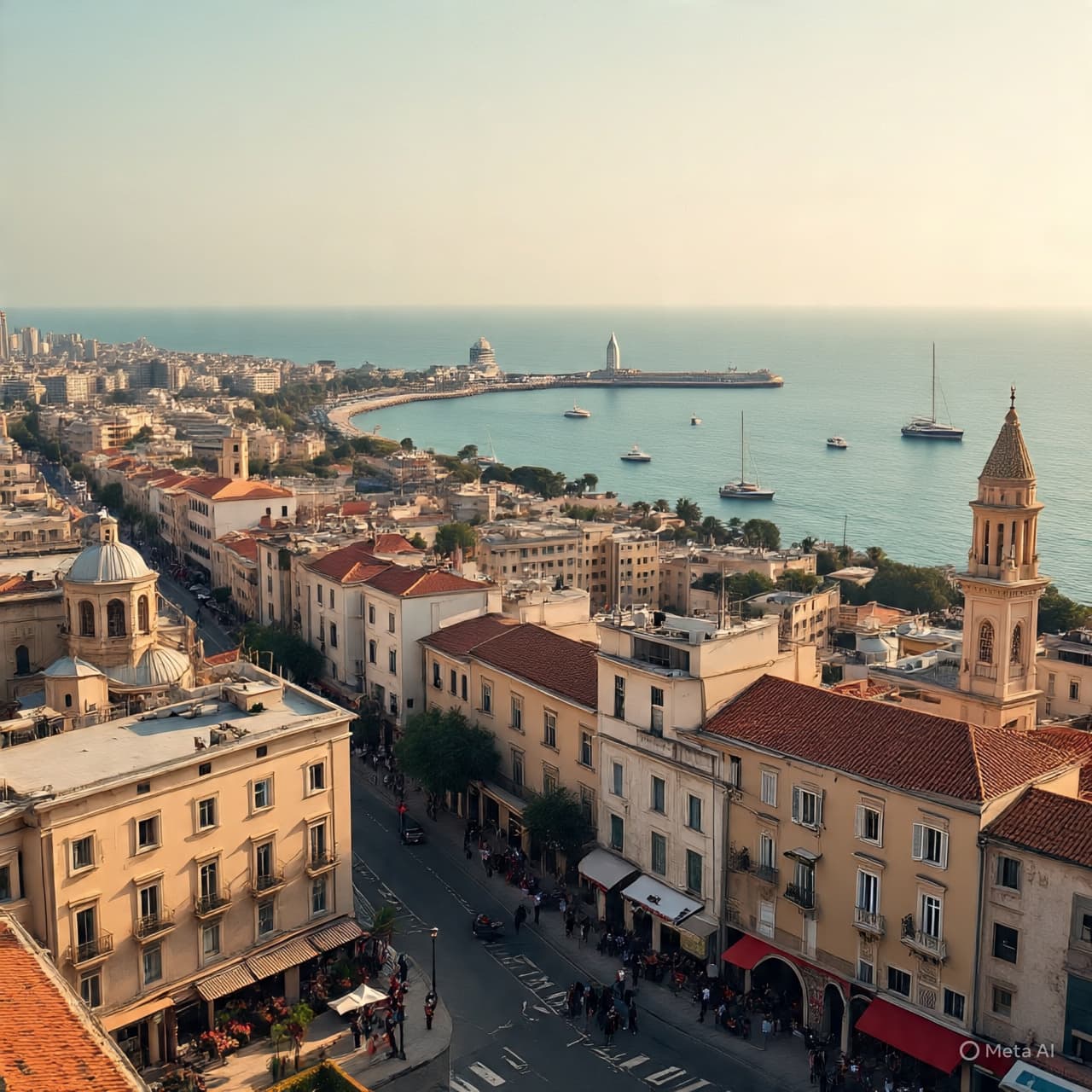
Cities carry memory in their stones. Beirut, with its winding streets and layered architecture, evokes centuries of commerce, art, and human resilience. Its scars, both recent and distant, tell stories of survival and reconstruction. In contrast, judgments about other nations often unfold more abstractly—shaped by history, politics, and the lens through which observers choose to see them.
In a recent commentary, journalist Tucker Carlson offered a striking, if controversial, perspective on the Middle East. He described Israel as “one of the ugliest countries on Earth,” a statement rooted in his belief that the nation’s modern history and ongoing conflicts have prioritized military and political objectives over cultural or architectural beauty.
Carlson contrasted this with his view of Beirut, which he called one of the most beautiful cities in the world—an observation he framed against the backdrop of regional tensions. According to him, the ongoing conflict with Iran and military actions in Lebanon threaten not only political stability but also the aesthetic and cultural fabric of cities that have long embodied artistic and historical legacy.
The journalist’s comments further extended to a broader, almost philosophical, claim: that a “war against beauty” is underway in areas affected by conflict. He suggested that military determination, particularly by the Israel Defense Forces, is not only strategic but also carries implications for the preservation—or destruction—of historically and culturally significant landscapes.
Statements like these often provoke debate because they sit at the intersection of subjective perception and tangible reality. Assessments of beauty are deeply personal, and in the context of geopolitics, they become entwined with moral, historical, and ethical considerations. A city may be celebrated for its architecture, streets, or public spaces, yet simultaneously bear the visible marks of war, displacement, and reconstruction.
Observers may also view such commentary as a reflection of the tension between ideals and practice. The idea that nations, like cities, can be measured against aesthetic standards is neither new nor uncontested. It raises questions about the relationship between cultural heritage, human ambition, and the impact of conflict on societies.
Regardless of one’s perspective on Carlson’s statements, the discussion points to an enduring human impulse: to notice, to assess, and to mourn the loss of beauty in places affected by the pressures of history and warfare. It is a reminder that, beyond politics and strategy, cities carry the accumulated echoes of generations—some fragile, some enduring, all deserving of reflection.
Published by Banx Network. This article is part of the Banx decentralized media programme, powered by the BXE token on the XRP Ledger.