In the quiet world of molecular self-assembly, where molecules drift together and apart through forces weaker than the bonds that hold a diamond, there has long been a limit to what scientists could build. They could design the pieces, but they could not always control how those pieces came together, how long they grew, or how they arranged themselves. It was like handing someone a box of bricks and hoping they would build a wall of a specific height and pattern. Now, a team at Northwestern University has found a way to make those bricks stack with a precision that was previously unknown.
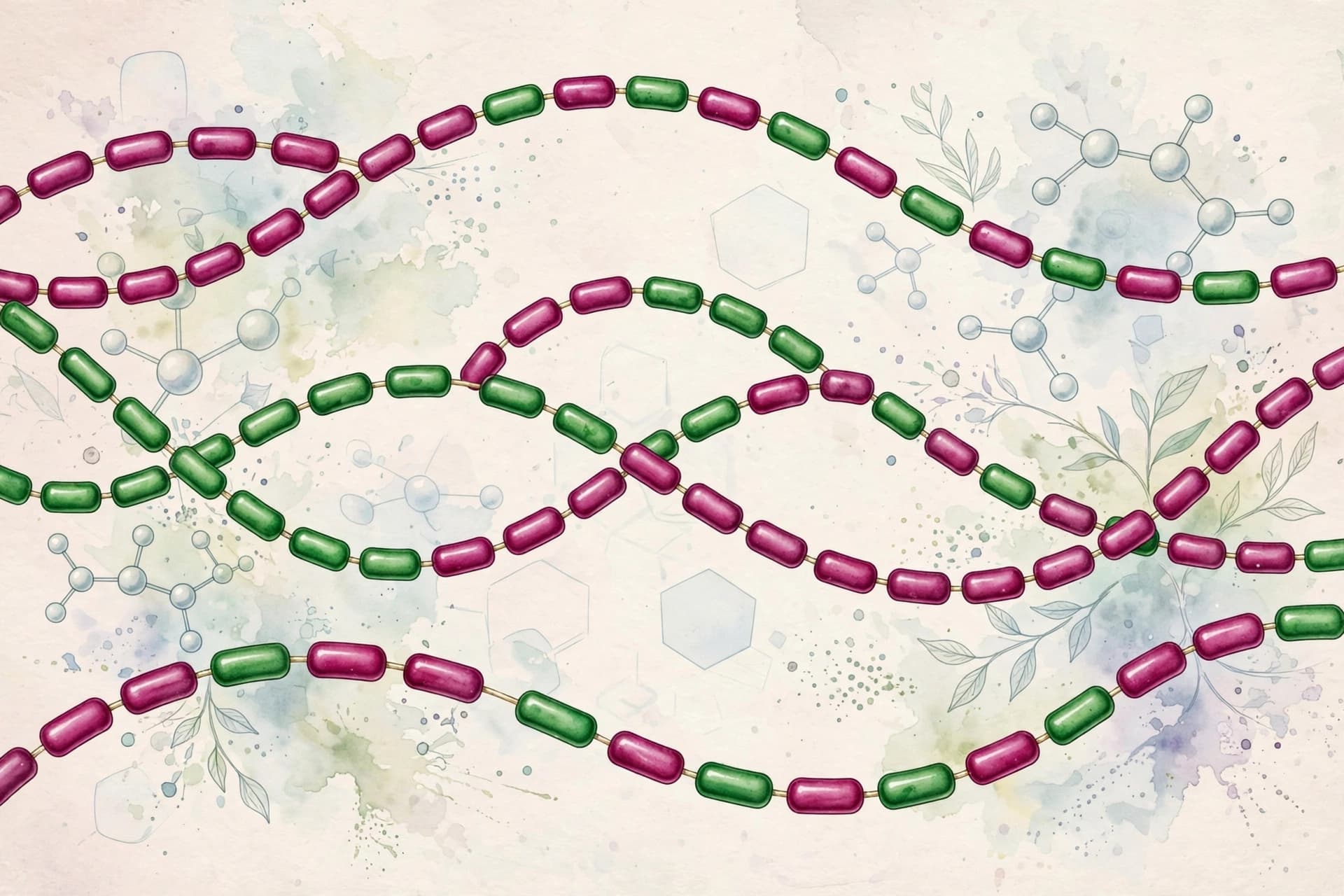
The research, published in the journal Science, describes supramolecular polymers—threads formed from self-assembling molecules—that reach collective molar masses on the order of billions of daltons . To put that in perspective, the largest common polymers of plastics have molar masses around 10 million daltons, and the largest proteins in nature reach only 3 to 5 million daltons . These are, by molecular standards, enormous structures. Yet their lengths are uniform, and their chemical composition can be divided into distinct segments carrying opposite electrical charges.
Samuel Stupp, the Northwestern materials scientist who led the study, calls the process “self-capping supramolecular polymerization” . As a thread grows, flexible portions at its ends remain dynamic, allowing new molecules to join in an orderly manner. Once the available building blocks are consumed, those flexible ends fold over and protect themselves, effectively shutting down further growth . This prevents the threads from fusing together or undergoing the process of Ostwald ripening, in which smaller structures disappear while larger ones grow. The result is a filament of a defined length that remains stable, even after months in solution.
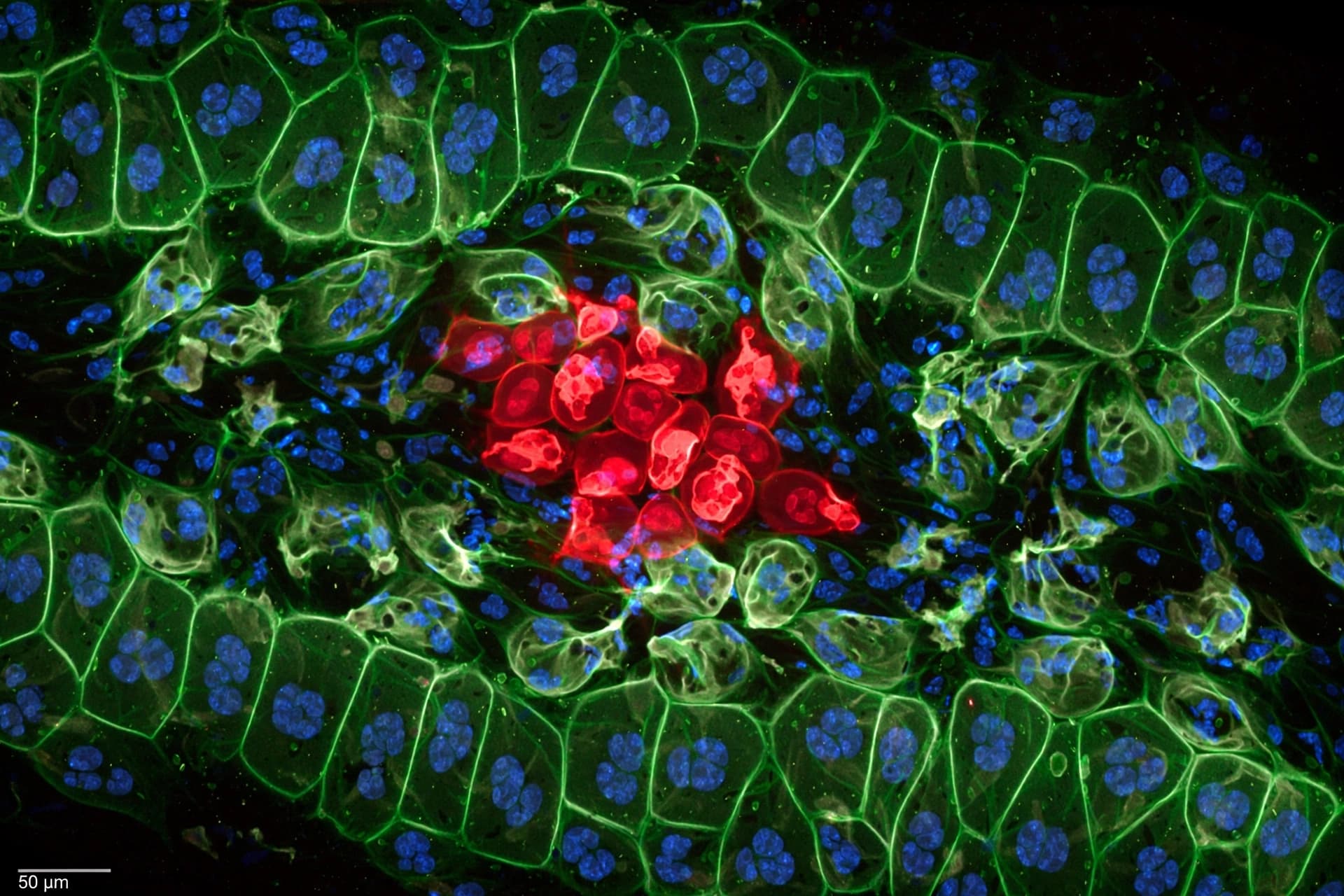
The researchers then used this precision to create threads with a small positively charged segment sandwiched between negatively charged segments of different lengths . When these segmented threads were introduced to neurons, which carry a strong negative charge, something unexpected happened. Threads with only positive charges killed the neurons. Threads with only negative charges were repelled entirely. But the segmented threads anchored themselves to the neurons through the small positive region, while the negative segments remained near the cell surface, unable to escape because they were tethered .
The effect on the neurons was striking. Treated cells grew longer neurites—the projections neurons use to communicate with other cells—and formed more elaborate branches. After seven days, their calcium activity was four times greater than that of untreated neurons. After fourteen days, they had formed more synapses . Perhaps most remarkably, the threads achieved this without carrying any biological signals designed to encourage growth. Stupp hypothesizes that the negatively charged segments recruit proteins already present around the cells, including neurotrophic factors and laminin, which have positively charged domains. The interplay between attraction and repulsion may cause the segments to tap rapidly toward and away from the neurons, enhancing signaling on millisecond timescales .
The study represents more than a technical achievement in materials science. It suggests a new way of thinking about how synthetic materials might interact with living cells—not by mimicking biological signals, but by organizing electrical charges in space with a precision that allows the body’s own molecules to do the work. Stupp noted that the unknown functions of these structures are likely to be as surprising as the bioactivity they have already observed .
For now, the research remains at the stage of cell cultures and fundamental discovery. But the ability to build long molecular structures with many carefully positioned chemical segments opens possibilities that extend beyond neurons—toward materials and devices with features that span distances far greater than any single molecule could reach. In a field where control has always been the challenge, a new level of precision has been found.
AI Image Disclaimer: The visual content in this article was generated by artificial intelligence and is intended for illustrative purposes only.
Sources: Science, Northwestern University, EurekAlert
Published by Banx Network. This article is part of the Banx decentralized media programme, powered by the BXE token on the XRP Ledger.