In the early light that skims across the rolling plains of Brandenburg or the gentle valleys of Occitanie, one can almost imagine the wind carrying the distant hum of steel and labor. These are lands long familiar with the quiet cadence of peace, yet beneath their pastoral surfaces lies an awareness — subtle yet persistent — that the world beyond their borders has grown more unpredictable. The fields and factories that dot Europe’s interior have begun to hum with a different kind of promise: a promise of self‑reliance, of tools fashioned not only for growth and everyday life, but for defense and resilience in a time shaped by far‑off conflicts and shifting alliances.
For decades, the European Union has depended heavily on its transatlantic partnership, particularly in matters of defense and security. American and Chinese firms dominate much of the global defense industry, shaping the frontier technologies and systems that armed forces the world over still rely upon. Against this backdrop, the EU’s own defense industrial base — once the product of careful craftsmanship and national pride — has, at times, seemed fragmented and overshadowed by the scale and resources of its larger counterparts.
In response, Brussels and capitals from Paris to Warsaw have begun to envision a Europe less tethered to outside sources for its security needs. Initiatives have been proposed to mobilize billions of euros into joint European defense capabilities and procurement. Member states hope to encourage collective spending, harmonize military research, and foster a home‑grown defense sector that can stand on its own feet in an era where geopolitical fault lines are ever more pronounced.
Yet these efforts are as much cultural and structural as they are economic. Today, a large share of Europe’s military orders have historically flowed beyond its borders: a significant fraction of EU defense procurement has traditionally been placed with American manufacturers, while Chinese dominance in key technologies — especially critical minerals and advanced electronics — has loomed large on the horizon. This dynamic has underscored both the depth of external reliance and the scale of the challenge in building truly indigenous capability.
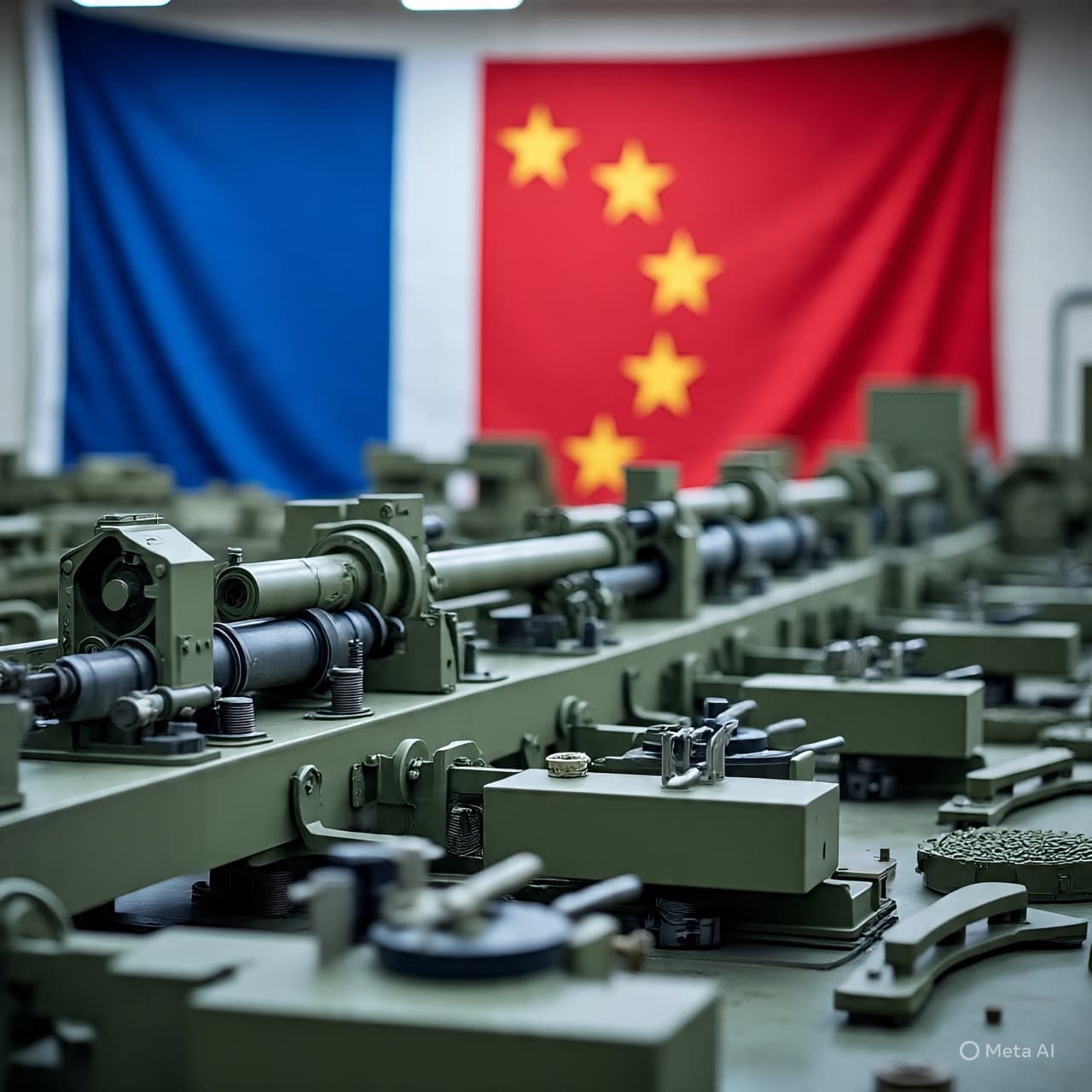
Walking through a workshop where a new generation of unmanned aerial systems or artillery components is being assembled, one hears not just the clang of metal but the murmur of a collective aspiration. Engineers and designers — some seasoned by years in traditional sectors, others shaped by the innovations of dual‑use technologies — are working under the long‑term vision that Europe must not defer its own future to others. Their task is not to withdraw from alliance or friendship, but to ensure that when the continent speaks of defense, its words have the weight of capability behind them.
Harmonizing the varied industrial traditions of Europe’s member states remains an ongoing task. Where once each nation maintained closely held defense programs — from French aircraft carriers to German armored vehicles and Spanish naval systems — today’s conversation often turns to how these efforts can be woven into a broader tapestry of joint action. The goal is not uniformity but strategic coherence: a system where investments align, research efforts reinforce one another, and procurement choices favor European‑wide benefit without fragmenting precious resources.
In straight news language, the European Union is pursuing a concerted effort to strengthen its defense industry and reduce reliance on external suppliers, particularly from the United States and China. Initiatives aim to mobilize substantial funding for joint defense development and procurement, while reports have highlighted that a majority of past European military equipment orders have gone to non‑EU suppliers. The push for greater self‑reliance reflects broader strategic concerns over geopolitical tensions and the need for the EU to build its own defense capabilities.
AI Image Disclaimer
Visuals are AI‑generated and serve as conceptual representations.
Sources (Media Names Only)
Defence News Xinhua Wikipedia (Readiness 2030)
Published by Banx Network. This article is part of the Banx decentralized media programme, powered by the BXE token on the XRP Ledger.