There are moments in international affairs when a single statement seems to echo beyond its immediate setting—carrying not only its words, but the possibility of what might follow. It is not always the loudest declaration that matters most, but the one that finds its way into an already unfolding conversation, adding a new layer to what is being considered.
In recent developments, has amplified Pakistan’s offer to host talks aimed at easing tensions with Iran. The gesture, while simple in form, carries a certain weight in timing. It arrives at a point when conflict and diplomacy appear to move side by side, each shaping the context in which the other is understood.
Pakistan’s willingness to provide a venue for dialogue reflects a broader effort within the region to create space for communication. Acting not as a central party, but as a facilitator, it offers an environment where discussions might take place without the immediate pressures of direct confrontation. Such roles, though often understated, can become significant when formal channels are strained.
By publicly endorsing this offer, Trump adds visibility to the proposal, bringing it into a wider sphere of attention. The amplification does not, in itself, alter the conditions on the ground, but it does highlight an ongoing interest in pursuing dialogue, even as tensions persist. It suggests that alongside strategic considerations, there remains an awareness of the value of conversation.
For Iran, the proposal and its endorsement are likely to be assessed with careful consideration. Questions of intent, timing, and substance inevitably shape how such offers are received. Public responses so far have remained cautious, reflecting a broader pattern in which diplomatic overtures are weighed against both present conditions and past experiences.
At the same time, the regional landscape continues to evolve. Military developments have not paused, and the broader context remains complex. In such an environment, the introduction of a potential venue for talks does not immediately shift realities, but it does add another dimension—one that exists alongside ongoing events.
There is also a wider audience to consider. Offers of dialogue, especially those publicly supported, are observed by multiple actors—each interpreting their significance in different ways. For some, they represent opportunity; for others, uncertainty. In this sense, the gesture resonates beyond the immediate participants.
Yet, even within this complexity, there is a certain continuity. Diplomacy often advances through incremental steps—offers, responses, and reconsiderations. Each action may appear modest on its own, but together they form the structure through which larger outcomes can emerge.
The current moment reflects that pattern. An offer is made, it is acknowledged and amplified, and it enters the broader flow of events. Whether it leads to formal talks or remains a possibility depends on factors that continue to unfold.
In the end, what remains is the presence of an option. Pakistan’s offer stands, now more visible through its endorsement, as a potential pathway within a landscape defined by both tension and dialogue.
For now, officials indicate that discussions around such talks are still at an early stage, with no confirmed timeline. The situation continues to develop, shaped by both actions on the ground and conversations yet to take place.
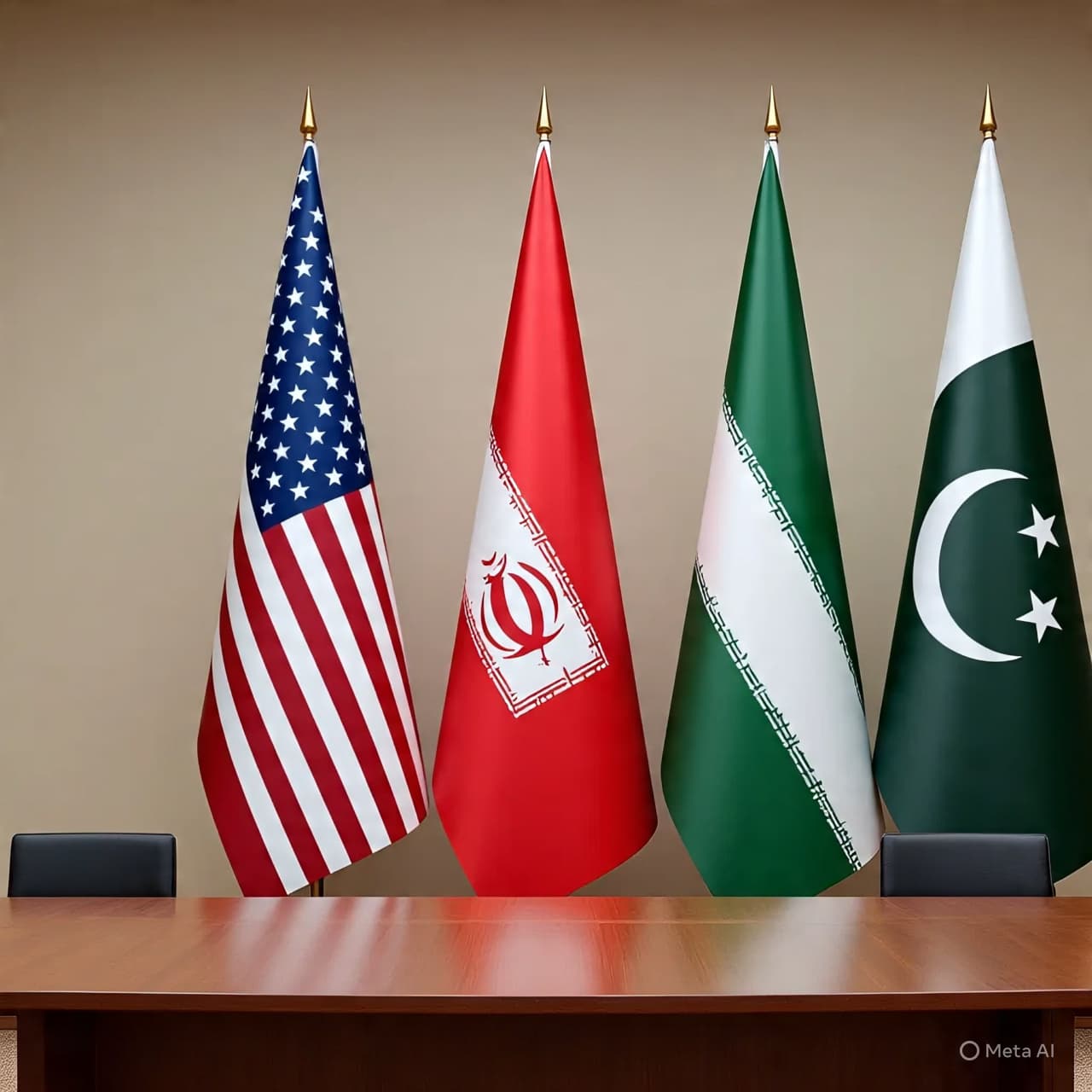
AI Image Disclaimer Illustrations were produced with AI and serve as conceptual depictions.
Source Check Credible coverage of this development exists. Key outlets reporting on it include:
Reuters BBC News Al Jazeera The New York Times Financial Times
Published by Banx Network. This article is part of the Banx decentralized media programme, powered by the BXE token on the XRP Ledger.