
Key Highlights
- France's diplomatic strategy faces scrutiny amid Middle East tensions.
- Macron's engagement with Iran raises concerns among Western allies.
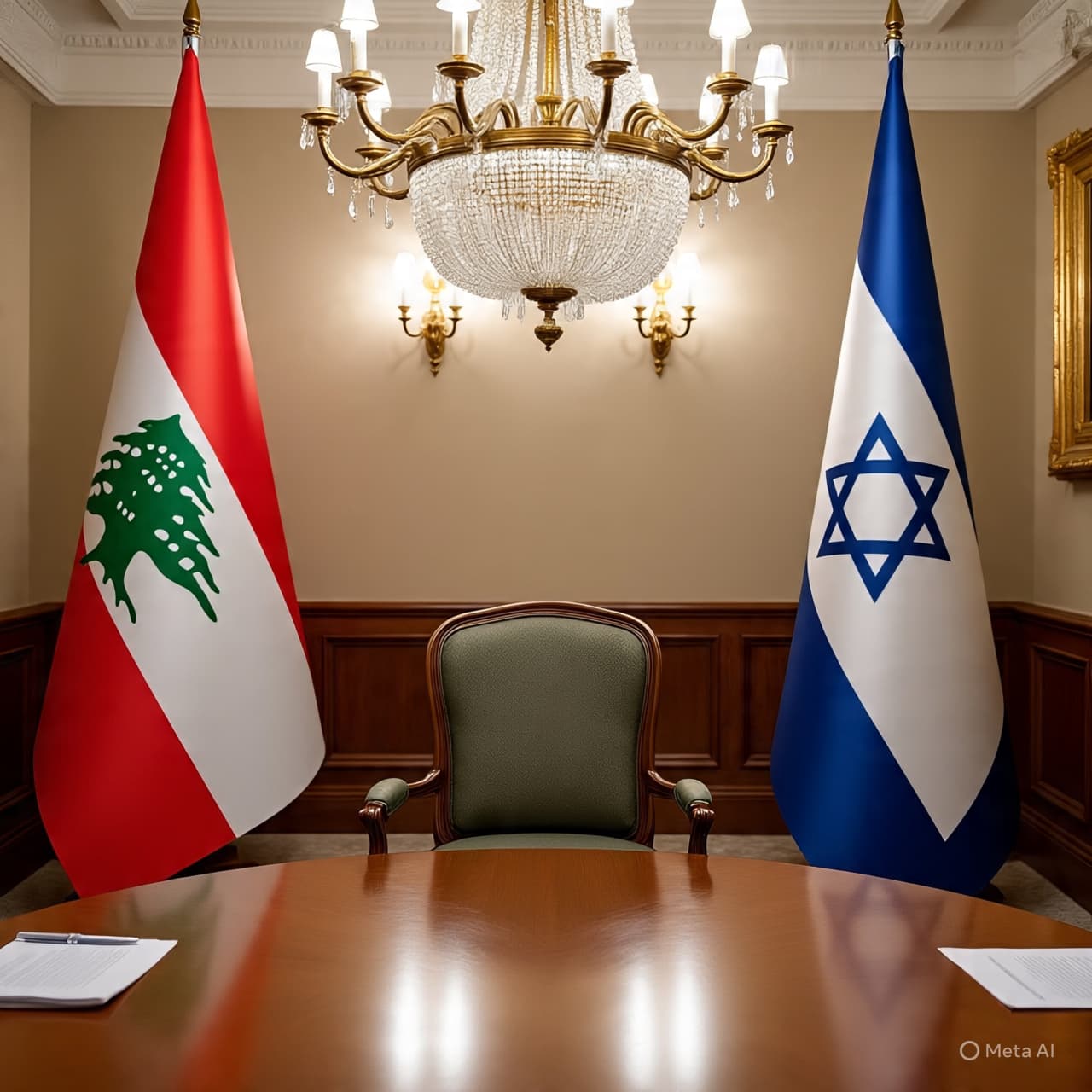
- Ongoing U.S.-led talks between Israel and Lebanon influence France's approach.
French President Emmanuel Macron is currently navigating a complex diplomatic landscape as tensions in the Middle East escalate. With the United States facilitating renewed discussions between Israel and Lebanon, France's approach to Iran and its relationship with Hezbollah is under increasing scrutiny. This situation highlights the delicate balance Macron must maintain as he seeks to position France as a mediator in a region fraught with conflicting interests.
At the core of the criticism is the question of how to engage with a region characterized by layered alliances and diverging definitions of legitimacy. France has historically positioned itself as a mediator, advocating for stability while maintaining diplomatic channels with Iran. However, this dual-track approach is now being tested as geopolitical urgency intensifies. Critics, particularly from Western and Israeli circles, argue that France's engagement with Iran may send mixed signals at a time when clarity is paramount.
The concern extends beyond policy; it encompasses perceptions of France's stance toward Iran and its allies, including Hezbollah. As the U.S. moves forward with talks aimed at addressing tensions along Israel's northern border, the implications of France's diplomatic choices become increasingly significant. French officials, however, assert that engagement does not equate to endorsement. They argue that dialogue is a necessary tool in a region where isolation often leads to deeper entrenchment rather than resolution.
The timing of these discussions adds another layer of complexity. As the U.S. facilitates negotiations, Hezbollah's firm resistance and skepticism toward external agreements loom large over any potential diplomatic progress. France's efforts to engage with multiple stakeholders can be viewed as either strategic patience or an approach that risks overextension. Within Europe, perspectives on France's position vary, with some policymakers viewing it as a continuation of its independent diplomatic tradition, while others question the sustainability of such independence amid shifting alliances.
Diplomacy rarely yields immediate clarity; it unfolds in layers, shaped by both spoken and unspoken elements. For Macron, the challenge lies not only in defending his policy choices but also in maintaining coherence amid competing expectations from allies, regional actors, and a global audience. As discussions progress in Washington and debates continue across European capitals, France's role remains part of a larger narrative where influence is measured by the ability to remain engaged in conversations that others may abandon.
In the coming days, the outcomes of these overlapping diplomatic efforts are expected to unfold gradually. France has indicated its commitment to continue engaging with regional actors while closely monitoring developments from the U.S.-led talks. As these parallel diplomatic tracks begin to intersect, the broader direction of France's policy may become clearer, revealing the intricate dynamics of international relations in a rapidly changing geopolitical landscape.
Published by Banx Network. This article is part of the Banx decentralized media programme, powered by the BXE token on the XRP Ledger.



