

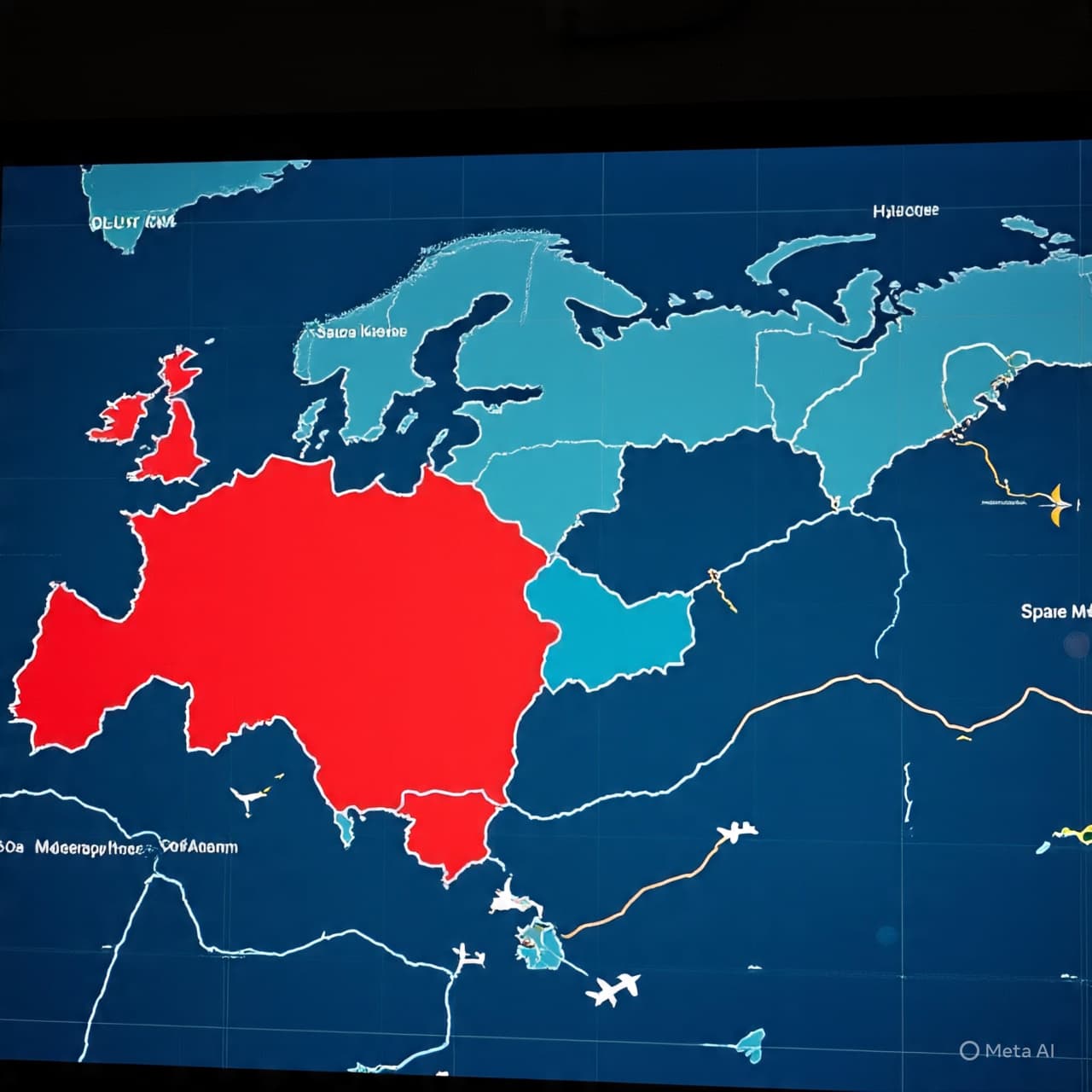
Key Highlights
- Spain restricts U.S. military aircraft access amid Iran tensions.
- The decision reflects a balance between alliance and autonomy.
- Airspace closure symbolizes Spain's cautious diplomatic stance.
Spain's recent decision to close its airspace to certain U.S. military aircraft linked to operations surrounding the Iran conflict marks a significant moment in international relations. This move, while subtle, carries profound implications for the dynamics of alliances and national autonomy. The airspace closure serves as a tangible boundary in a landscape often defined by invisible lines, illustrating how nations navigate complex geopolitical realities.
The decision does not indicate a complete rupture of ties with the United States but rather a recalibration of Spain's strategic posture. By restricting access to specific military flights, Spain is asserting its autonomy while maintaining its position within the broader framework of Western cooperation. This nuanced approach allows Spain to remain engaged in international affairs without being drawn into direct conflict, reflecting a desire for a balanced foreign policy.
The context surrounding this decision is multifaceted. Tensions involving Iran have escalated in recent years, impacting the calculations of allied nations. Spain's geographical position at the crossroads of Europe and Africa, coupled with its historical ties and domestic considerations, influences its response to these tensions. The Spanish government is likely weighing strategic commitments against public sentiment and regional stability, making this airspace closure a calculated move.
From a logistical perspective, closing airspace alters flight routes and operational planning for military operations. However, it also serves a symbolic purpose, conveying a message that participation in international conflicts has its limits. By opting for a measured response rather than outright condemnation, Spain is asserting its sovereignty while still acknowledging its alliances.
This decision reflects a broader trend within Europe, where unity among NATO allies coexists with individual member states' discretion. Spain's action can be seen as an expression of this flexibility, balancing solidarity with the need for national independence. It highlights the complexity of international relations, where countries must navigate their interests while remaining part of a collective framework.
The implications of Spain's airspace closure extend beyond its borders. For the United States, adjusting military operations in response to this restriction may be manageable, but it introduces new complexities into the relationship. This development serves as a reminder that cooperation among allies is not unconditional and that each nation must navigate its interests carefully.
As the situation evolves, the uncertainty surrounding international relations remains palpable. Decisions made today may shift as circumstances change, and Spain's current stance reflects a cautious approach to diplomacy. By choosing a middle path, Spain demonstrates that even amid conflict, there is room for nuanced expressions of national interests.
In conclusion, Spain's airspace closure is a significant gesture that underscores the delicate balance between alliance and autonomy in international relations. It highlights the importance of strategic decision-making in a complex geopolitical landscape, where nations must navigate their interests while maintaining diplomatic ties.
Published by Banx Network. This article is part of the Banx decentralized media programme, powered by the BXE token on the XRP Ledger.




