Technology often enters daily life quietly. A recommendation appears on a screen, a machine processes information in seconds, and systems begin making decisions that once required far more human effort.
Indonesia is preparing to take that transformation further by incorporating artificial intelligence into several major government programs. Reuters reported that the country's strategy includes using AI in the $15 billion free-meals program.
The proposal forms part of a broader digital-development strategy. Indonesian authorities believe wider adoption of AI could contribute significantly to economic growth by 2030.
For a country of more than 280 million people spread across thousands of islands, digital systems can potentially help government programs operate across geographic distances. Data can move faster than physical resources, allowing authorities to monitor activities and identify patterns.
The free-meals initiative provides one example of how AI could be incorporated into a large public program. Such a system could potentially assist with information management, distribution planning and monitoring, although specific applications would depend on how the program is ultimately designed.
Indonesia's interest in AI also extends beyond government services. Businesses, universities and technology companies are increasingly exploring artificial intelligence for manufacturing, financial services, education and digital commerce.
The country's expanding digital economy provides a substantial environment for that development. Millions of people already interact with digital platforms daily, creating large volumes of information that can be processed using increasingly sophisticated tools.
Yet the expansion of AI also brings practical questions. Reliable data, computing infrastructure, cybersecurity and skilled workers are all necessary if artificial intelligence is to produce useful results at national scale.
There is also the question of access. Indonesia's geography means that technological development can move at different speeds between major cities and more remote communities.
The government's strategy therefore represents more than the adoption of a new software tool. It reflects an attempt to make artificial intelligence part of the country's wider development infrastructure.
Indonesia's plans remain in the development stage, with implementation depending on regulations and individual government programs. But the direction is increasingly clear: artificial intelligence is moving from the technology sector into areas that directly affect public services and everyday economic activity.
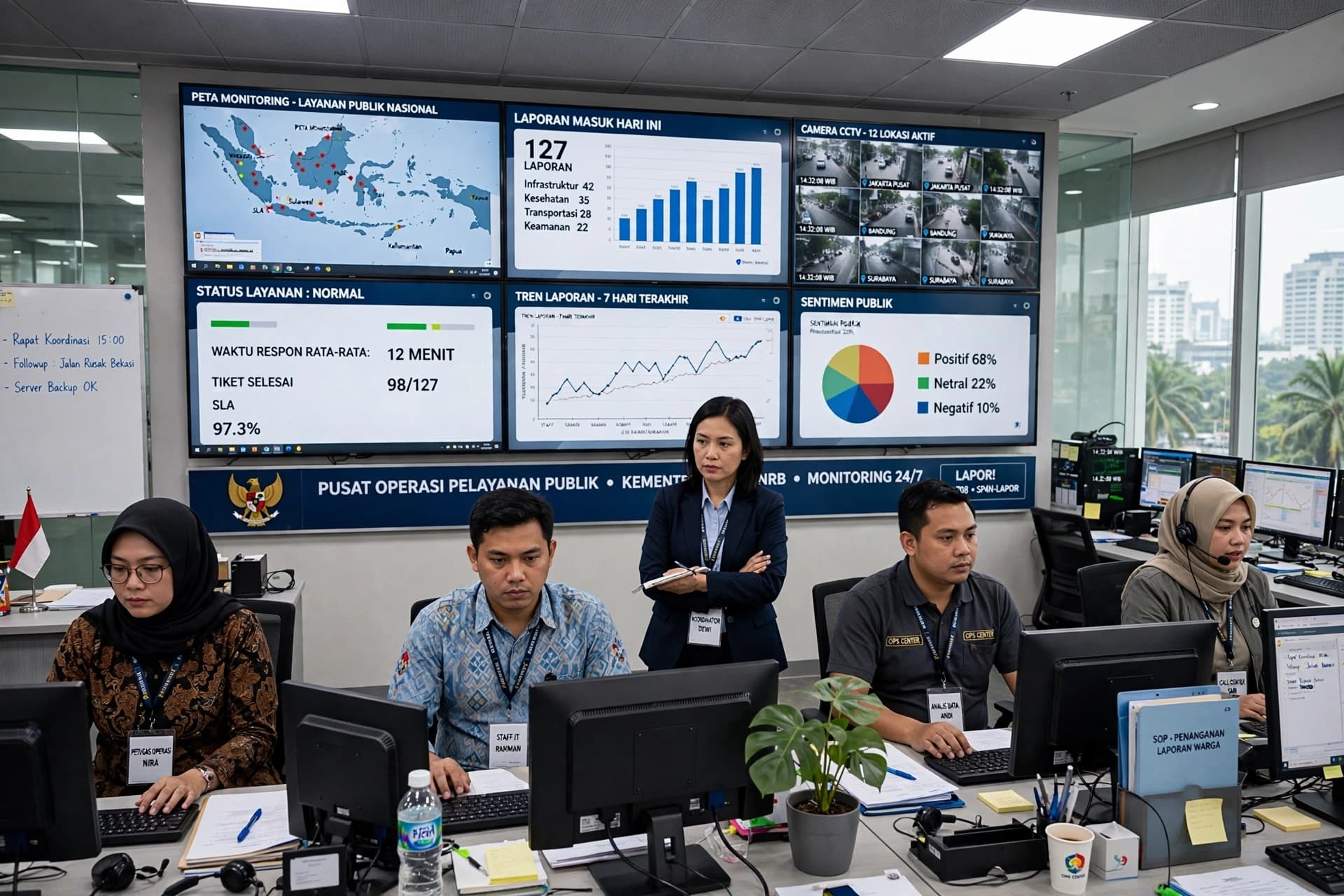
AI Image Disclaimer: The accompanying illustrations were created with AI as conceptual representations of Indonesia's artificial-intelligence development and digital infrastructure; they are not photographs of actual government projects.
Sources: Reuters Indonesian Ministry of Communication and Digital Affairs Indonesian Government
Published by Banx Network. This article is part of the Banx decentralized media programme, powered by the BXE token on the XRP Ledger.