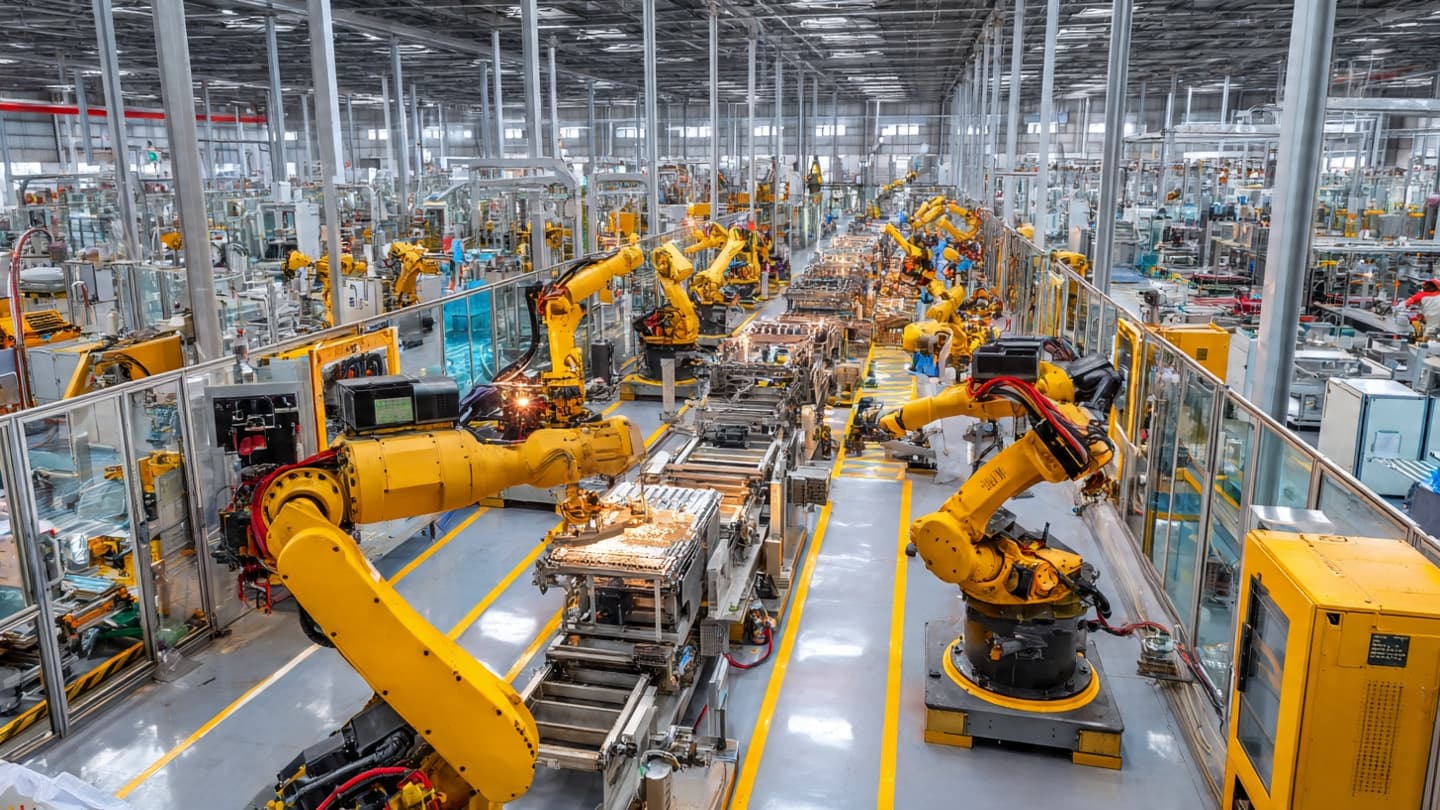
For years, a walking robot could draw a crowd simply by taking a few careful steps. Now the novelty is beginning to fade, and a more demanding question is taking its place: can the machine actually work? Across China, robotics companies are increasingly looking beyond the exhibition floor toward factories, warehouses and other environments where usefulness can be measured in repetition rather than applause.
At the World Robot Conference in Beijing, hundreds of Chinese companies displayed new machines as the country's robotics industry moved toward practical applications. Reuters reported that competitions and demonstrations increasingly emphasize complex tasks, including those requiring advanced robotic hands and coordination.
The change is significant because humanoid robots are expensive and technically complicated. Walking on two legs is only one part of the challenge. A useful industrial machine must also recognize objects, manipulate them, respond to unexpected conditions and repeat the same action reliably.
China has developed a substantial manufacturing ecosystem capable of supplying many of the components required for such machines. Motors, sensors, batteries, processors and precision mechanical parts can often be sourced within a country that already has extensive experience producing industrial robots and electronic equipment.
Artificial intelligence is providing another layer. Modern humanoid machines can use computer vision and AI systems to interpret their surroundings and decide how to move. That combination gives robots greater flexibility than traditional machines designed for one narrowly defined task.
The distinction matters on a factory floor. A conventional industrial robot may perform a single movement thousands of times with remarkable precision, but a humanoid robot is being designed to operate in spaces originally built for people. Its potential advantage is flexibility rather than simple repetition.
Chinese companies are therefore experimenting with logistics, assembly, inspection and other applications. The goal is gradually shifting from showing that a robot can perform a task once to demonstrating that it can do the same task economically and safely over long periods.
The country's robot competitions have also evolved. What began as relatively modest technical events have become large showcases of robotics capabilities, with machines being tested through increasingly complicated challenges. Reuters described the transformation as a move from science-fair demonstrations toward platforms emphasizing technological and commercial readiness.
The commercial test will ultimately be less dramatic than an exhibition performance. Businesses will ask how much a machine costs, how often it needs maintenance, how safely it operates around people and whether it can produce enough value to justify deployment.
China's robotics sector is now approaching that practical stage. The machines may still attract attention when they walk, run or manipulate objects, but their longer journey will be measured in quieter places: warehouses, production lines and workplaces where a robot must simply do its job.
SEO-friendly Slug china-humanoid-robots-industrial-applications-2026
Hashtags #China #Robotics #HumanoidRobots #ArtificialIntelligence #Technology #Science #Manufacturing
Image Disclaimer The visuals were generated with AI as conceptual representations of China's developing robotics industry and are not photographs of specific demonstrations.
Sources Reuters
Published by Banx Network. This article is part of the Banx decentralized media programme, powered by the BXE token on the XRP Ledger.