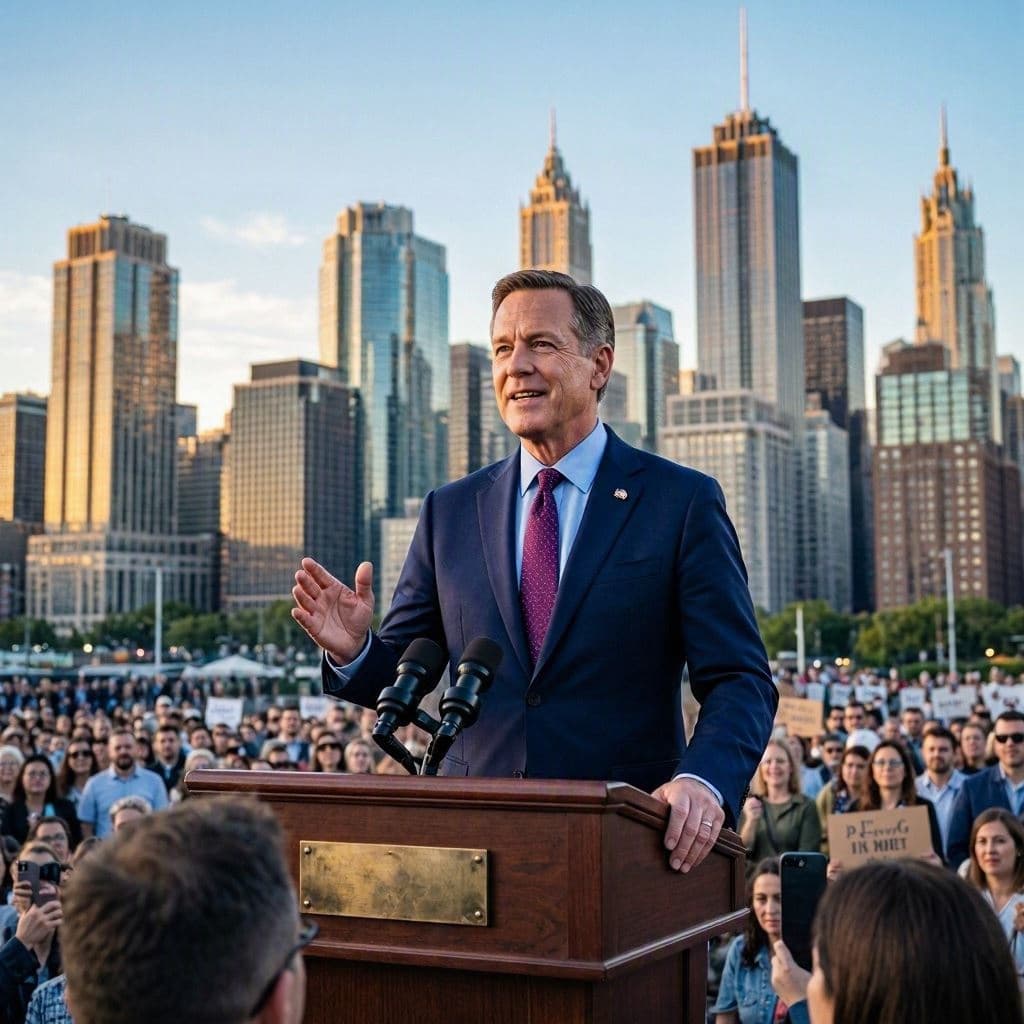
In the windy city of Chicago, where political alliances are as complex as its architecture, Mayor Brandon Johnson has officially announced his bid for reelection. Facing a challenging political landscape, Johnson is betting that the progressive base that propelled him to victory in 2023 will turn out in force once again. His announcement marks the start of a campaign focused on public safety, education, and economic equity, aiming to solidify his legacy amid growing criticism.
Johnson’s first term has been marked by bold initiatives, including increased funding for mental health services and police accountability measures. However, rising crime rates and budget deficits have drawn sharp criticism from moderates and business leaders. Despite these challenges, Johnson remains confident that his core supporters value his commitment to social justice and community investment. He argues that progress takes time and that abandoning these principles now would be a mistake.
The mayor’s strategy relies heavily on mobilizing young voters and communities of color, who have historically been key constituents for progressive candidates. By emphasizing issues such as affordable housing and workers’ rights, Johnson hopes to energize these groups and counteract potential apathy. His campaign team is working to highlight tangible achievements, such as new community centers and expanded after-school programs, to demonstrate the impact of his policies.
Opponents, including several prominent Democrats and independents, are already gearing up for a competitive race. They argue that Chicago needs a shift in direction, focusing more on fiscal responsibility and law enforcement. The primary battle is expected to be fierce, reflecting the deep divisions within the city’s Democratic party. For Johnson, winning the nomination is the first hurdle in a contest that will define Chicago’s future.
National attention is also fixed on Chicago, as the election is seen as a bellwether for progressive politics in urban America. Success or failure for Johnson could influence similar campaigns in other major cities. Political analysts are watching closely to see if the progressive model can sustain itself in the face of practical governance challenges. The outcome may offer insights into the evolving nature of American liberalism.
Community engagement will be crucial in the coming months. Town halls, door-knocking campaigns, and digital outreach will play significant roles in shaping public opinion. Johnson’s ability to connect with voters on a personal level, addressing their daily concerns, will be tested. The campaign is not just about policy but about trust and relationship-building in a diverse and demanding electorate.
As the election approaches, the stakes are high for Chicago. The city faces critical decisions on infrastructure, safety, and equity. Johnson’s bet on the progressive vote is a gamble on the enduring power of idealism in politics. Whether this strategy pays off will depend on his ability to deliver results while maintaining the enthusiasm of his base. In Chicago, the political journey is never straightforward, but it is always consequential.
AI Image Disclaimer: The visual content in this article is AI-generated to depict the themes of urban politics and community engagement.
Sources: Chicago Sun-Times, WTTW, NBC Chicago
Published by Banx Network. This article is part of the Banx decentralized media programme, powered by the BXE token on the XRP Ledger.