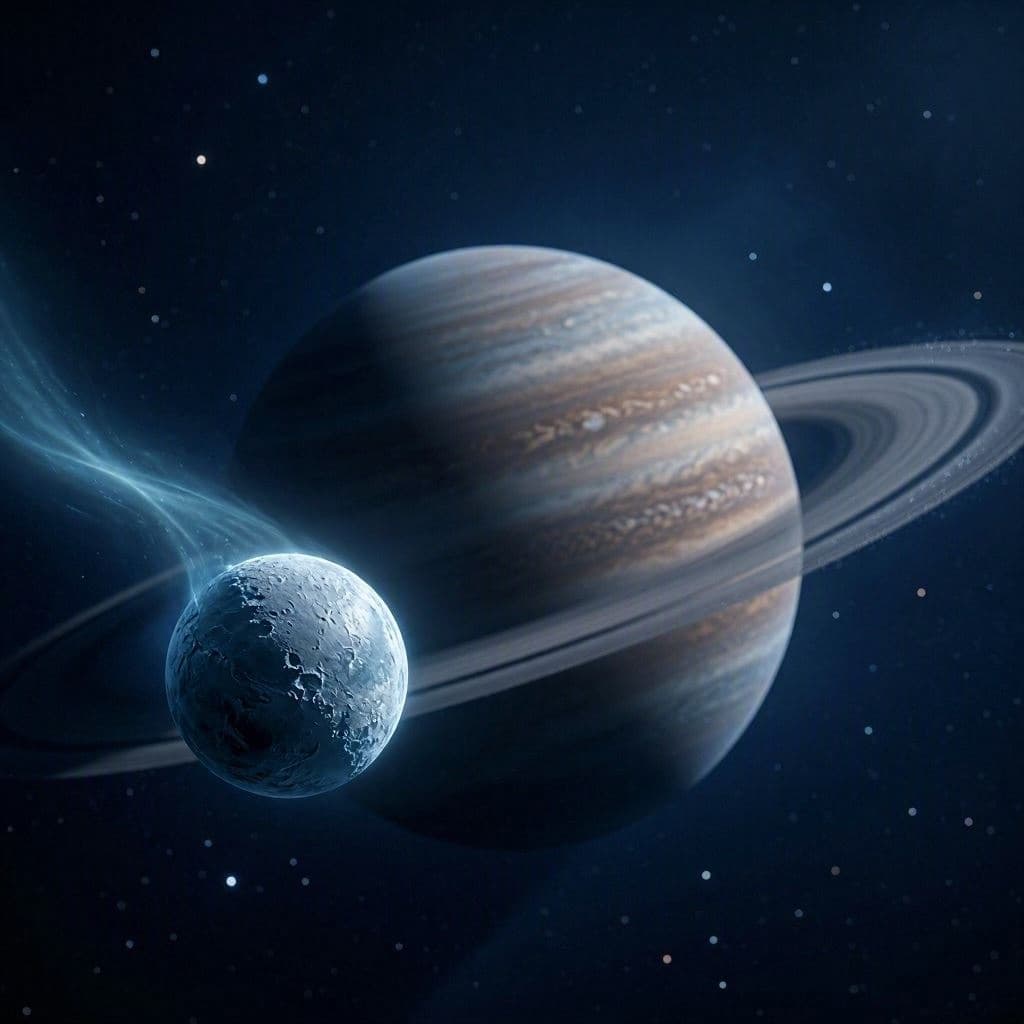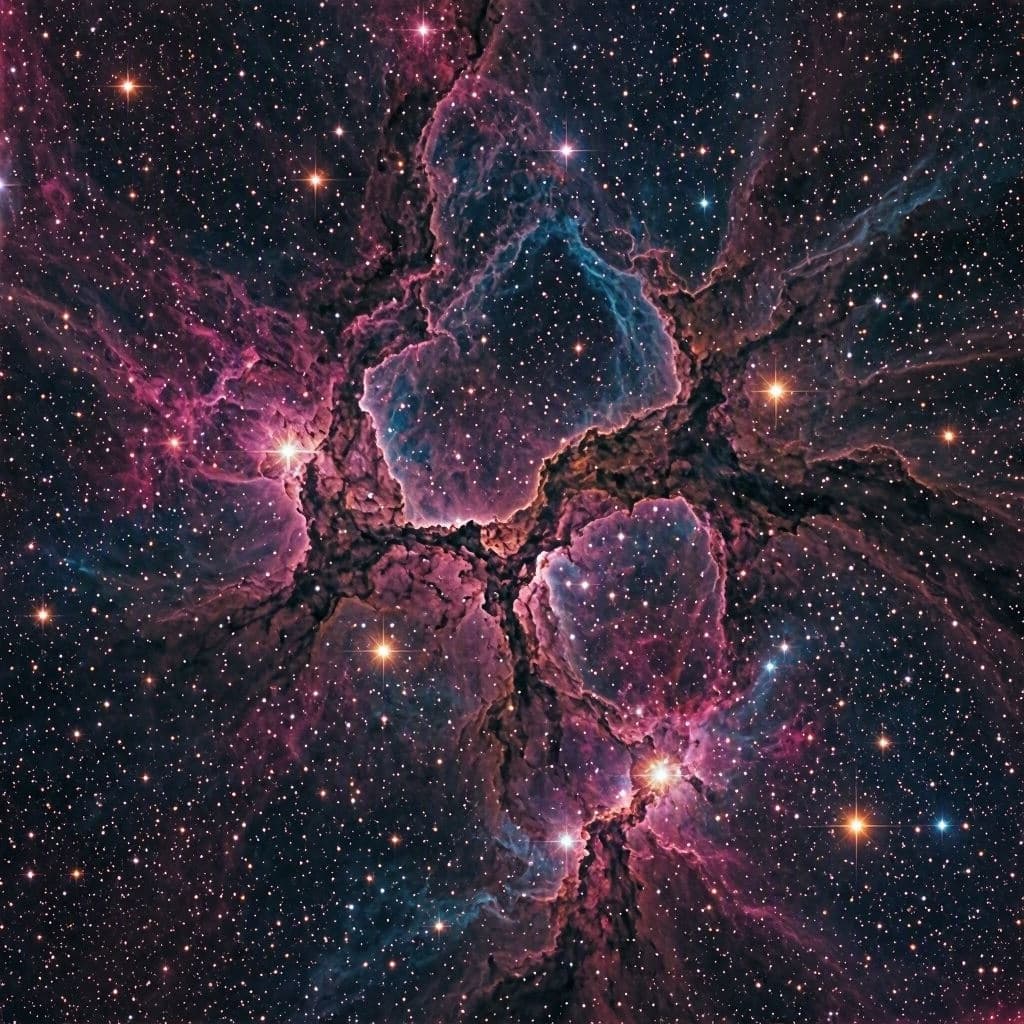
Betelgeuse, the red supergiant that anchors the shoulder of Orion, has long captivated astronomers with its unpredictable behavior. Recently, observations have revealed that its atmosphere is becoming increasingly spotty and asymmetric, deviating from the smooth, spherical shape often assumed in stellar models. Intriguingly, new research suggests that a hidden companion star may be influencing these patterns, gravitationally tugging at the giant’s outer layers. This discovery adds a layer of complexity to our understanding of stellar evolution and the dynamic interactions within binary systems.
The surface of Betelgeuse is a turbulent place, characterized by massive convection cells that rise and fall like boiling soup. These movements cause variations in brightness and shape, leading to the "spotty" appearance noted by researchers. However, the asymmetry observed goes beyond typical convective noise. It suggests an external force at work, one that distorts the star’s atmosphere in a consistent manner. The hypothesis of a companion star provides a plausible explanation for this persistent irregularity.
Detecting such a companion is no small feat. Betelgeuse is so bright and large that any nearby star would be drowned out by its glare. Researchers used advanced interferometry techniques to peer through the noise, analyzing subtle shifts in the star’s light and structure. The data hints at a smaller, fainter star orbiting close to Betelgeuse, its gravity creating tidal forces that stretch and distort the supergiant’s envelope. This interaction could be responsible for the uneven distribution of material in the atmosphere.
The presence of a companion also has implications for Betelgeuse’s future. As a red supergiant, it is nearing the end of its life and is expected to explode as a supernova within the next 100,000 years. A binary partner could influence the nature of this explosion, potentially affecting the distribution of ejected material and the formation of remnants. Understanding this relationship helps astronomers predict the final acts of massive stars with greater accuracy.
This finding challenges the notion that Betelgeuse is a solitary wanderer. Many massive stars are born in pairs or groups, and their interactions can significantly alter their evolutionary paths. The discovery encourages a re-evaluation of other red supergiants, suggesting that hidden companions may be more common than previously thought. It opens new avenues for research into the dynamics of stellar binaries and their role in shaping the cosmos.
For observers on Earth, Betelgeuse remains a majestic sight in the winter sky. Its reddish hue and prominent position make it a favorite for amateur and professional astronomers alike. Knowing that there may be a hidden partner dancing around it adds a narrative depth to its visual presence. It reminds us that even the most familiar objects in the night sky hold secrets waiting to be uncovered.
As technology improves, our ability to resolve these fine details will grow. Future missions and telescopes may provide direct evidence of the companion, confirming the current hypotheses. Until then, the spotty, asymmetric atmosphere of Betelgeuse serves as a clue, pointing toward the invisible forces that shape the lives of stars.
New evidence suggests a hidden companion star is influencing the asymmetric atmosphere of Betelgeuse, offering fresh insights into the dynamics of red supergiants and their eventual supernova explosions.
AI Image Disclaimer: Visuals associated with this article are computer-generated interpretations designed to complement the narrative, not actual photographic evidence.
Sources: The Astrophysical Journal ESO (European Southern Observatory) Space.com Scientific American
Published by Banx Network. This article is part of the Banx decentralized media programme, powered by the BXE token on the XRP Ledger.