For centuries, appeared to humanity as a brilliant but unreachable light in the evening sky, hidden beneath thick clouds that concealed its true surface. Modern planetary science has gradually revealed a world shaped by volcanic plains, crushing atmospheric pressure, and intense heat. Now, researchers say they have identified evidence of a massive underground lava tube on Venus, adding another intriguing feature to one of the solar system’s most extreme environments.
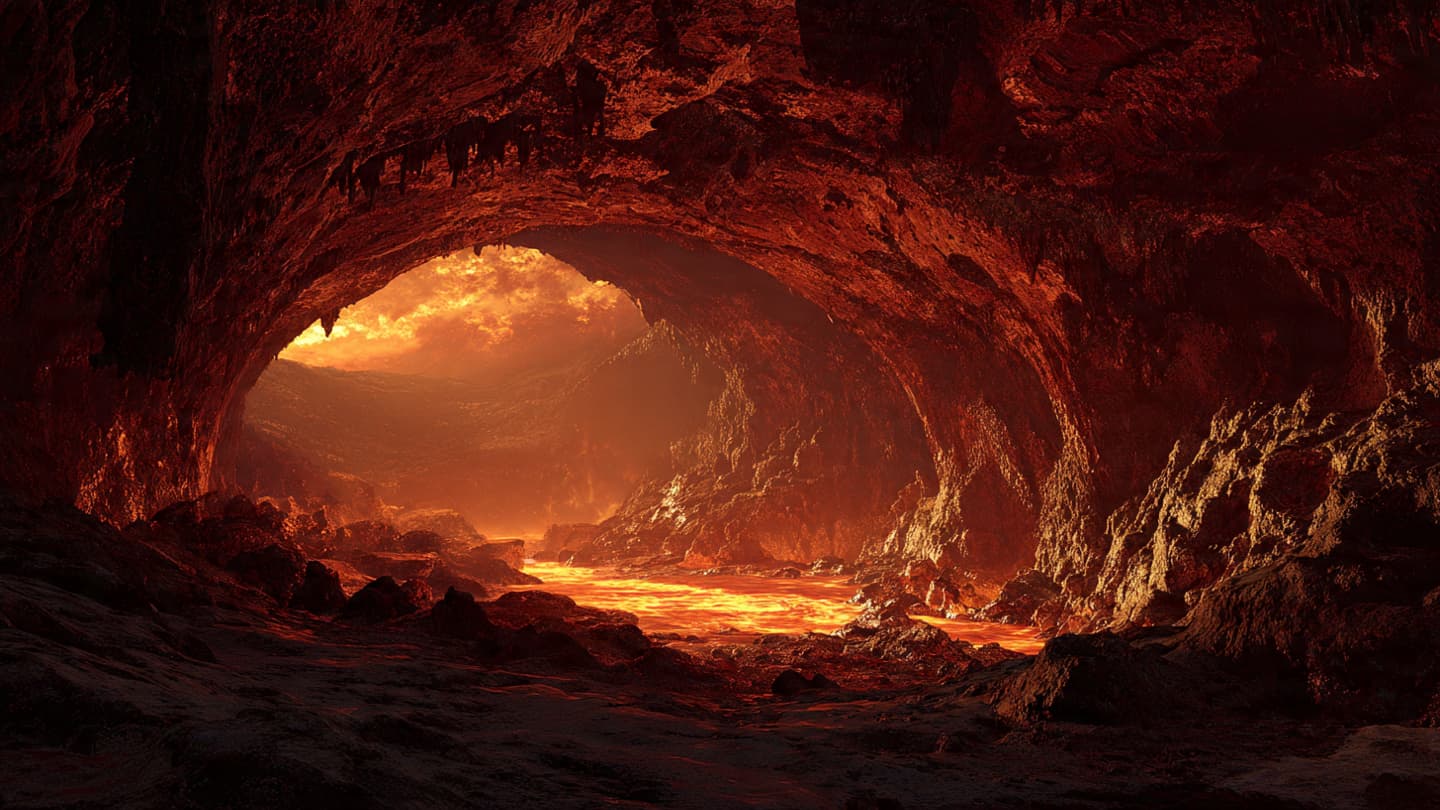
Lava tubes form when flowing lava cools and hardens along the surface while molten material continues moving beneath it. Once volcanic activity subsides, hollow tunnel-like structures can remain behind. Similar formations exist on Earth and the Moon, though Venusian examples may reach extraordinary scales due to the planet’s geological conditions.
Scientists identified the suspected structure through radar observations and surface analysis collected by planetary missions studying Venus from orbit. Because Venus’s dense atmosphere blocks ordinary visual observation, radar mapping plays a central role in examining its terrain.
Researchers believe the lava tube could stretch for enormous distances beneath the surface, potentially becoming one of the largest volcanic tunnel systems identified in the solar system. The formation may offer important clues about Venus’s volcanic history and internal geological activity.
Venus has increasingly regained scientific attention in recent years as space agencies prepare future missions aimed at studying the planet’s atmosphere, surface chemistry, and tectonic evolution. Despite often being described as Earth’s “sister planet” because of similar size, Venus developed into a radically different world dominated by extreme greenhouse conditions.
Some planetary scientists note that underground structures such as lava tubes may also preserve environmental information less affected by surface erosion and atmospheric conditions. Studying them could therefore improve understanding of how volcanic processes shaped the planet over time.
Lava tubes on other worlds also attract interest because they may eventually provide natural shelter for robotic or human exploration missions. On the Moon and Mars, researchers have discussed the possibility of using such formations for radiation protection and habitat development. Venus, however, remains far more hostile because of its extreme heat and atmospheric pressure.
The newly identified structure will likely become a focus for future planetary research as scientists continue refining maps of Venus’s hidden surface. The discovery reflects how even neighboring planets still contain landscapes waiting quietly beneath clouds and darkness to be understood.
AI Image Disclaimer: Some planetary visuals associated with this article may be AI-generated artistic recreations based on scientific models of Venus.
Sources: NASA, European Space Agency, Space.com, Nature Astronomy, Live Science
Published by Banx Network. This article is part of the Banx decentralized media programme, powered by the BXE token on the XRP Ledger.