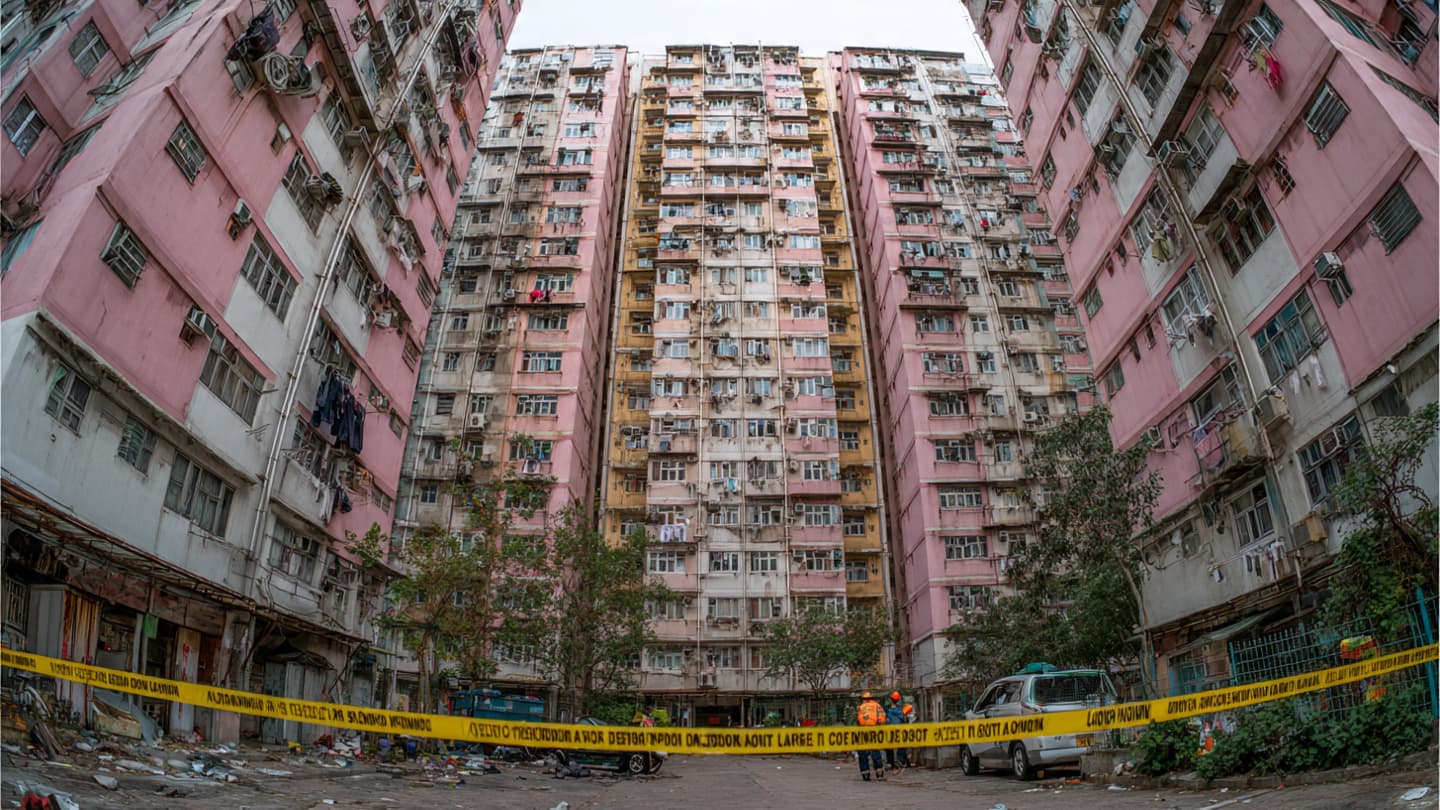
There are moments when a single building begins carrying the weight of an entire city’s anxieties. Its damaged walls become symbols of larger fears, and every blackened window seems to ask whether disaster was truly unavoidable. In Hong Kong, the aftermath of a deadly housing estate fire has once again drawn attention toward the uneasy relationship between rapid urban density and the systems designed to keep residents safe.
Authorities remain under growing scrutiny following the inferno that tore through a residential estate, with investigators examining whether oversight failures contributed to the scale of the disaster. The inquiry has focused on fire prevention systems, maintenance responsibilities, and the chain of communication between agencies tasked with monitoring safety conditions.
Residents who survived the blaze described scenes of confusion as thick smoke filled hallways and escape routes became increasingly difficult to navigate. Emergency responders worked through narrow corridors and stairwells while frightened occupants searched desperately for exits within the sprawling housing complex.
Testimony presented during the ongoing investigation suggested that earlier safety concerns involving the estate may not have received sufficient attention. Questions emerged regarding inspection procedures, repair delays, and whether warnings about potential fire hazards were adequately addressed before the incident occurred.
Housing advocates argue that the tragedy reflects deeper structural pressures affecting older residential developments across Hong Kong. Many estates continue housing large populations despite aging infrastructure, complicated layouts, and growing concerns over emergency preparedness in densely occupied buildings.
Government officials have stated that existing safety systems complied with regulations at the time, though investigators continue examining whether enforcement measures and maintenance practices were effective in practice. Public frustration has grown steadily as details from hearings reveal possible gaps between official standards and real-world conditions inside the estate.
Outside the damaged property, daily life has resumed cautiously. Residents pass temporary barriers and scaffolding while investigators continue reviewing evidence within smoke-stained sections of the building. Some displaced families remain in temporary accommodations as authorities assess structural safety and long-term recovery plans.
Across the city, conversations surrounding housing safety have moved beyond technical discussions into broader concerns about urban vulnerability. For many Hong Kong residents, the fire has become a stark reminder of how quickly ordinary routines inside crowded towers can unravel when systems fail under pressure.
Authorities confirmed that investigations into the estate fire remain active. Officials stated that recommendations involving inspection practices, maintenance oversight, and fire prevention measures may be introduced after the inquiry concludes.
Published by Banx Network. This article is part of the Banx decentralized media programme, powered by the BXE token on the XRP Ledger.