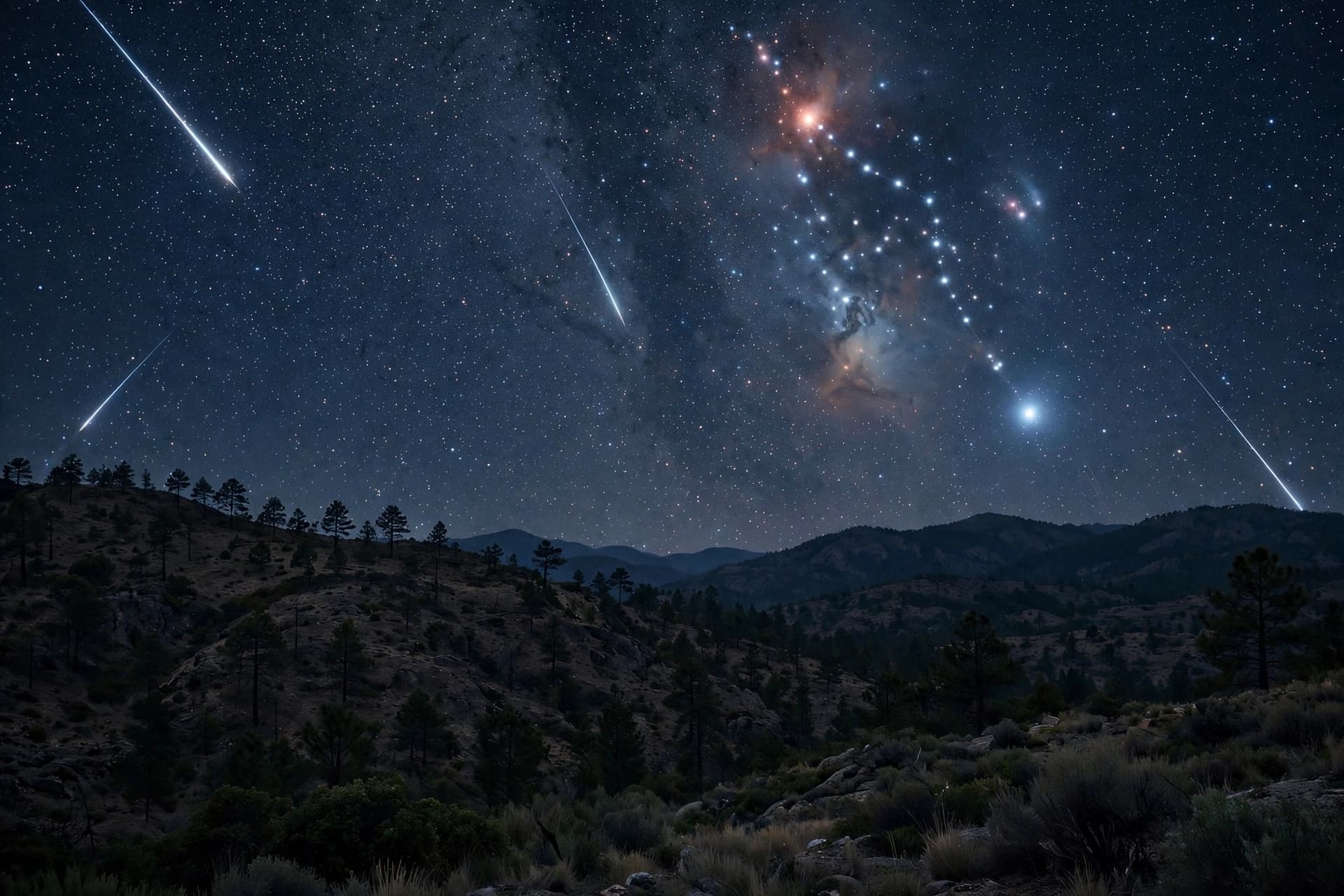
There are evenings when the sky feels closer than usual, as if the vastness above has leaned down to whisper something ancient into human ears. In February 2026, such evenings may return, when several planets gather in a quiet celestial procession — what many call a “planet parade.” It is not a parade with banners or music, but one of light and patience, unfolding across the dark canvas of night.
A planetary alignment does not mean the worlds line up in a perfect straight line like beads on a string. Rather, from our vantage point on Earth, several planets appear clustered along the same arc of sky, following the invisible path astronomers call the ecliptic. In February 2026, observers are expected to see a striking arrangement that may include Venus, Jupiter, Mars, Saturn, and possibly Mercury, depending on local viewing conditions.
What makes February 2026 special is not rarity in the strict astronomical sense — alignments occur from time to time — but the accessibility. Several of the brightest planets may become visible to the naked eye within the same window of twilight. For many, that simple act of looking up without the need for complex equipment will be invitation enough.
To witness this quiet gathering, timing and location will matter. The best opportunity is often shortly after sunset or before sunrise, when the sky is dark enough for planets to shine yet not so deep into night that some have already dipped below the horizon. Venus and Jupiter, typically the brightest, will likely appear first — steady points of light that do not twinkle like stars. Mars may glow with its familiar reddish hue, while Saturn’s golden tone will sit more subtly against the dusk.
Clear horizons are essential. An open western view after sunset — free from tall buildings or trees — can make the difference between a fleeting glimpse and a lingering experience. In urban areas, light pollution may dim the fainter planets, but the brighter ones should still pierce through. For those in rural settings, the spectacle may feel more expansive, stretching across a darker, richer sky.
No telescope is strictly necessary, though binoculars can enhance the experience. With modest magnification, Saturn’s rings may hint at their delicate structure, and Jupiter’s largest moons could appear as tiny beads beside the planet. Astronomy apps can help identify each world, guiding the eye from one to another along the gentle curve of the ecliptic.
Weather, of course, remains the final arbiter. Cloud cover can erase even the most carefully planned observation. Checking local forecasts in advance will increase the chance of success. And patience — that quiet companion of every skywatcher — will be invaluable.
In truth, the February 2026 planet parade is as much about perspective as it is about astronomy. These worlds are always there, moving in their ancient rhythms. Yet on certain nights, their geometry aligns with human curiosity, reminding us that we orbit the same sun, share the same cosmic neighborhood, and look up at the same sky.
When the month arrives, there will be no trumpet to announce it. Only a subtle brightening along the horizon, a scattering of steady lights, and the quiet awareness that, for a brief span of evenings, the solar system has chosen to gather in view.
AI Image Disclaimer Visuals are created with AI tools and are not real photographs.
Sources NASA Space.com Sky & Telescope National Geographic BBC Science Focus
Published by Banx Network. This article is part of the Banx decentralized media programme, powered by the BXE token on the XRP Ledger.