

Key Highlights
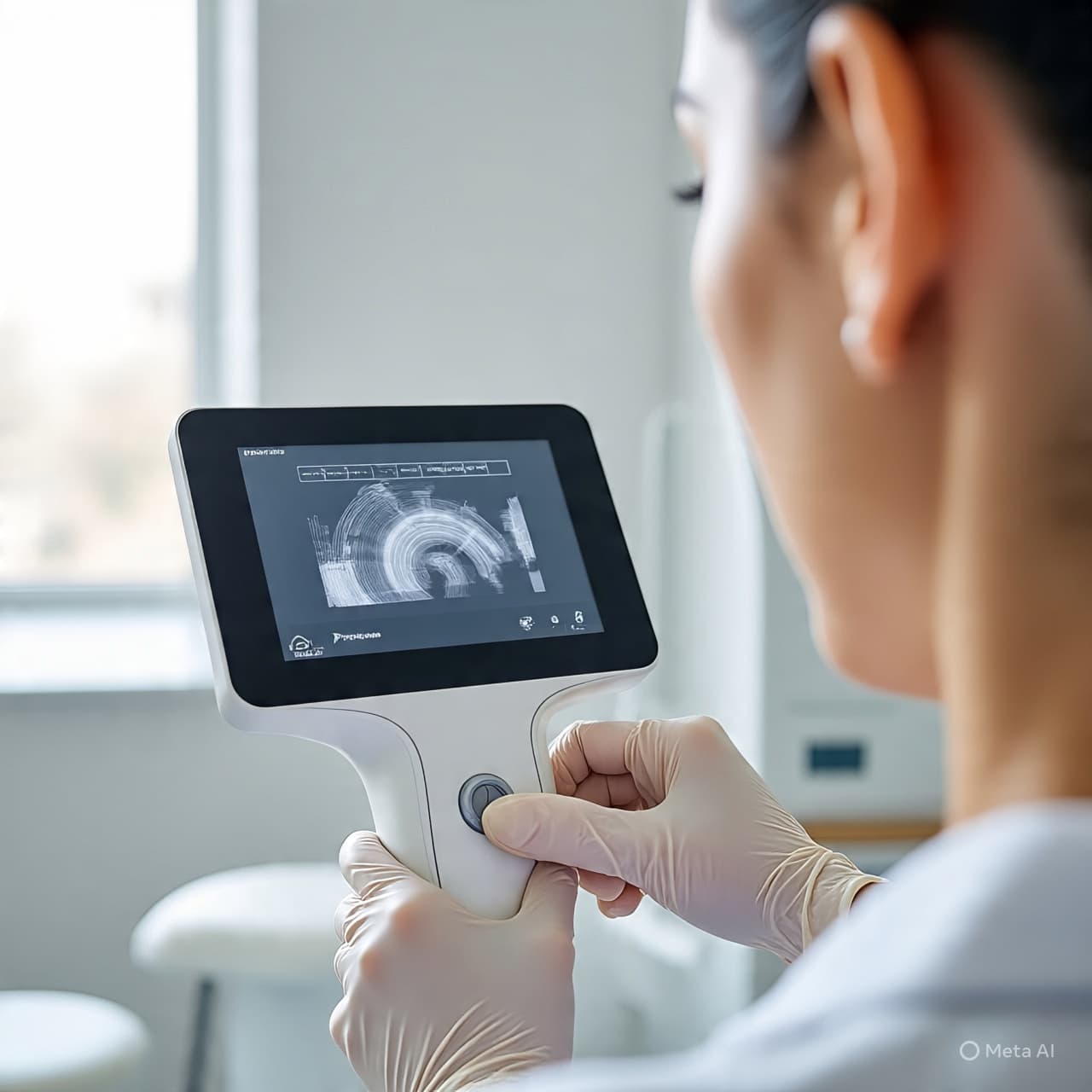
- New Technology:Near-infrared spectroscopy reveals subsurface collagen.
- Medical Applications:Potential uses in dermatology, orthopedics, and wound care.
- Non-Invasive:Offers detailed insights with minimal patient discomfort.
[Advancements in Medical Technology]
Beneath the surface of the human body lies a complex architecture—layers of tissue that support, protect, and connect. Among these, collagen forms a hidden framework, shaping skin, tendons, and organs with a strength that often goes unnoticed. Recent advancements in near-infrared (NIR) spectroscopy are beginning to illuminate this concealed world, providing a non-invasive method to assess subsurface collagen without the need for invasive procedures.
NIR spectroscopy operates on a principle that is both simple and intricate. By utilizing specific wavelengths of light, researchers can penetrate biological tissue and interact with molecular structures, producing signals that can be analyzed to determine the composition and integrity of collagen. This unique protein reflects and absorbs light in identifiable patterns, allowing for a deeper understanding of its role in the body.
The implications of this technology are vast and varied. In dermatology, NIR spectroscopy may assist in assessing skin aging or monitoring the effectiveness of various treatments. For orthopedics, it could provide critical insights into tendon health or recovery from injuries without the need for more invasive imaging techniques like MRI. This non-invasive approach not only enhances patient comfort but also opens new avenues for diagnostics and treatment.
[Applications in Wound Care]
In the realm of wound care, evaluating collagen beneath healing skin could enable clinicians to better understand tissue regeneration. This knowledge allows for more tailored interventions, shifting the focus from mere observation to a comprehensive understanding of healing processes. The balance between precision and gentleness in this technology reflects a broader trend in medical advancements, prioritizing patient experience alongside diagnostic accuracy.
Despite its promise, challenges remain in the implementation of NIR spectroscopy. Interpreting the signals generated requires sophisticated algorithms and careful calibration. Factors such as skin tone, hydration levels, and other biological variations can influence readings, necessitating ongoing refinement of the technology to ensure accuracy across diverse patient populations.
[Future Directions]
As NIR spectroscopy continues to evolve, its integration with other diagnostic tools may enhance its utility. Combining this technology with other data streams could provide a more comprehensive picture of tissue health, allowing for a multi-faceted approach to patient care. Furthermore, the development of this technology carries significant implications for research, as studying collagen dynamics in real time could deepen our understanding of aging, disease progression, and tissue repair.
In the quiet interplay of light and biology, a new form of visibility emerges—one that does not disturb what it observes but gently reveals it. As researchers continue to explore the potential of near-infrared spectroscopy, the hidden architecture of the human body may soon be more accessible than ever before.
Published by Banx Network. This article is part of the Banx decentralized media programme, powered by the BXE token on the XRP Ledger.




