The universe has often been described as a vast ocean of stars, galaxies, and unseen forces. Yet beneath that immense cosmic tapestry lies another layer, one that cannot be observed directly with the human eye. Australian scientists have now illuminated part of that hidden landscape by releasing what researchers describe as the most detailed map of cosmic magnetic fields ever assembled.
The breakthrough was announced by Australia's national science agency, CSIRO, through its ambitious SPICE-RACS project. Using observations gathered by the ASKAP radio telescope, researchers succeeded in mapping magnetic structures spread across enormous regions of the universe.
Magnetic fields are among the least understood components of the cosmos. Although invisible, they influence the behavior of charged particles, shape the evolution of galaxies, and affect processes occurring across interstellar space. Scientists have long sought to understand how these fields originated and evolved over billions of years.
The newly released map contains measurements from millions of distant radio sources, providing an unprecedented level of detail. Researchers say the dataset offers a valuable foundation for future investigations into some of astronomy's most enduring mysteries.
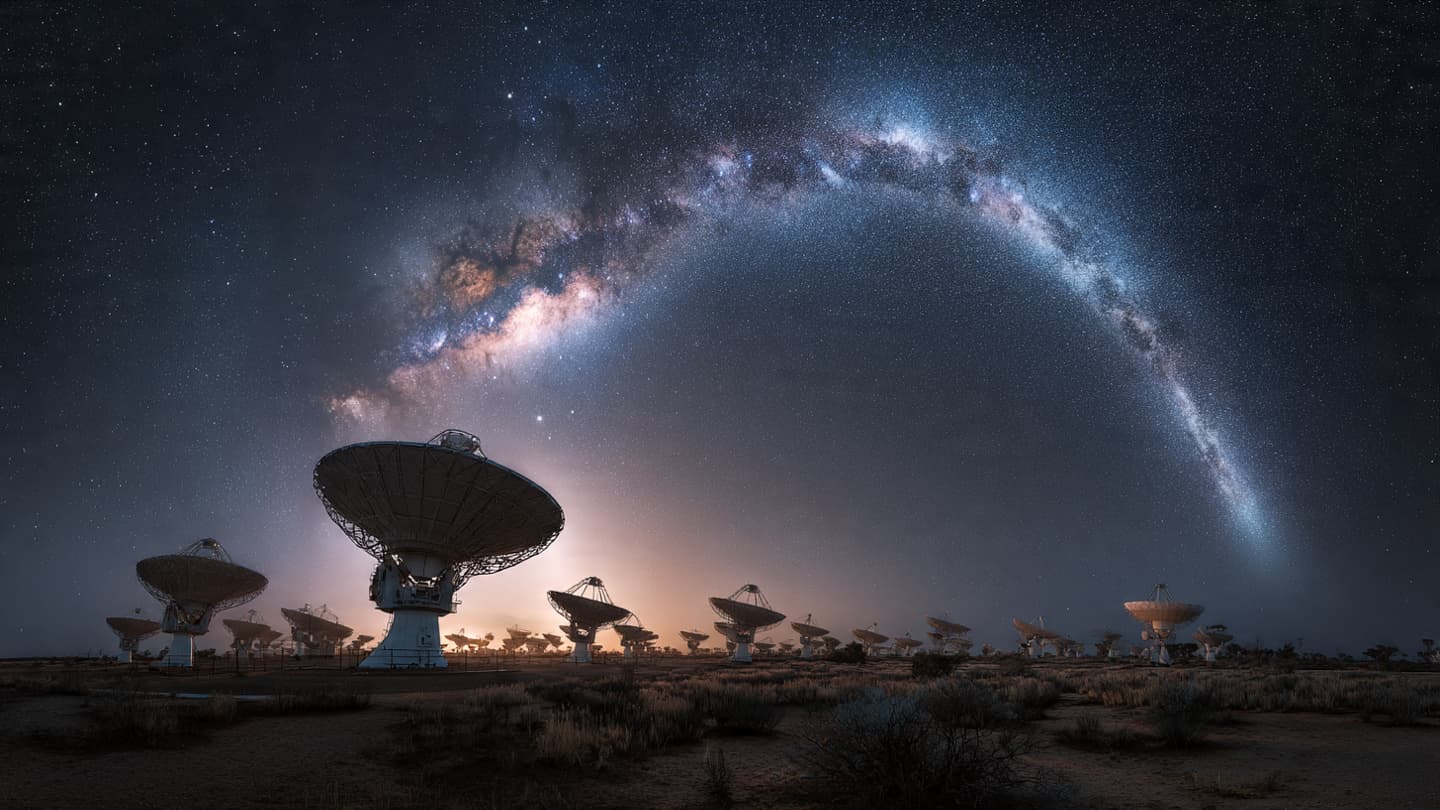
Central to the project is the Australian Square Kilometre Array Pathfinder, or ASKAP, located in Western Australia. The facility has become one of the world's leading radio astronomy instruments, enabling scientists to survey vast sections of the sky with remarkable sensitivity.
According to CSIRO researchers, the project may help answer questions concerning the formation of galaxies and the large-scale structure of the universe itself. Understanding cosmic magnetism could also improve scientific models describing how matter behaves in extreme environments.
International collaboration played a significant role in the achievement. Scientists from numerous institutions contributed expertise, reflecting the increasingly global nature of modern astronomical research.
The release of the map arrives at a time of rapid progress in radio astronomy. Future observatories, including the larger Square Kilometre Array project, are expected to expand humanity's understanding of the cosmos even further.
For now, the detailed magnetic atlas stands as both a scientific milestone and a reminder that even in an age of advanced technology, much of the universe remains beautifully unexplored.
AI Image Disclaimer: The images accompanying this article are AI-generated visualizations created for illustrative editorial purposes.
Sources: CSIRO, Nature Astronomy, Phys.org, Google News Australia
Published by Banx Network. This article is part of the Banx decentralized media programme, powered by the BXE token on the XRP Ledger.