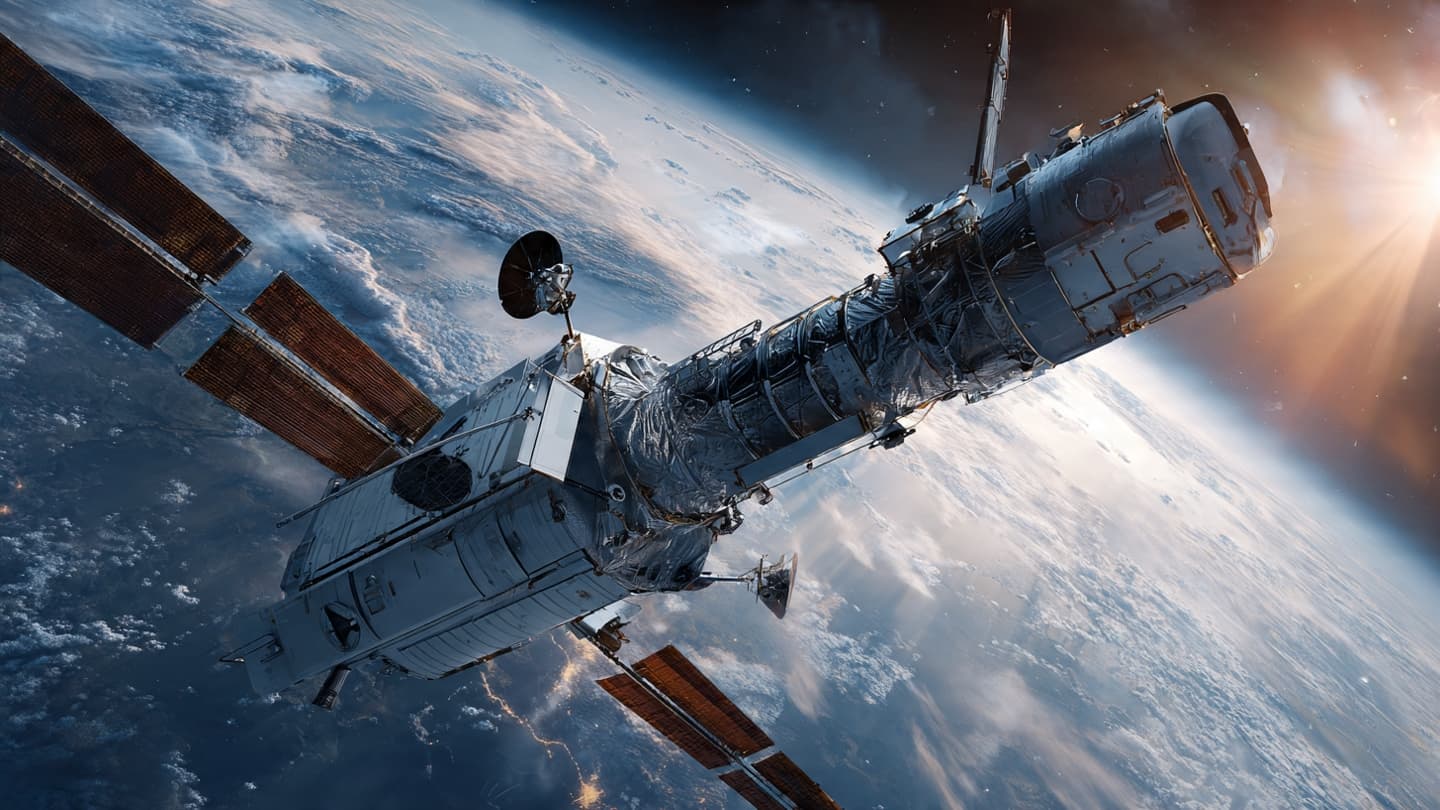
The life of a space telescope is often measured not only by years, but by the discoveries it leaves behind. Like an aging lighthouse still casting its beam across distant seas, NASA's Neil Gehrels Swift Observatory has continued to watch the universe long after many expected its mission to fade. Now, an unprecedented effort seeks to give the observatory a new chapter.
Launched in 2004, the Swift Observatory has spent more than two decades studying gamma-ray bursts, some of the most energetic events in the cosmos. Over the years, the telescope has contributed significantly to astrophysical research, helping scientists better understand black holes, neutron stars, and explosive stellar events.
However, Swift's orbit has gradually decayed due to increased atmospheric drag in low Earth orbit, a process intensified by heightened solar activity. Without intervention, the spacecraft could eventually reenter Earth's atmosphere.
To address the challenge, NASA has partnered with Arizona-based company Katalyst Space Technologies for a pioneering servicing mission known as "Swift Boost." The mission will use a robotic spacecraft called Link to rendezvous with and dock to Swift.
What makes the operation particularly notable is that Swift was never designed to be serviced in space. Engineers must carefully approach and attach to an observatory that lacks dedicated docking hardware, making the mission technically demanding.
If successful, the robotic spacecraft will raise Swift into a higher orbit, potentially extending its operational life by several years. Such an achievement could demonstrate a new model for maintaining and upgrading aging satellites and scientific spacecraft.
The broader implications extend beyond astronomy. Future missions could employ similar technologies to service satellites, reduce space debris, and improve the sustainability of activities in Earth orbit.
For NASA and its partners, the mission represents more than an effort to preserve a valuable observatory. It also serves as a test of whether robotic servicing can become a routine part of future space operations.
AI Image Disclaimer: The images accompanying this story are AI-generated visual interpretations intended solely for illustration.
Sources: NASA, Space.com, Reuters, Katalyst Space Technologies
Published by Banx Network. This article is part of the Banx decentralized media programme, powered by the BXE token on the XRP Ledger.