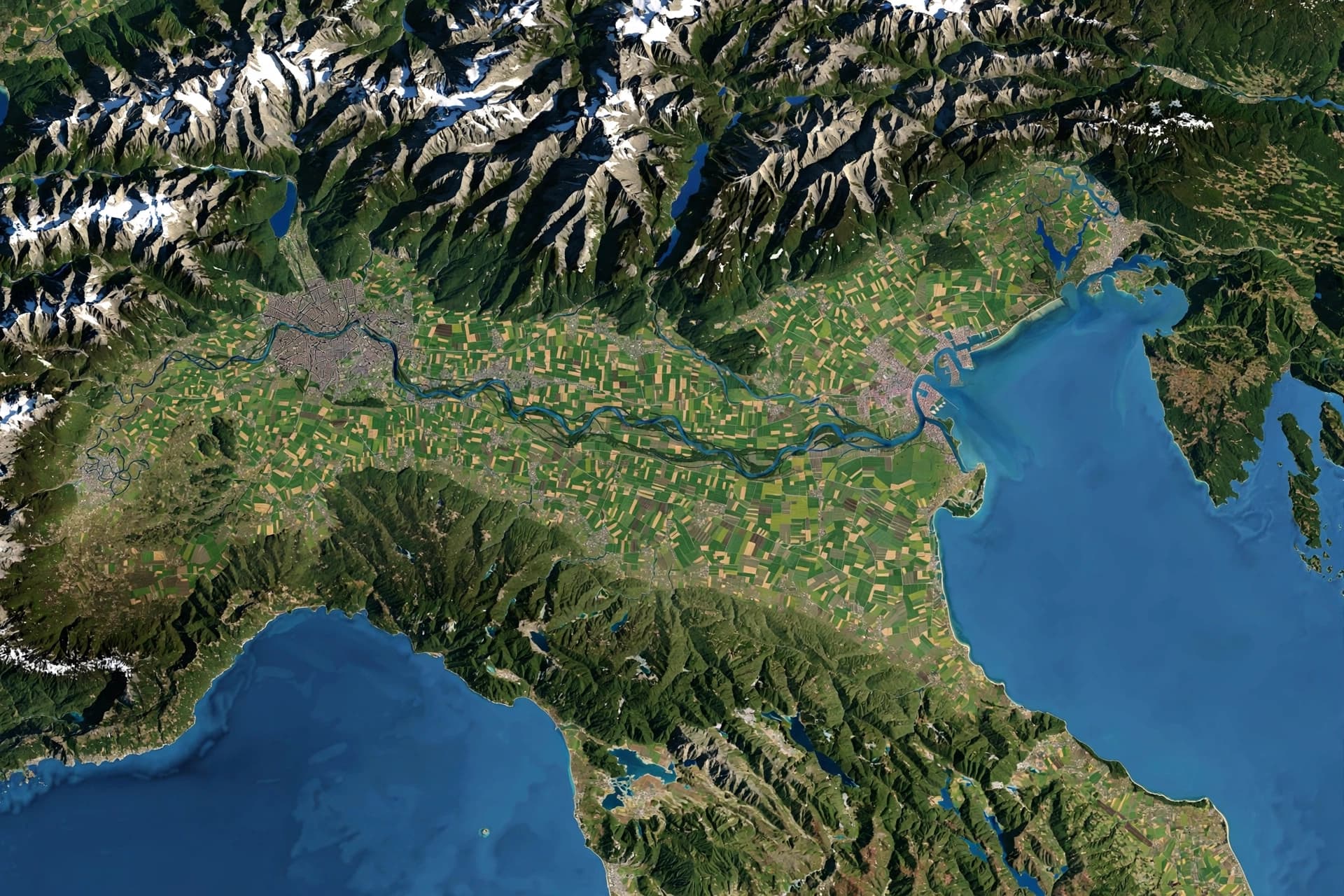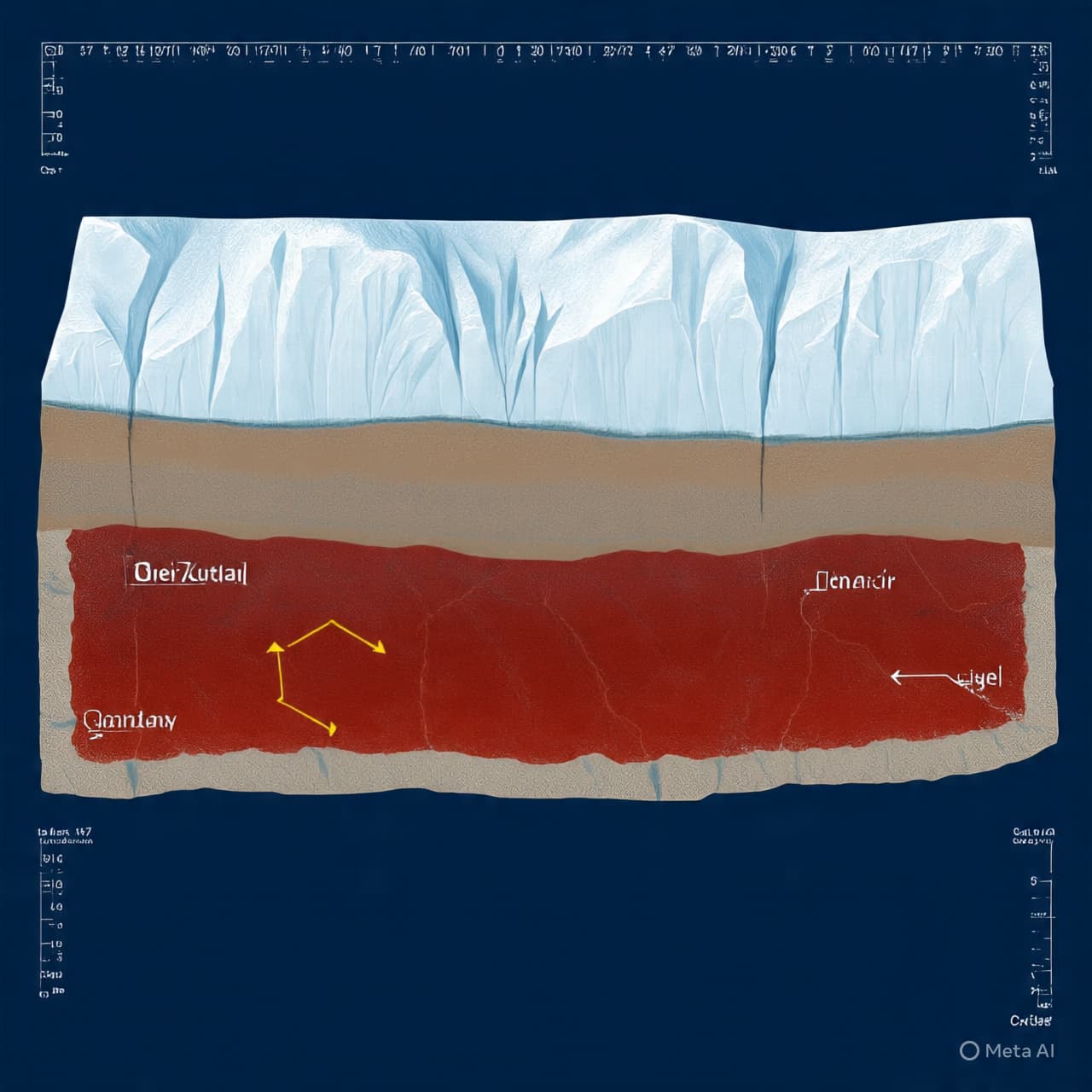
In the farthest reaches of the southern world, where ice stretches like an unfinished sentence across the horizon, Antarctica has long kept its secrets in silence. Beneath its frozen surface lies not only ancient climate records and buried mountain ranges, but quiet gravitational whispers — subtle shifts that scientists patiently decode from orbit. Now, one of those whispers appears to be growing louder.
Researchers have reported that a vast gravity anomaly beneath is intensifying. The phenomenon, known as the Wilkes Land gravity anomaly, represents a massive region where gravitational pull behaves differently from surrounding areas. While gravity varies slightly across Earth due to differences in mass distribution, this particular anomaly has long intrigued scientists for both its size and persistence.
The anomaly spans hundreds of miles beneath East Antarctica. Measurements collected over decades — including satellite data from missions led by — have allowed researchers to refine their understanding of the region’s mass structure. Gravity data is subtle by nature; it does not announce itself dramatically. Instead, it reveals patterns through long-term observation, careful modeling, and comparison.
At its core, the gravity anomaly suggests an unusually dense structure beneath the ice sheet. Some studies have proposed that it may be linked to ancient tectonic activity, possibly even the remnants of a massive asteroid impact buried deep below the ice. Others point toward mantle processes — movements of molten rock within Earth’s interior that slowly redistribute mass over geological time.
Recent analyses indicate that the gravitational signal in parts of the region appears to be strengthening. Scientists caution that the term “stronger” does not imply sudden upheaval, but rather a measurable shift detected through advanced satellite instrumentation. These changes may reflect ongoing mass redistribution beneath the crust, adjustments in mantle dynamics, or even long-term ice mass fluctuations affecting gravitational readings.
Antarctica’s ice sheet itself plays a role in this delicate equation. As climate patterns influence ice accumulation and melting, the redistribution of surface mass can subtly alter gravitational measurements. Separating surface effects from deep geological processes requires precision and patience. Researchers rely on decades of satellite observations, seismic data, and computer modeling to untangle these overlapping influences.
The strengthening anomaly does not signal immediate danger, nor does it suggest imminent geological disruption. Instead, it offers scientists another piece of the planet’s interior puzzle. Understanding such anomalies helps refine models of Earth’s structure, plate tectonics, and mantle convection. It also enhances the calibration of satellite systems used to monitor sea level rise and ice mass balance globally.
Antarctica, often perceived as static and frozen in time, remains geologically dynamic beneath its icy shell. The continent drifts, the mantle flows, and gravity responds in subtle increments. Each measurement contributes to a broader portrait of Earth as a living system — layered, shifting, and interconnected.
In straightforward terms, scientists report that a large gravity anomaly beneath Antarctica appears to be intensifying based on satellite observations. The findings contribute to ongoing research into Earth’s internal structure and Antarctic mass distribution, with further studies expected to clarify the underlying causes.
AI Image Disclaimer Images in this article are AI-generated illustrations, meant for concept only.
Sources (Media Names Only)
NASA Live Science ScienceAlert The Guardian Reuters
Published by Banx Network. This article is part of the Banx decentralized media programme, powered by the BXE token on the XRP Ledger.