
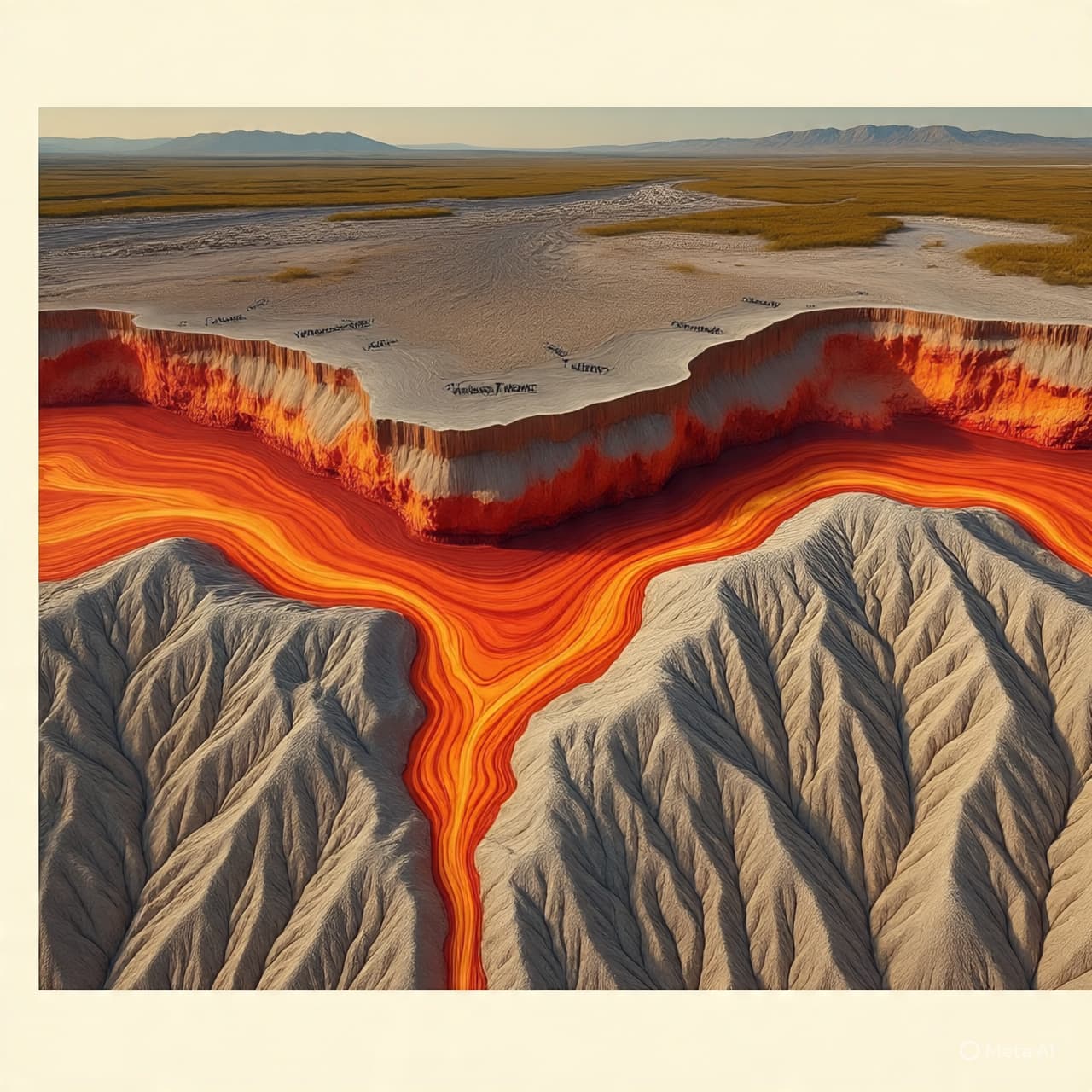
Key Highlights
- New Study:Research reveals multiple heat sources may power Yellowstone.
- Geological Insights:Advanced imaging techniques uncover complex interactions.
- Safety Assurance:No immediate eruption risk despite new findings.
[Understanding Yellowstone's Volcanic System]
Beneath the calm landscapes of Yellowstone lies a force both ancient and enduring. It serves as a reminder that the Earth, though often steady beneath our feet, holds within it layers of motion and heat that rarely reveal themselves directly. For decades, scientists have sought to understand what fuels one of the world’s most closely watched supervolcanoes, and a recent study has shed new light on this enigmatic geological feature.
The study suggests that Yellowstone’s immense volcanic system may be powered by a previously underestimated source. Rather than relying solely on a deep mantle plume rising from the Earth’s core, researchers propose that additional heat and material may come from shallower processes within the mantle. This finding challenges a long-standing model of how supervolcanoes are sustained, which traditionally held that a narrow column of hot rock, known as a mantle plume, feeds the magma chamber beneath Yellowstone. While this mechanism remains relevant, the new research indicates that it may not tell the whole story.
Using advanced imaging techniques, scientists have mapped the structures beneath the Yellowstone region with greater detail than ever before. These images reveal complex interactions between layers of the Earth’s interior, suggesting that heat may be distributed more broadly than previously thought. The presence of a shallower heat source could help explain certain geological features observed in the area, including the behavior of geysers and hot springs, which are characteristic of Yellowstone’s geothermal activity.
Importantly, researchers emphasize that the findings do not indicate an increased risk of eruption. Yellowstone remains closely monitored, and current data shows no signs of imminent volcanic activity. The study is focused on understanding processes, not predicting immediate events. This assurance is crucial for the millions of visitors who flock to the park each year, drawn by its natural beauty and geological wonders.
The broader significance of this research lies in how scientists model volcanic systems worldwide. If Yellowstone’s power is indeed supported by multiple sources, similar mechanisms could exist elsewhere, prompting a reevaluation of volcanic behavior on a global scale. This could lead to improved predictive models and a better understanding of volcanic risks in various regions.
Geology often unfolds over timescales far beyond human perception. Discoveries like this remind us that what appears stable may still be evolving, quietly shaped by forces deep below. As research continues, Yellowstone remains both a subject of study and a symbol of Earth’s dynamic nature. The ground may seem still, but beneath it, the story is always in motion.
Published by Banx Network. This article is part of the Banx decentralized media programme, powered by the BXE token on the XRP Ledger.



