
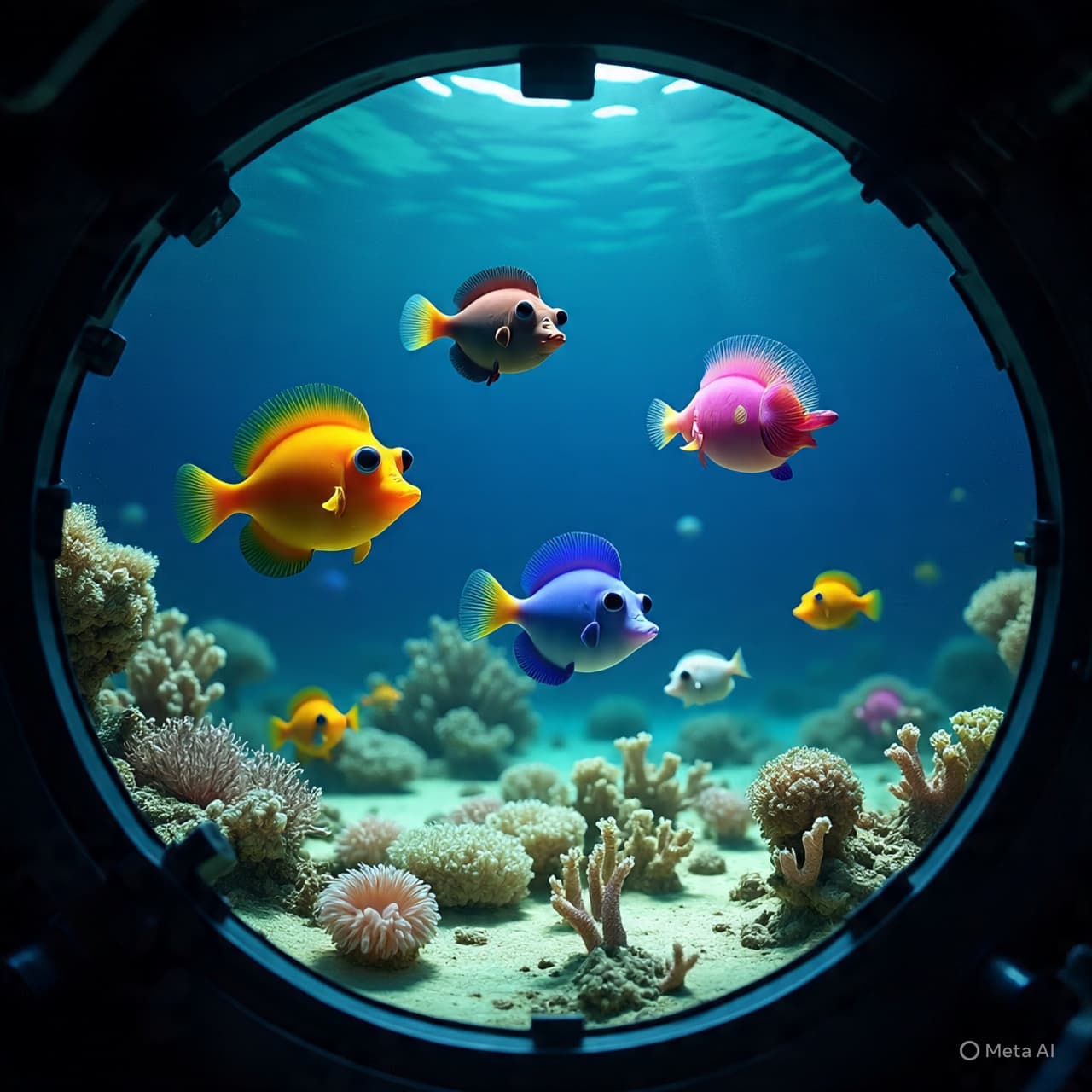
There are places on Earth that feel untouched not only by human presence, but by expectation itself. Remote, distant, and largely unseen, they exist in the imagination as empty spaces—blank regions where little is thought to live or grow.
Yet the natural world has a way of resisting such assumptions.
In a remote marine region off the coast of , scientists set out to study what they believed would be a largely barren seafloor. Instead, what they encountered was something far more intricate: a hidden ecosystem, alive with unfamiliar forms, and rich with possibility.
The expedition revealed 28 potential new species, ranging from delicate invertebrates to unusual marine organisms adapted to life in extreme conditions. These discoveries, still under study, may expand our understanding of biodiversity in one of the least explored environments on the planet.
The deep sea is often perceived as empty due to its darkness, cold temperatures, and immense pressure. Sunlight does not reach these depths, and food sources can be scarce. Yet, life persists—evolving in ways that are both subtle and extraordinary.
Creatures found in such environments often rely on unique adaptations. Some develop slow metabolisms to conserve energy, while others form symbiotic relationships that allow them to survive where resources are limited. In certain cases, entirely new biological strategies emerge—ones that challenge established scientific understanding.
The findings also highlight how much of Earth’s oceans remain unexplored. Despite advances in technology, large portions of the seafloor are still largely unknown, leaving room for discoveries that can reshape how scientists view marine ecosystems.
Expeditions like this often depend on remotely operated vehicles and deep-sea imaging tools, allowing researchers to observe and collect samples from environments otherwise inaccessible to humans. Through these methods, the once-invisible becomes visible, and assumptions can be tested against reality.
The discovery of so many potential new species in a single region suggests that biodiversity in the deep ocean may be far richer than previously believed. What appears empty from above may, in fact, be quietly teeming with life below.
There is also a broader implication.
Understanding these ecosystems is not only a matter of scientific curiosity, but of conservation. As human activity expands into deeper parts of the ocean—through fishing, mining, and exploration—the need to understand and protect these fragile environments becomes increasingly important.
In this sense, the discovery carries both wonder and responsibility.
Researchers continue to analyze the collected specimens to confirm whether they represent entirely new species. Further expeditions may provide additional insight into the region’s ecosystem and its role within the broader ocean environment.
AI Image Disclaimer Visuals are created with AI tools and are not real photographs.
Source Check Credible sources covering the topic “New species discovered on seafloor in Argentina”:
National Geographic BBC Science Nature Science Magazine The Guardian
Published by Banx Network. This article is part of the Banx decentralized media programme, powered by the BXE token on the XRP Ledger.



