
Key Highlights
- Supercell storm:Glasgow experienced a severe supercell storm with gusts exceeding 90 mph.
- Power outages:Over 60,000 homes in Scotland faced power outages due to the storm's impact.
- Emergency response:Emergency services worked tirelessly to clear debris and secure damaged buildings.
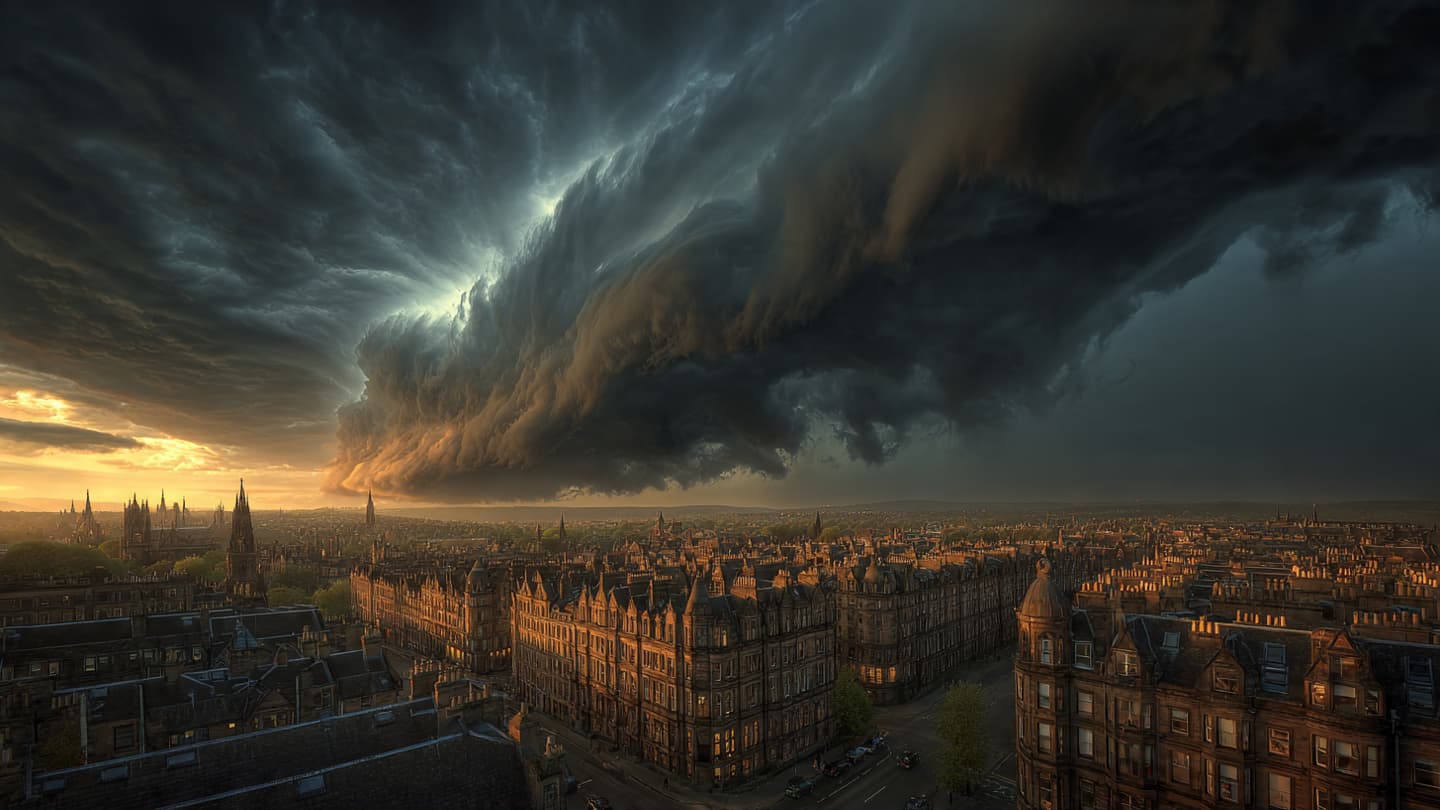
On a seemingly ordinary day in Glasgow, the atmosphere shifted dramatically as a supercell thunderstorm approached, transforming the familiar skyline into a canvas of ominous colors. The air grew heavy, pregnant with anticipation, as deep purples and greens replaced the usual gray, signaling a storm unlike any other. This was not just another rain shower; it was a meteorological phenomenon that would leave a lasting mark on the city.
As the storm began to unleash its fury, the city was enveloped in a cacophony of sound. The wind howled with an intensity that felt almost alive, battering against the historic stone tenements that have stood resilient through countless storms. The groaning of timber and the snapping of branches created a symphony of chaos, echoing through the rain-soaked streets of the West End.
Then, without warning, the lights went out. The comforting glow of streetlamps and the warm illumination from homes vanished, plunging thousands into darkness. Residents were left to navigate their neighborhoods by the flickering light of lightning, a stark reminder of how quickly modern conveniences can be stripped away. The sudden silence that followed was deafening, a pre-industrial stillness that enveloped the city.
On Ashiestiel Place, the storm's power was laid bare as roofs were torn from their rafters, scattering debris across the pavement. The sight of a home’s protective covering ripped away was a poignant reminder of vulnerability in the face of nature's wrath. Emergency services sprang into action, their blue lights cutting through the darkness as they navigated the debris-laden streets, embodying a bravery that shone brightly amid the chaos.
In the aftermath of the storm, the quiet that settled over Glasgow was heavy and damp, punctuated only by the distant hum of generators and the crunch of shattered glass underfoot. Neighbors emerged cautiously, torches in hand, to check on one another, their beams piercing through the misty gloom. The community spirit shone through as they banded together to assess the damage and offer support.
The Clyde River, usually a serene reflection of the city, now swelled with rainwater and debris, carrying the remnants of the storm toward the sea. This once-proud waterway became a turbulent reminder of the day’s unexpected violence, a silent witness to the chaos that had unfolded.
As dawn broke, the extent of the storm's impact became clear. Miles of railway tracks lay silent, and homes remained cold and dark, their radiators unresponsive. The recovery process would be arduous, involving repairs to infrastructure and the clearing of debris. Yet, for those who witnessed the sky turn green, the memory of the storm would linger, a primal reminder of nature's power and unpredictability.
The Met Office confirmed that the supercell storm brought gusts exceeding 90 mph to the region, resulting in over 60,000 power outages across Scotland. In Glasgow, structural damage was reported in several districts, with emergency crews focusing on clearing blocked roads and securing damaged buildings. Utility companies have begun restoring connections, but some outages may persist as repairs to the high-voltage infrastructure continue.
Published by Banx Network. This article is part of the Banx decentralized media programme, powered by the BXE token on the XRP Ledger.



