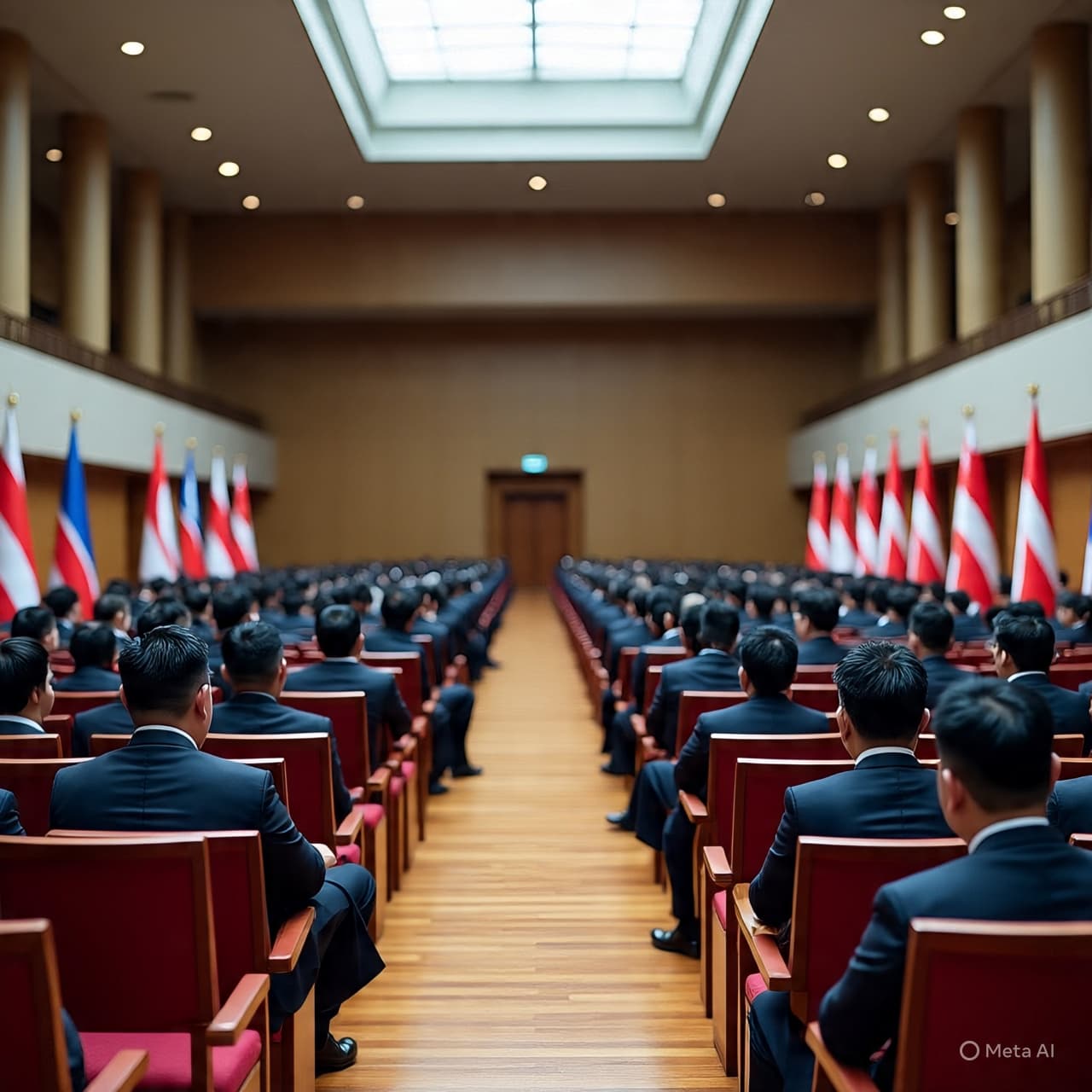
Power in certain corners of the world does not change hands in sudden gestures. It moves more quietly, like a current beneath still water, shaping the surface long before it is seen. In Pyongyang, where symbolism often speaks louder than proclamation, even the smallest public appearance can echo with meaning.
As the Workers’ Party of Korea prepares for its first party congress in five years, observers are turning their attention not only to policy signals from Kim Jong Un, but also to the increasing visibility of his daughter, Kim Ju Ae. The question being quietly raised among analysts is whether this gathering could mark an early inflection point toward what some describe as a potential fourth-generation hereditary succession in North Korea.
The congress of the Workers' Party of Korea is traditionally a venue for outlining economic strategies, military priorities, and ideological direction. It serves as a stage upon which continuity is emphasized and authority reaffirmed. Yet over the past two years, Kim Ju Ae’s public appearances alongside her father—at military events, missile tests, and national ceremonies—have drawn international scrutiny.
In North Korea’s political culture, symbolism is rarely accidental. The Kim family lineage has shaped the country’s leadership structure since the founding of the state. From Kim Il Sung to Kim Jong Il and now Kim Jong Un, succession has followed a hereditary path. The emergence of a possible fourth generation, however, remains speculative, particularly given Kim Ju Ae’s youth and the absence of formal announcements regarding succession.
State media coverage has provided images and language that some analysts interpret as elevating her status. Descriptions emphasizing reverence, continuity, and familial legacy have prompted debate about whether these gestures are ceremonial, strategic messaging, or the early architecture of transition planning. Others caution that North Korea’s internal political dynamics are opaque, and projecting definitive conclusions from limited signals may oversimplify a complex system.
The upcoming party congress could clarify broader policy directions—especially regarding economic resilience, sanctions pressures, and military posture. Whether it will directly address leadership succession is uncertain. Historically, North Korean transitions have been carefully staged over time rather than declared abruptly at public forums.
International observers note that consolidating stability remains a central priority for Pyongyang. In that context, the public introduction of a potential successor—even symbolically—could serve to reinforce perceptions of continuity. At the same time, analysts acknowledge that internal elite politics and institutional considerations play roles not visible to outside audiences.
For now, the notion of a “fourth-generation succession” remains a question rather than a confirmed trajectory. The congress is expected to proceed with speeches, resolutions, and strategic messaging consistent with past gatherings. Whether it becomes a watershed moment in dynastic leadership will depend not only on imagery, but on formal signals yet to emerge.
As the party congress convenes, attention will rest on official statements and state media coverage. No formal declaration of succession has been announced. Observers will continue to assess developments as they unfold, mindful that in Pyongyang, change often arrives gradually, framed in continuity rather than surprise
AI Image Disclaimer: Graphics are AI-generated and intended for representation, not reality.
Source Check: Reuters Associated Press BBC News The Korea Herald NK News
Published by Banx Network. This article is part of the Banx decentralized media programme, powered by the BXE token on the XRP Ledger.