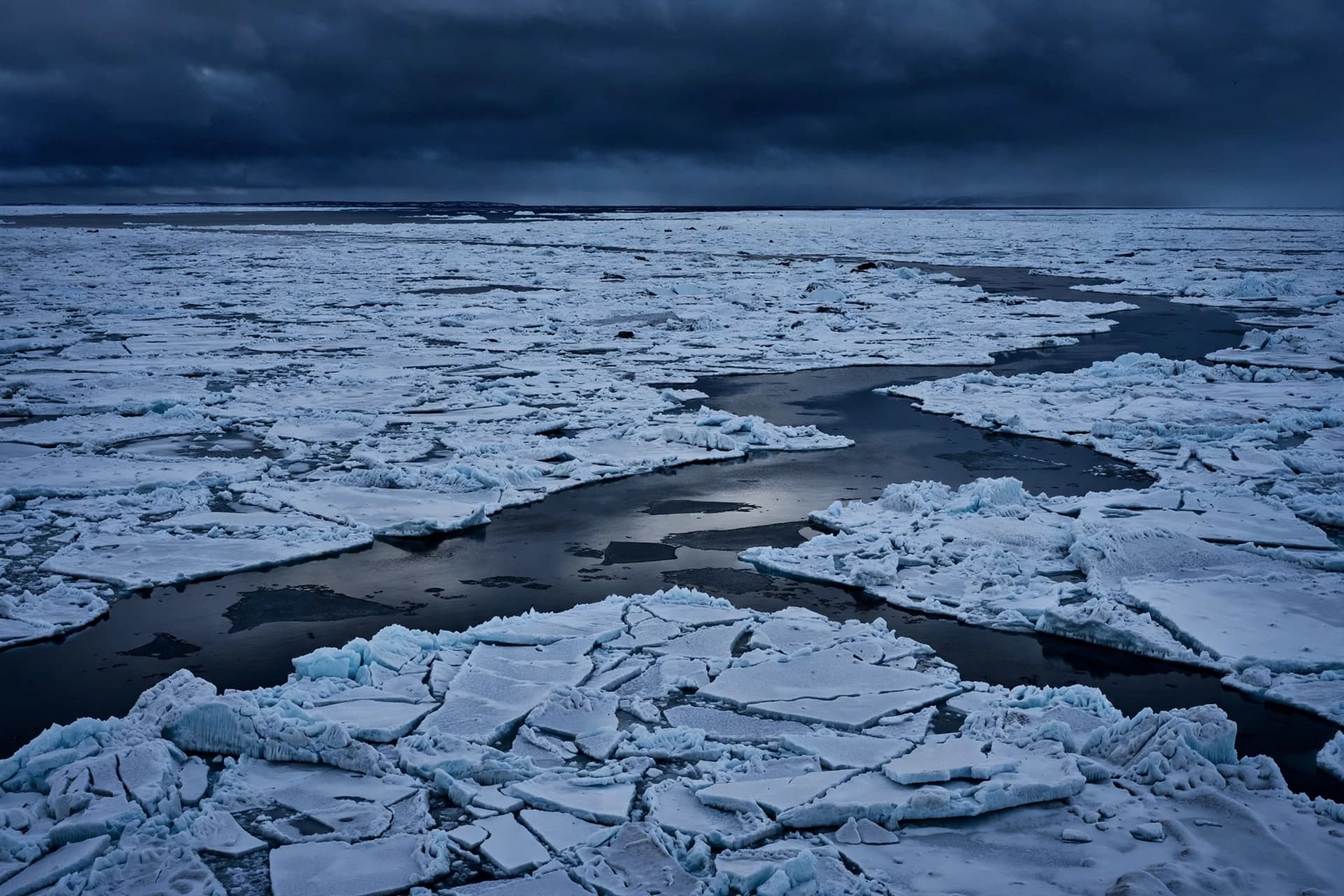
Ice, in its purest form, can seem like the quietest of materials — still, cold, and unchanging. Yet beneath the smooth white expanse of Greenland, scientists have found a world that operates more like a simmering pot than a static block of frozen water. For years, researchers peering beneath the surface suspected that hidden forces were at work, shaping the great ice sheet from within in ways that defied intuition. Like explorers listening for the subtlest shifts in a long‑silent forest, glaciologists relied on radar echoes and mathematical models to piece together clues of what lay beneath. Now, after more than a decade of puzzlement, a key chapter of that hidden story has been decoded, offering fresh insight into how Earth’s colossal ice sheets behave in a warming world.
In the vast interior of Greenland’s ice sheet, scientists noticed unusual plume‑like structures — swirling formations that seemed to push upward through layers of ice that were deposited over thousands of years. These features puzzled researchers because they appeared to contradict the longstanding image of ice as a rigid, slow‑moving material. What could drive such patterns beneath a glacier, far from any surface melting or atmospheric influence?
A new study — produced by an international team including glaciologists from the University of Bergen, NASA’s Goddard Space Flight Center, and the University of Oxford — points to a surprising answer: thermal convection within the ice itself.
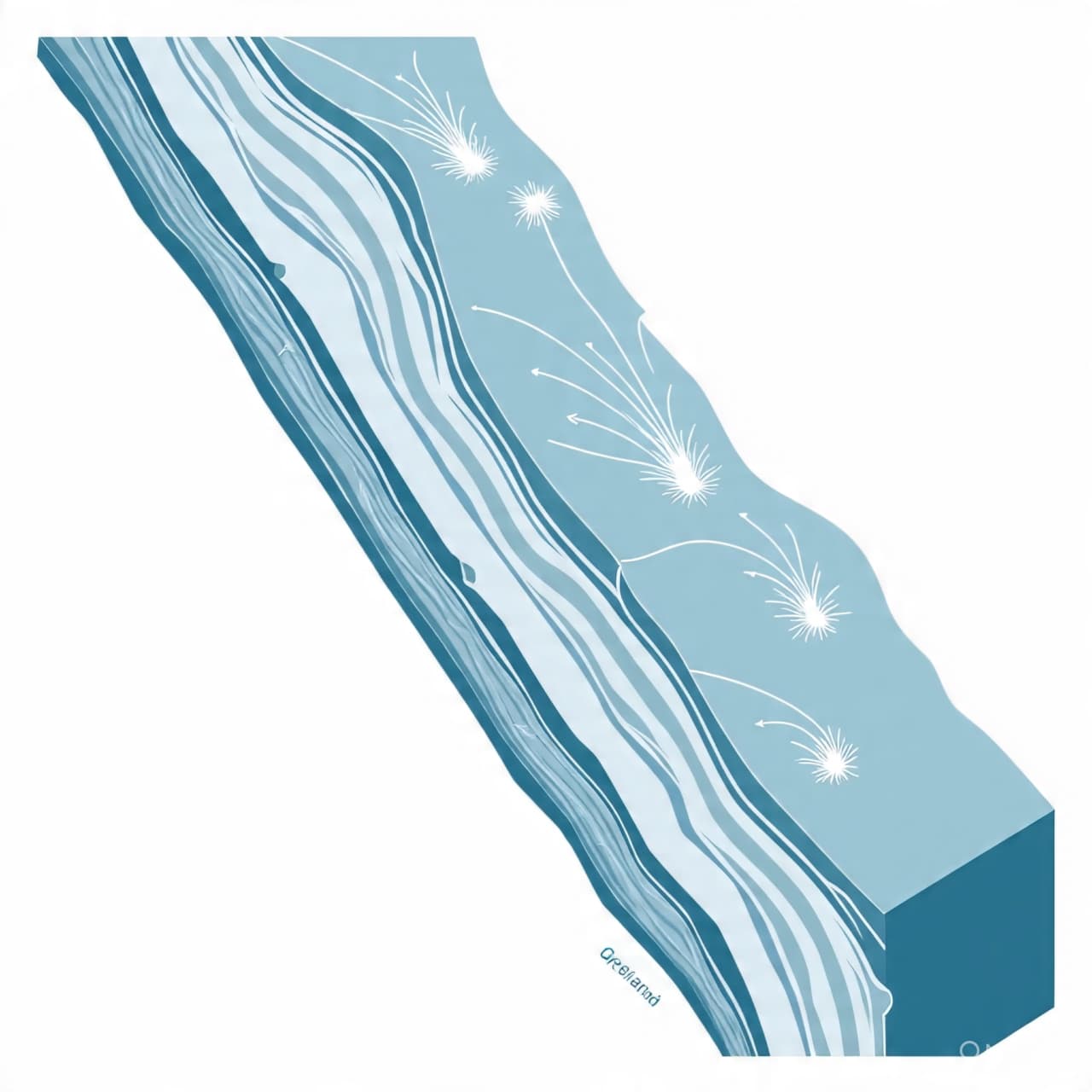
Convection is a process familiar in molten rock and heated fluids, where warmer, less dense material rises while cooler, denser material sinks. Although ice is much colder and seemingly immobile, under the immense pressure of the Greenland ice sheet it can slowly deform and flow. Researchers now suggest that geothermal heat from Earth’s interior — the constant, gradual decay of radioactive elements deep below the surface — warms the base of the ice enough to create soft, plume‑like upward movement.
This “churning” effect, described by one glaciologist as reminiscent of rising dough in a bread oven, helps explain the formation of the odd structures observed in radar images. Until now, these anomalies had no clear explanation, existing as a mystery buried beneath miles of ice and snow.
Understanding this internal movement matters because it may influence how the ice sheet redistributes its mass — a key factor in modeling how Greenland contributes to global sea‑level rise. Traditional models of ice behavior focus heavily on surface melting and ocean‑driven processes, but the new findings point to an underappreciated internal mechanism that could affect long‑term dynamics.
Alongside this discovery, long‑term satellite observations from missions like ESA’s Copernicus Sentinel‑1 show how Greenland’s ice is changing at larger scales, with shifting ice flow patterns and increased mass loss in many regions. These broader patterns underscore the complexity of ice sheet behavior in a changing climate and highlight the need to refine our understanding of both surface and subsurface processes.
The study’s authors emphasize that realizing ice can undergo such intrinsic motion — not just sliding toward the sea under gravity but slowly circulating due to internal heat — challenges and enriches our understanding of glaciology. Rather than being a uniform slab of frozen water, Greenland’s ice reveals itself as a dynamic system with layers of motion that reflect both age and heat.
Researchers have identified thermal convection as a likely source of enigmatic plume‑like structures discovered deep within the Greenland ice sheet, suggesting that internal heating can cause slow upward movement in ice otherwise considered static. The findings, based on radar imaging and climate modeling, are expected to improve understanding of ice sheet dynamics and help scientists refine projections of future mass loss and sea‑level rise. Continued observation and modeling will be needed to quantify how common these convective processes are and how they may influence Greenland’s response to a warming climate.
AI Image Disclaimer “Illustrations were produced with AI and serve as conceptual depictions.”
Credible sources identified:
Sci.News — reports researchers solved mystery of plume‑like structures deep inside Greenland’s ice. JANG (news) — summarizes recent findings on hidden structures and convection in Greenland’s ice. GreenMatters — describes same scientific study on mysterious plumes. ScienceAlert / ScienceAlert.com — detailed context on thermal convection inside the ice sheet. ESA Copernicus Sentinel‑1 coverage — long‑term observations of Greenland ice dynamics, relevant background.
Published by Banx Network. This article is part of the Banx decentralized media programme, powered by the BXE token on the XRP Ledger.