There is a depth to the Earth that resists imagination. Far below the shifting plates and familiar ground, beneath layers measured not in meters but in vast intervals of pressure and heat, the planet carries a memory of its earliest state. It is here, in this unseen interior, that the story of beginnings continues to be revised.
For a long time, one version of that story held steady. The early Earth, newly formed, was thought to have passed through a phase of widespread melting—a global or near-global ocean of magma from which its internal structure gradually separated and cooled. This idea, often framed as a primordial beginning, offered a coherent way to understand how the planet’s layers came to be.
But recent findings in geophysics suggest that this process may not have unfolded as uniformly as once believed.
Deep within the mantle, scientists have identified regions—often referred to as anomalies—where material behaves differently from the surrounding environment. These zones, detectable through seismic imaging and modeling, appear to influence how heat moves through the Earth’s interior. Rather than allowing heat to rise and spread evenly, they may act as barriers, altering the pathways through which melting could occur.
The implication is subtle but significant. If such structures were present early in Earth’s history, they may have limited the extent of widespread melting, preventing a fully homogeneous magma ocean from forming or persisting. Instead of a single, global phase of melting, the early Earth may have experienced a more uneven process—localized, variable, shaped by internal structures that guided heat flow in complex ways.
This perspective challenges the simplicity of the primordial model without discarding it entirely. It suggests that while melting did occur, it may not have been as complete or as uniform as once imagined. The Earth’s interior, even in its earliest stages, may have been more structured, more resistant to full transformation.
Understanding these deep mantle features is not straightforward. They are inferred through indirect means—patterns in seismic waves, variations in density, and computational models that attempt to reconstruct conditions far beyond direct observation. Each piece of evidence adds to a picture that is necessarily incomplete, yet increasingly detailed.
There is also a broader implication for how planetary formation is understood. If Earth’s early interior was less uniformly molten, then the processes that led to the differentiation of its core, mantle, and crust may need to be reconsidered. The timing, the sequence, and the mechanisms of these changes could differ from established models.
Such revisions are part of a longer pattern in the Earth sciences. As methods improve and data accumulate, earlier assumptions are tested against new observations. The result is not a sudden overturning, but a gradual reshaping—a movement toward greater complexity.
In this case, the image of a fully molten early Earth gives way to something more varied. A planet in formation, yes, but one whose internal dynamics were already intricate, already influenced by structures that would persist far into its history.
Scientists report that deep mantle anomalies may have restricted early Earth melting, challenging the idea of a fully uniform primordial magma ocean. The findings suggest a more complex and heterogeneous early planetary interior.
AI Image Disclaimer
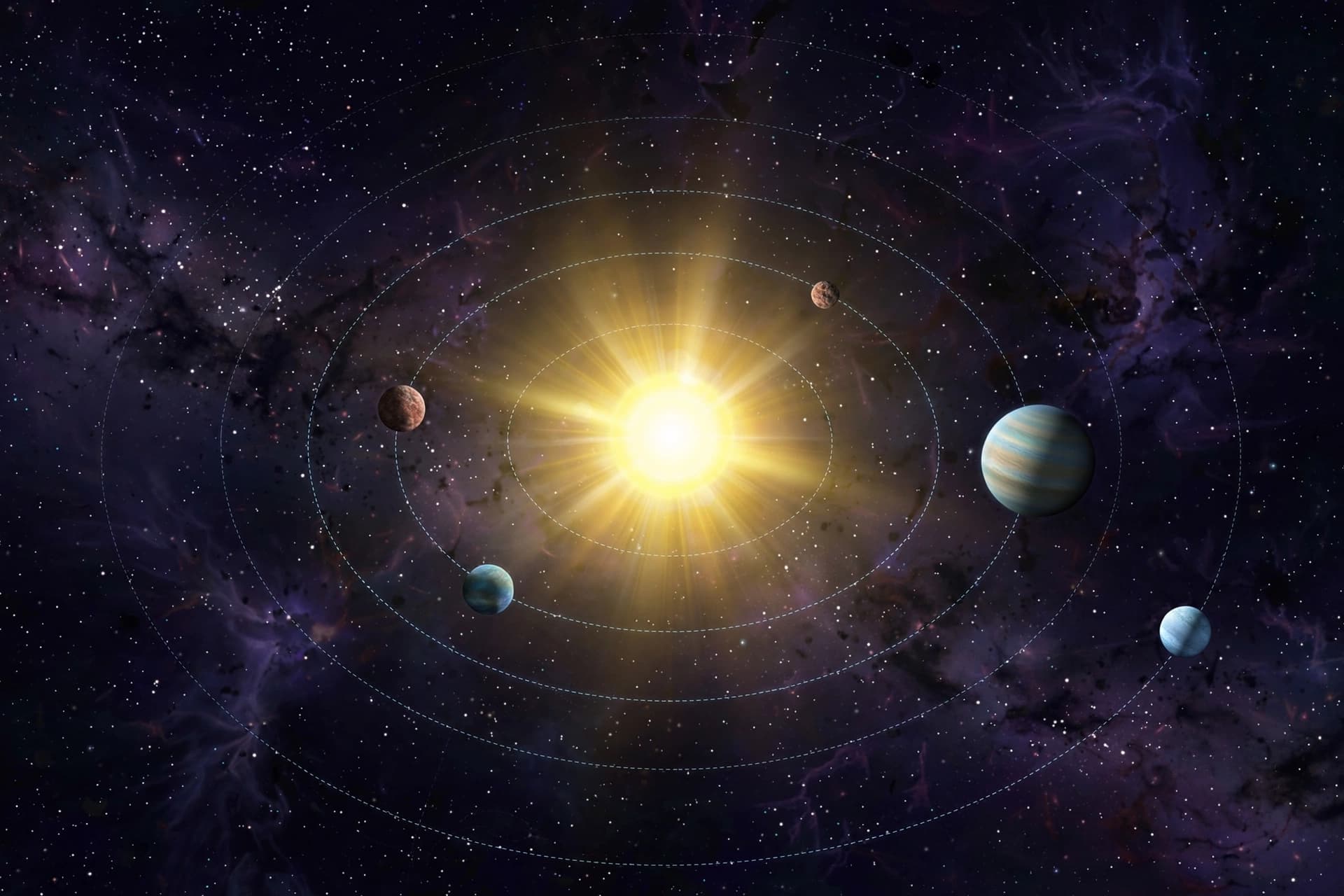
Illustrations were created using AI tools and are not real scientific images.
Sources
Nature Science Geophysical Research Letters Nature Geoscience New Scientist
Published by Banx Network. This article is part of the Banx decentralized media programme, powered by the BXE token on the XRP Ledger.