There is a stillness to the ground that often goes unnoticed. Fields stretch outward in quiet continuity, their surfaces offering little hint of the activity beneath. Yet below that calm exterior, the soil holds a complex and shifting world—roots extending, moisture moving, microorganisms shaping the balance of life in ways that remain largely unseen.
It is into this hidden terrain that a different kind of observation is now being introduced, one that does not disturb the soil but listens to it through light.
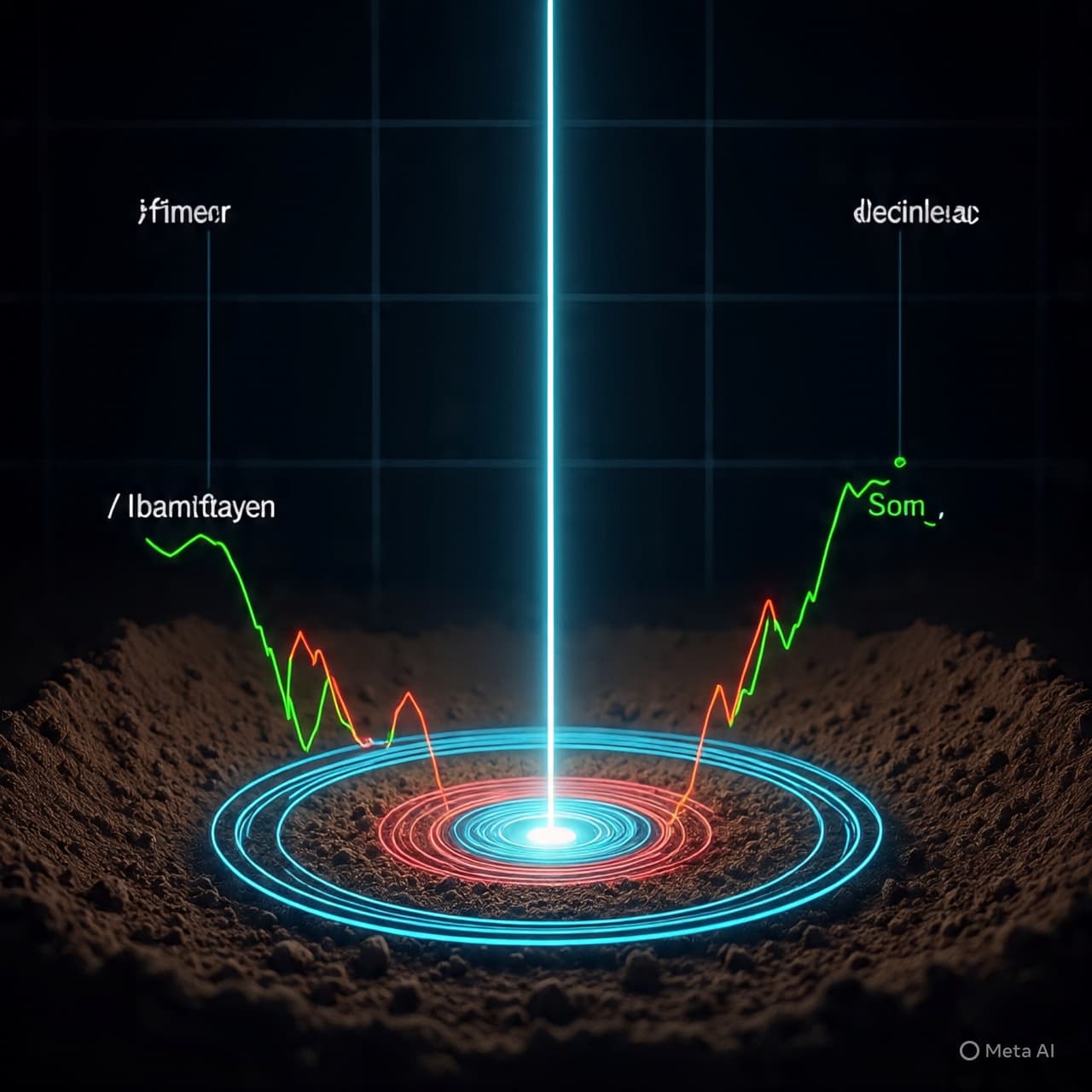
Researchers are exploring the use of optical-fiber sensors to monitor soil health, embedding thin strands of fiber beneath the surface to detect changes in temperature, moisture, and structural conditions over time. These fibers, similar to those used in telecommunications, carry pulses of light that respond subtly to their surroundings. As environmental conditions shift, the properties of that light change, creating signals that can be measured and interpreted.
What emerges is not a single reading, but a continuous flow of information. The sensors allow for real-time monitoring across extended areas, offering a more detailed picture of how soil conditions vary from one place to another. Instead of isolated measurements taken at intervals, the system provides a kind of ongoing awareness—an ability to trace patterns as they develop.
This approach reflects a broader shift in agriculture and environmental science, where attention is turning toward precision and sustainability. Understanding soil health has long been recognized as essential to crop productivity, water management, and ecosystem stability. Yet traditional methods often rely on sampling that can miss the finer variations occurring beneath the surface.
By contrast, optical-fiber sensing introduces a distributed perspective. The fibers can extend across fields, along root zones, or through areas of particular interest, capturing gradients of moisture and temperature that influence plant growth. Over time, these measurements can help identify stress conditions, optimize irrigation, and inform decisions about land management.
There is a certain subtlety in using light to observe the earth. The fibers themselves remain largely invisible once installed, their presence marked only by the data they produce. They do not alter the soil they monitor, but rather move through it quietly, translating physical conditions into signals that can be read from above.
In this way, the technology becomes less about intervention and more about understanding. It offers a means of observing the soil as a living system, one that responds continuously to weather, cultivation, and biological activity.
The research highlights the potential of optical-fiber sensors to provide detailed, real-time insights into soil conditions, supporting more precise agricultural practices and improved environmental monitoring. Scientists note that the technology could play a role in advancing sustainable farming by enabling better management of water and soil resources.
AI Image Disclaimer
These visuals were generated with AI and depict imagined representations rather than real scenes.
Source Check: ScienceDaily; Phys.org; IEEE Spectrum; Nature Communications; Agricultural Research Magazine
Published by Banx Network. This article is part of the Banx decentralized media programme, powered by the BXE token on the XRP Ledger.