
Key Highlights
- Discovery:Researchers identified over 110 potential new species in the Coral Sea.
- Expedition:The mission utilized advanced technologies to explore deep-sea environments.
- Biodiversity:Findings include unique brittlestars, sea anemones, and a catshark.
The Coral Sea, at first glance, offers only a surface of shifting blues—sunlight scattering across water that seems endless, familiar, almost complete. Yet far below that brightness, beyond the reach of casual sight, the seafloor keeps its own quiet archive. There, in the slow darkness where pressure settles like a constant weight, life continues to take forms that remain, even now, largely unspoken.
During a recent scientific expedition off the coast of Queensland, researchers descended into these deeper layers and returned not with a single revelation, but with many—more than 110 potential new species of fish and invertebrates. The discovery did not arrive as a sudden headline in the depths; it emerged gradually, specimen by specimen, as remotely operated vehicles traced the contours of underwater ridges and plains, collecting fragments of a world still in the process of being understood.
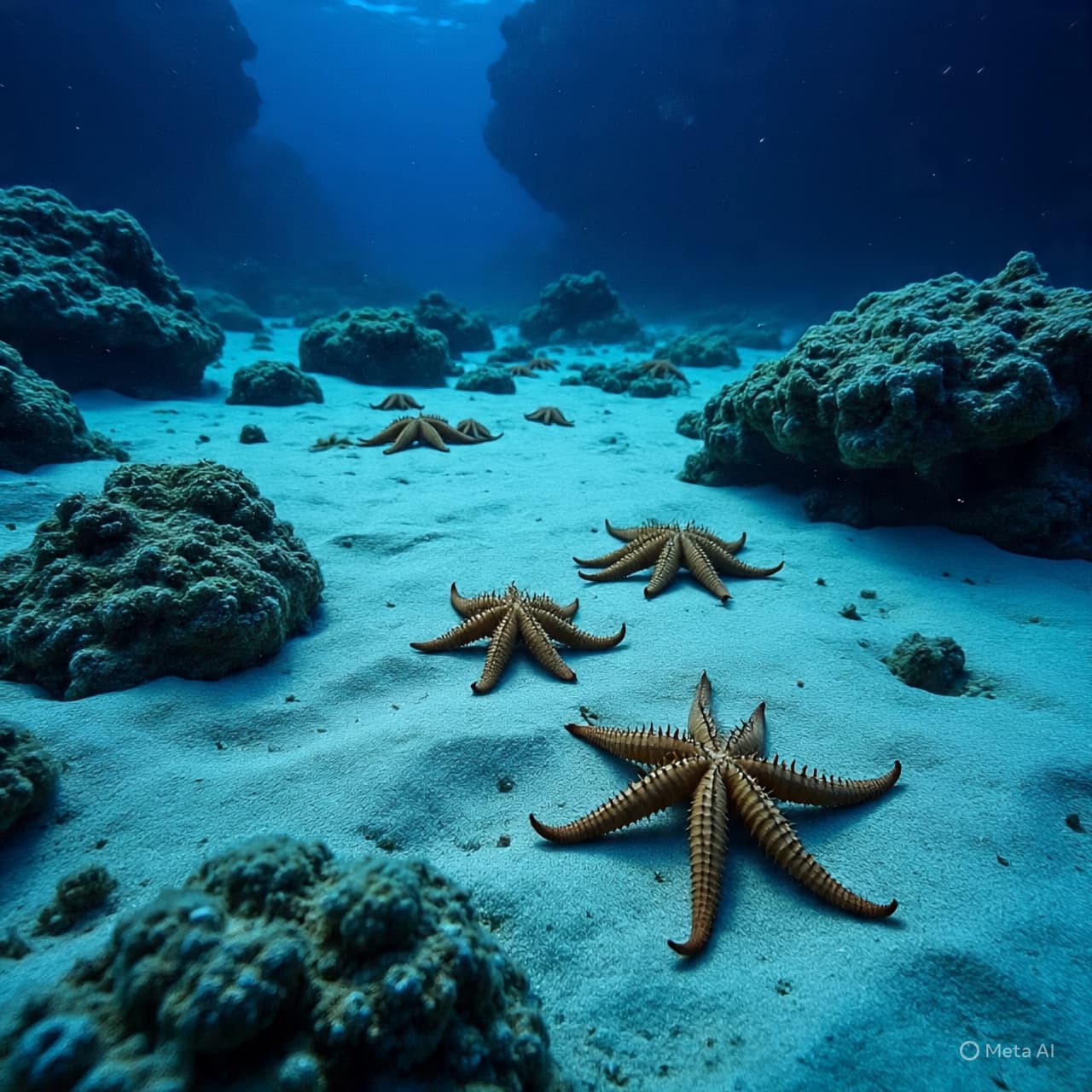
Among the findings were delicate brittlestars, their thin arms arranged like quiet constellations against the seafloor, and sea anemones anchored in stillness, their soft structures responding to currents that never reach the surface. There was also a small catshark, understated in appearance, carrying the subtle distinction of being unfamiliar to science. Each organism, in its own way, extended the known boundaries of life in the Coral Sea—not dramatically, but persistently.
The expedition, supported by marine researchers and institutions focused on ocean biodiversity, reflects a broader pattern in deep-sea exploration. Advances in imaging and sampling technologies have made it possible to reach depths that were once inaccessible, revealing ecosystems shaped less by sunlight and more by chemistry, pressure, and time. In these environments, life evolves along quieter pathways, often producing species that appear both intricate and restrained, adapted to conditions that rarely change.
What becomes evident is not only the diversity of forms, but the scale of what remains unknown. Scientists involved in the mission suggest that many of the collected specimens will require months, if not years, of careful analysis before they are formally classified. The process is deliberate, almost patient—names are assigned only after comparison, verification, and consensus. Discovery, in this context, is less about announcement and more about recognition.
Beyond taxonomy, the findings carry a quieter implication. The Coral Sea, long valued for its surface ecosystems and coral reefs, also holds a deepwater environment that is only beginning to be mapped in biological terms. These newly identified species exist within habitats that may be sensitive to changes—warming waters, shifting currents, and human activity that increasingly reaches even the ocean’s deeper layers.
And so, the significance of the expedition rests not only in the number—more than 110—but in what that number suggests. Beneath familiar waters, there remains a vast, unfolding narrative of life, still incomplete, still waiting to be described. The Coral Sea does not reveal everything at once. Instead, it offers its discoveries slowly, in fragments, asking only that they be observed with care.
In the end, the facts settle into place with quiet clarity. Scientists exploring deep waters off Queensland have identified over 110 previously unknown species, including brittlestars, sea anemones, and a catshark. The work continues, measured and methodical, as each specimen moves from discovery toward definition—another small step in understanding a world that has always been there, just beyond view.
Published by Banx Network. This article is part of the Banx decentralized media programme, powered by the BXE token on the XRP Ledger.



