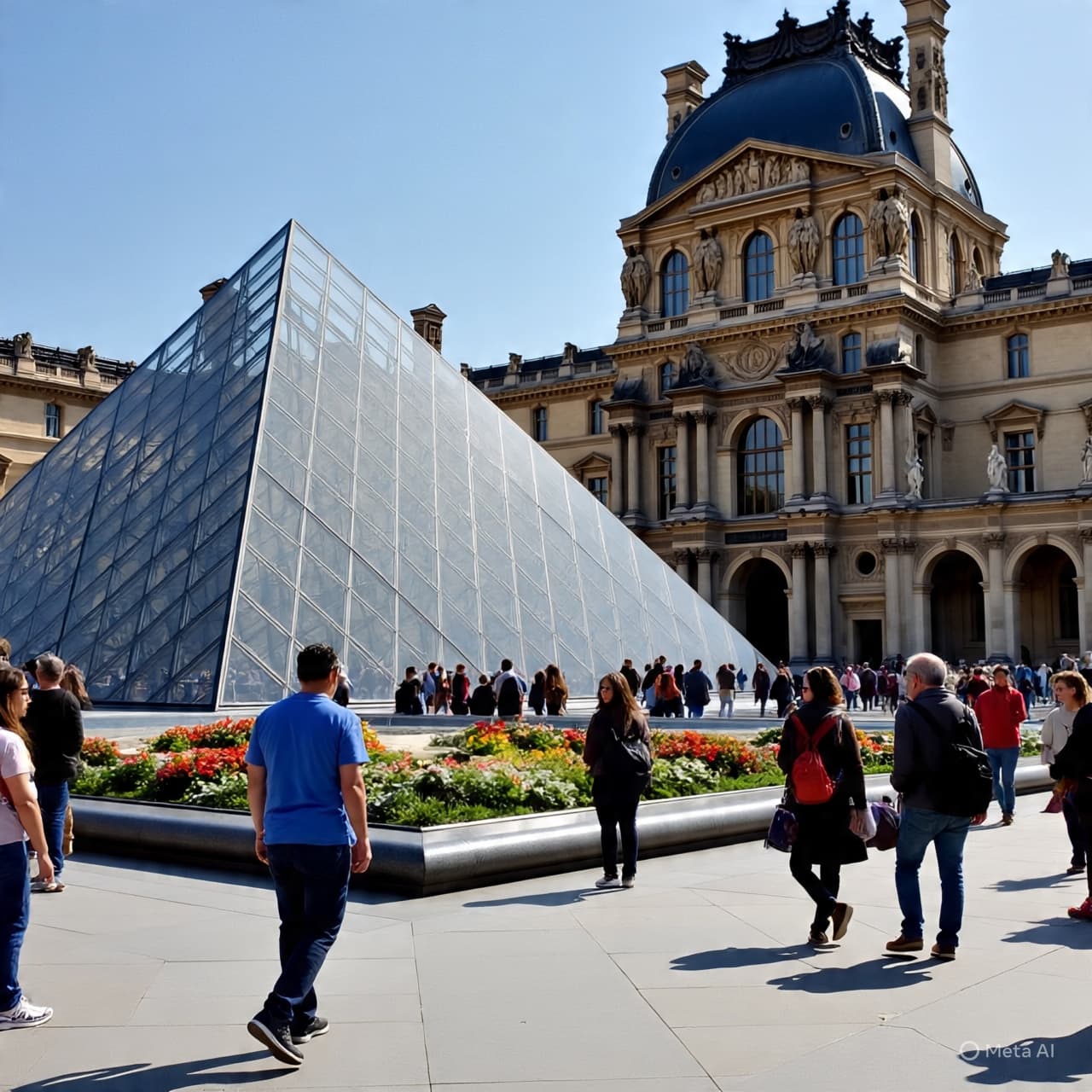
There are institutions that resemble living organisms. They breathe through their visitors, pulse through their galleries, and carry centuries within their walls. The Louvre Museum is one such place—a monument not only of stone and glass, but of memory and identity. When questions arise about who steers its course, the discussion feels less administrative and more intimate, as though one were debating the guardianship of a shared inheritance.
Recently, voices in France’s political and cultural spheres have argued that the State “must take back control” of the Louvre. The phrase carries weight. It suggests concern over governance, financial management, strategic direction, or perhaps the broader philosophy guiding one of the world’s most visited museums. While the Louvre operates as a public institution under the supervision of the French Ministry of Culture, it also enjoys a degree of administrative autonomy—an arrangement designed to allow flexibility in programming, partnerships, and international outreach.
The call for the State to “reclaim control” reflects unease about how such autonomy is exercised. Critics have raised questions about budgetary pressures, the scale of international projects, sponsorship models, and the balance between cultural mission and financial sustainability. In an era when cultural institutions increasingly rely on global tourism and private partnerships, some policymakers argue that clearer state oversight would ensure that national heritage remains firmly anchored in public accountability.
Supporters of stronger state involvement often frame their argument as a matter of stewardship. The Louvre is not merely a museum; it is a symbol of France’s historical continuity and artistic patrimony. Its collections—from antiquities to Renaissance masterpieces—form part of a narrative that extends beyond exhibition strategy. For these advocates, ensuring that strategic decisions align closely with public interest is less about control and more about guardianship.
Yet others caution against an overly centralized approach. Autonomy, they argue, has allowed the museum to innovate, expand its international presence, and adapt to evolving cultural expectations. Partnerships abroad, diversified revenue streams, and dynamic curatorial initiatives have helped the Louvre remain globally influential. Excessive state intervention, some suggest, could slow decision-making or limit the institution’s ability to respond swiftly to changing circumstances.
The debate unfolds against a broader backdrop of financial strain affecting many cultural institutions. Rising operational costs, security requirements, conservation needs, and fluctuating visitor numbers—particularly in the aftermath of global crises—have complicated the economics of museum management. In such a climate, discussions about governance structures are perhaps inevitable.
At its core, the conversation is less about authority than about responsibility. Who ensures that masterpieces are preserved for generations? Who defines the balance between accessibility and preservation, between national heritage and global ambition? In France, where culture holds constitutional and symbolic significance, these questions resonate deeply.
Government officials have indicated that discussions are ongoing regarding oversight mechanisms and strategic priorities for major public institutions. No immediate structural changes have been formally enacted, but the debate signals a renewed focus on how the Louvre—and similar institutions—should be guided in the years ahead.
For now, the museum continues to welcome millions beneath its glass pyramid, its halls unchanged in appearance even as conversations ripple beyond them. Whether the State ultimately reshapes its governance framework remains to be seen. What is certain is that the Louvre’s future, like its past, will continue to reflect the evolving dialogue between culture, authority, and the public trust.
AI IMAGE DISCLAIMER Graphics are AI-generated and intended for representation, not reality.
SOURCE CHECK
Credible mainstream French and international sources covering debate over state control of the Louvre include:
Le Monde Le Figaro France Info Libération Agence France-Presse (AFP)
Published by Banx Network. This article is part of the Banx decentralized media programme, powered by the BXE token on the XRP Ledger.