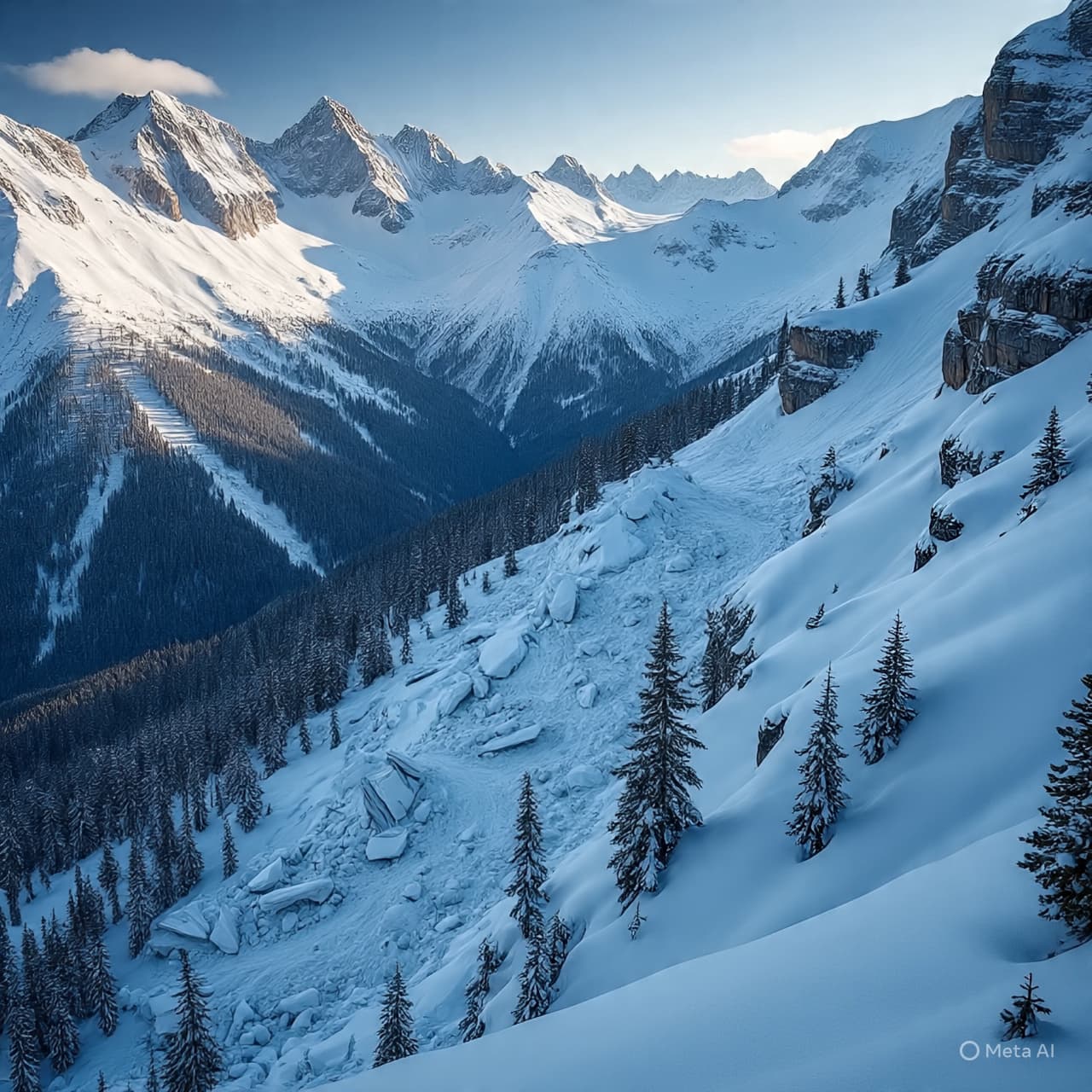
There are winters when the mountains seem to breathe unevenly. Snow arrives not in steady, patient layers, but in bursts — absent for weeks, then suddenly overwhelming. In California’s high country, this uneven rhythm has become increasingly familiar. And this season, experts say, it may have set the stage for tragedy.
A deadly avalanche in the has drawn renewed attention to what scientists call a “snow drought” — a winter pattern marked not by a lack of total snowfall, but by long dry spells interrupted by intense storms. According to forecasters and climate researchers, these erratic conditions can create unstable snowpacks, layering dense, wind-driven snow atop weaker foundations.
The result is a mountain that appears calm, even pristine, while beneath the surface tension quietly builds.
In this case, meteorologists tracking conditions across noted that early-season dryness was followed by powerful atmospheric river systems that dropped heavy snow in short periods. Without consistent intermediate storms to bond layers together, weak crystalline structures remained buried beneath newer accumulation. When additional weight or vibration disturbed those layers, the slope gave way.
Avalanche specialists explain that snow droughts are not simply about scarcity. Rather, they describe imbalance. Warmer baseline temperatures, linked by many researchers to broader climate trends, influence how snow forms, melts, refreezes, and consolidates. A winter marked by fluctuation can create what experts call “persistent weak layers,” capable of failing weeks after they are formed.
The had issued advisories warning of elevated avalanche risk following recent storms. Backcountry travelers were urged to check local forecasts, carry safety equipment, and avoid steep wind-loaded slopes. Yet avalanche terrain often holds an allure — wide bowls, untouched powder, the quiet vastness of high elevation wilderness.
When the slide occurred, rescue teams responded swiftly. Officials later confirmed fatalities, underscoring how quickly conditions can shift from serene to catastrophic. Avalanches move with startling speed, sometimes exceeding 80 miles per hour, leaving little margin for escape once a slope fractures.
Climatologists caution against attributing any single avalanche solely to climate change. Mountains have always been dynamic, and avalanches are part of their natural cycle. But the pattern of prolonged dry spells punctuated by extreme precipitation events has grown more pronounced in recent years. This variability, they note, complicates forecasting and increases unpredictability.
In practical terms, snow drought alters the architecture of winter. Instead of a staircase built layer by layer, the snowpack becomes a stack of mismatched boards — some solid, others fragile. Stability depends on cohesion. Without it, gravity waits patiently.
For communities near the Sierra crest, the incident has prompted renewed calls for caution as the season continues. Avalanche centers are emphasizing education and real-time reporting, while urging outdoor enthusiasts to treat advisory levels with seriousness rather than suggestion.
The broader conversation, meanwhile, extends beyond this single slope. Researchers continue to study how shifting climate patterns are reshaping Western winters — influencing water supply, wildfire cycles, and mountain safety alike.
The investigation into the avalanche remains ongoing. Authorities continue to gather details about weather conditions, terrain factors, and timing. Officials reiterate that avalanche warnings remain in effect in certain high-elevation areas and encourage the public to consult updated forecasts before traveling into backcountry zones.
For now, the mountains stand as they always have — beautiful, immense, and quietly complex. But beneath their surface, the story of this winter lingers, layered in snow.
AI Image Disclaimer Visuals are created with AI tools and are not real photographs.
Sources Associated Press Reuters The New York Times Los Angeles Times CNN
Published by Banx Network. This article is part of the Banx decentralized media programme, powered by the BXE token on the XRP Ledger.