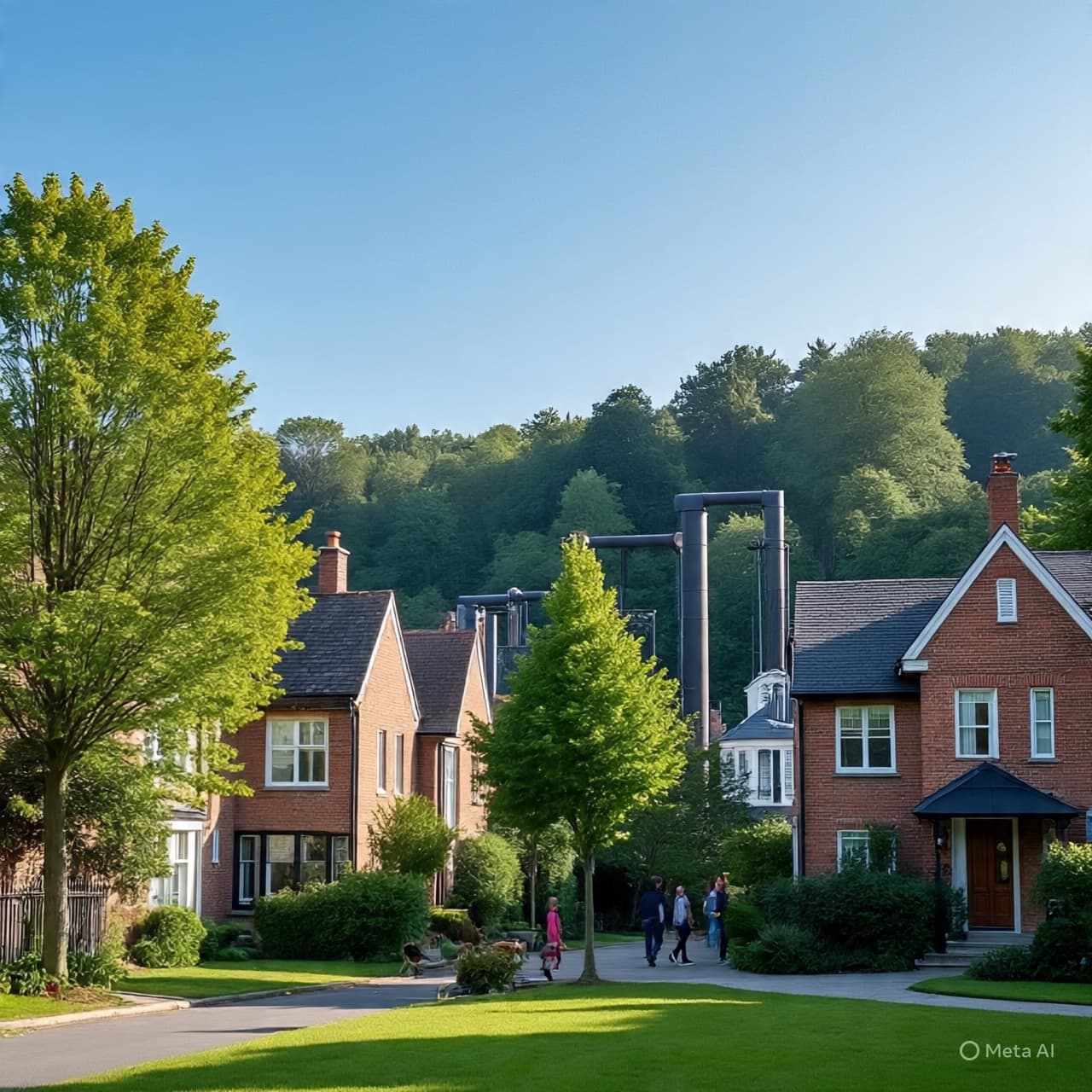
The warmth beneath our feet has always been patient. Long before cities drew their first street grids, before power lines stitched together distant towns, the Earth carried its quiet heat in silence. It is a warmth born not of sunlight, but of the planet’s own restless interior—a slow pulse that has endured for billions of years. Now, in a first for the United Kingdom, that ancient heat is being invited into modern homes.
In a landmark renewable energy project, geothermal energy drawn from deep underground is set to power approximately 10,000 homes in the UK. The initiative marks a significant step in diversifying the country’s clean energy portfolio, traditionally dominated by wind and solar. While geothermal energy has long been utilized in countries such as Iceland and parts of the United States, its development in the UK has been comparatively limited.
The project centers on tapping naturally heated water stored in deep rock formations. By drilling several kilometers below the surface, engineers can access water warmed by the Earth’s internal heat. That hot water is then brought to the surface, where it transfers its thermal energy through heat exchangers to supply district heating networks. The water itself is typically returned underground, creating a closed-loop system designed to minimize environmental disruption.
Unlike wind turbines that depend on breezes or solar panels that rely on daylight, geothermal systems offer a constant and predictable supply of energy. This reliability makes them particularly valuable during winter months, when heating demand rises and sunlight is scarce. Supporters of the project view it as a complementary addition to the UK’s broader strategy to reach net-zero carbon emissions.
The development also signals a shift in how the UK approaches its geological landscape. Regions once known primarily for coal mining are being reconsidered for their geothermal potential. In some cases, abandoned mine shafts—remnants of the industrial past—are being evaluated as conduits for warm water that has accumulated underground over decades. What was once associated with carbon-intensive energy may now help deliver lower-emission heating.
Government officials and energy companies involved describe the initiative as both practical and symbolic. Practically, it reduces reliance on natural gas for home heating, a sector responsible for a substantial share of UK emissions. Symbolically, it reflects a broader recalibration—an effort to look inward, quite literally, for sustainable solutions.
Challenges remain. Geothermal projects require significant upfront investment and detailed geological assessments. Not all regions possess suitable rock formations or heat gradients. Moreover, public awareness of geothermal energy in the UK is still developing, often overshadowed by the more visible silhouettes of wind farms offshore.
Yet the promise is steady rather than dramatic. The Earth’s heat does not flicker or surge; it persists. For the 10,000 households expected to benefit, warmth may soon arrive not from distant fuel imports, but from a resource beneath their own foundations.
The project represents the UK’s first large-scale geothermal district heating scheme of its kind. Construction and infrastructure development are underway, with energy delivery anticipated once systems are fully operational. As the country continues to expand its renewable mix, geothermal energy may quietly take its place—less visible than turbines, less celebrated than solar arrays, but enduring in its source.
AI Image Disclaimer Graphics are AI-generated and intended for representation, not reality.
Source Check – Credible Media Coverage Found: BBC Reuters The Guardian The Independent Financial Times
Published by Banx Network. This article is part of the Banx decentralized media programme, powered by the BXE token on the XRP Ledger.