
Key Highlights
- Incident:A major industrial fire in Hamburg has resulted in toxic smoke drifting over the city.
- Duration:The blaze lasted over twelve hours, prompting health warnings.
- Response:Fire officials are monitoring air quality and assessing structural integrity of nearby buildings.
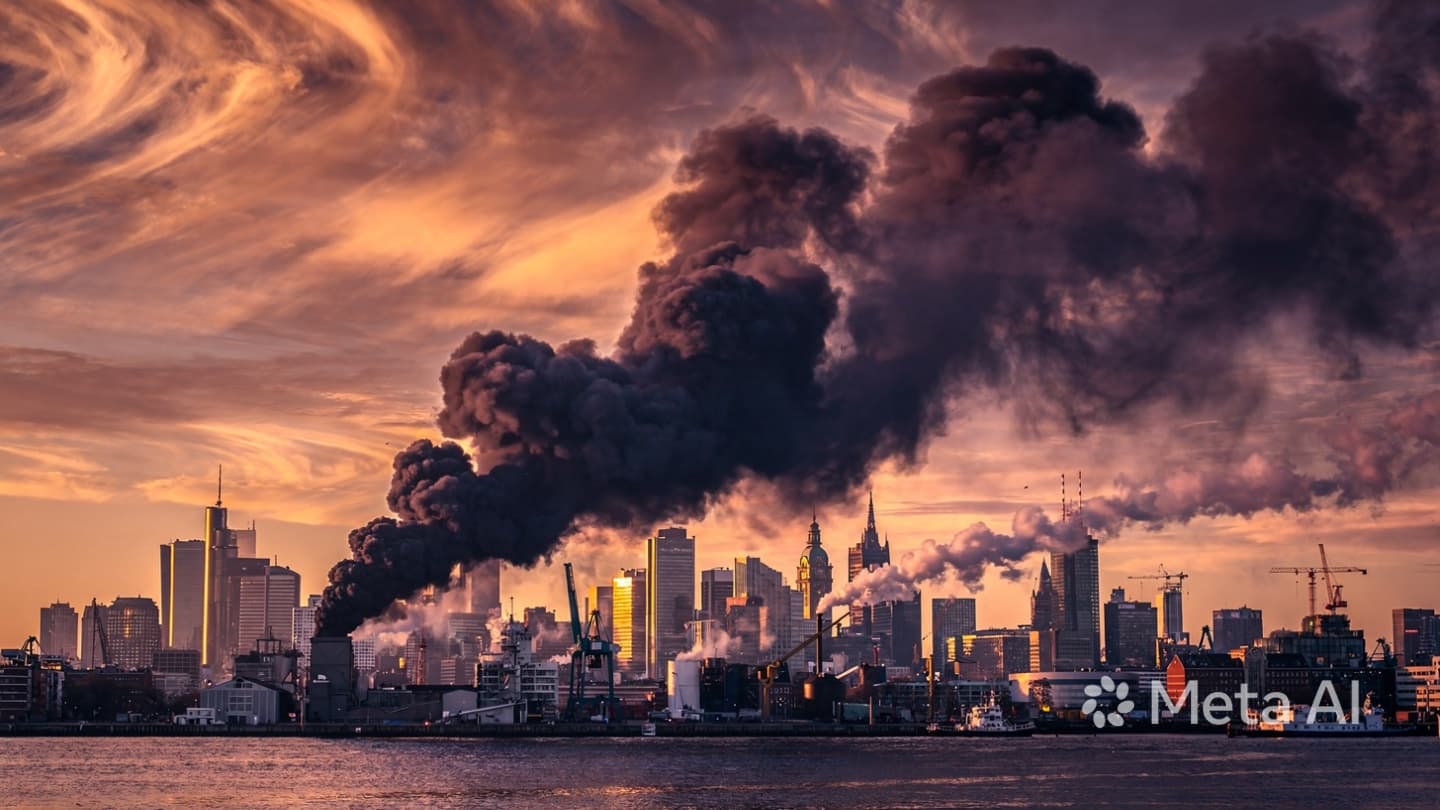
On a seemingly ordinary day in Hamburg, the familiar salt-kissed breeze of the North Sea was replaced by an ominous sight: a heavy, obsidian cloud rising from the Billbrook district. This was no ordinary weather phenomenon; it was the aftermath of a catastrophic fire at a major industrial storage facility. The blaze, fueled by chemical precursors and consumer goods, transformed the skyline into a scene of chaos and uncertainty, prompting immediate warnings from local authorities for residents to stay indoors.
As the smoke billowed across the Elbe River, it served as a stark reminder of the industrial activities that underpin modern life. The vibrant city, usually bustling with energy, fell into an eerie stillness as the sun struggled to penetrate the thick haze. Residents peered from their balconies, witnessing a surreal transformation of their environment as the light turned a muted copper, obscured by the particulate matter that hung heavily in the air.
Fire brigades responded with urgency, their silhouettes stark against the fiery backdrop. They battled not just flames but an elemental force that threatened to engulf the city. Water from their hoses arced through the air, a desperate attempt to cool the inferno and prevent further destruction. The scene was both heroic and haunting, as the firefighters engaged in a delicate dance with danger, striving to contain the blaze that had erupted from the heart of the industrial sector.
In the streets below, a palpable tension filled the air. The usual scents of the harbor were replaced by a harsh, metallic odor, a byproduct of the burning plastics and chemicals. This incident starkly illustrated the thin line between the controlled environment of industrial production and the chaos of an accident. The toxic plume drifted across the city, a reminder of the shared atmosphere that connects all residents, regardless of their location.
As evening approached, the intensity of the fire began to wane, leaving behind a smoldering ruin. The once-black smoke transformed into a weary gray, signaling that the firefighters were gaining the upper hand. However, the aftermath was evident: a fine layer of ash settled on windowsills and boats in the harbor, a tangible reminder of the day when the sky turned dark over Hamburg.
The recovery process from such an event is complex and lengthy. Environmental monitoring teams have been deployed throughout the metropolitan area to assess air and soil quality, ensuring the safety of residents in the wake of the disaster. Additionally, the structural integrity of nearby buildings is under scrutiny as officials prepare to lift the exclusion zone around the site of the fire.
As the last remnants of smoke cleared toward the sea, the stars emerged in the night sky, a stark contrast to the chaos of the day. Hamburg's residents cautiously opened their windows, allowing the fresh night air to flow in, yet the memory of the fire lingered. This incident serves as a sobering reminder of the fragility of our environment and the need for vigilant stewardship of the industrial processes that shape our lives.
Hamburg fire officials have issued ongoing warnings for several districts, emphasizing the importance of monitoring air quality and ensuring public safety in the aftermath of the fire. The community is left to reflect on the lessons learned from this event and the importance of safety in industrial operations.
Published by Banx Network. This article is part of the Banx decentralized media programme, powered by the BXE token on the XRP Ledger.



