
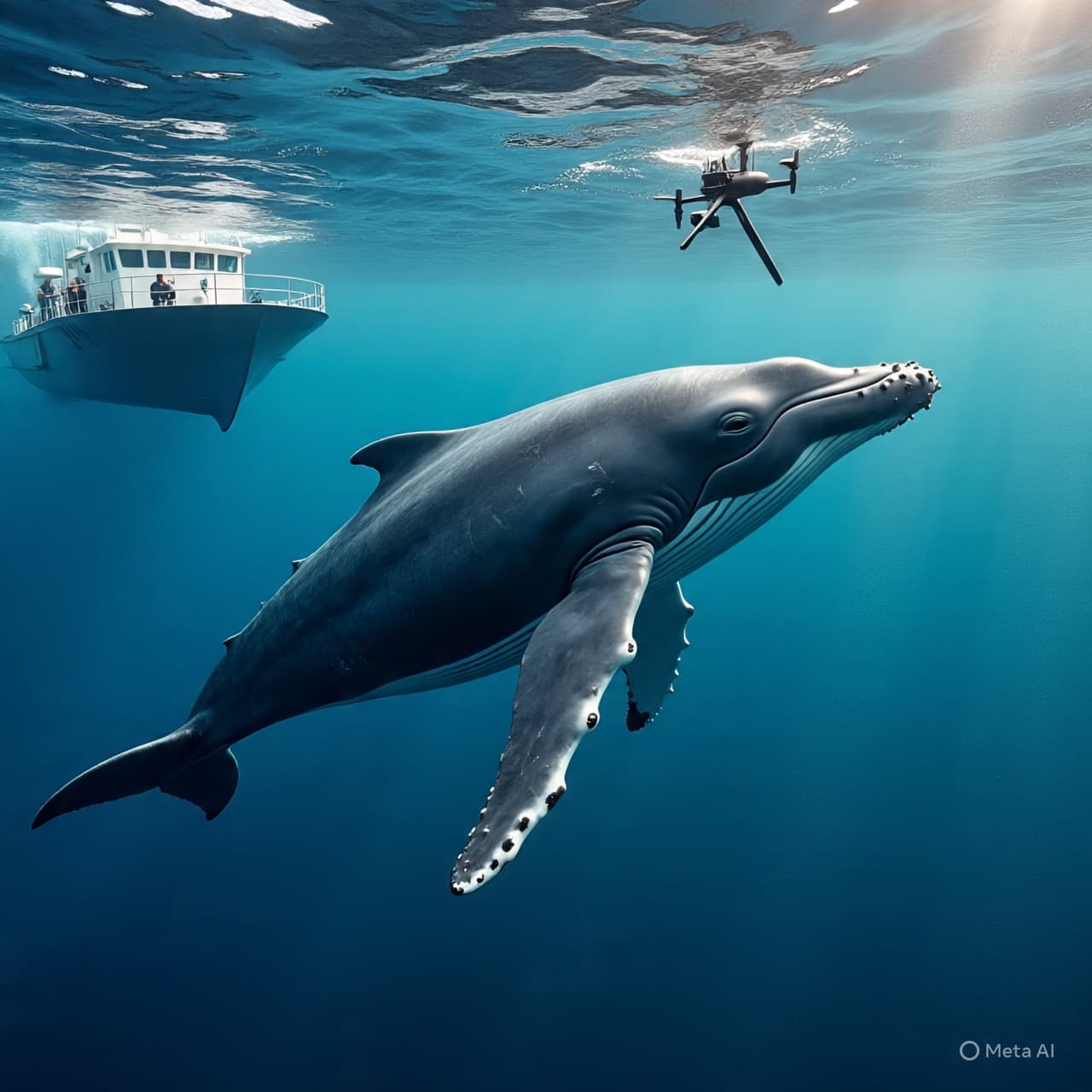
Key Highlights
- AI Integration:Researchers in Scotland are using AI to monitor marine mammals.
- Migration Insights:AI helps identify migration patterns and species behavior.
- Climate Impact:Understanding shifts in marine mammal movements due to environmental changes.
Artificial intelligence is reshaping the way scientists observe and understand the ocean's vast ecosystems. In Scotland, a collaborative effort among marine research institutions is harnessing AI to listen to the quiet journeys of whales, dolphins, and other marine mammals. This innovative approach is not merely about replacing traditional observation methods; it enhances them by processing extensive data that would otherwise go unnoticed.
The integration of AI into marine research involves sophisticated tools such as underwater acoustic sensors and satellite-linked tracking systems. These technologies continuously gather data from the ocean, allowing researchers to monitor marine life more effectively. AI algorithms analyze this data, identifying species, recognizing movement patterns, and mapping migration routes with remarkable accuracy. This capability is particularly crucial in conditions where visibility is limited, enabling scientists to detect marine mammals through sound and other indicators.
The significance of this research cannot be overstated. Marine mammal migration is dynamic, influenced by various factors including water temperature, prey availability, and human activities. In recent years, monitoring efforts in Scottish waters have documented tens of thousands of encounters with marine mammals, revealing a complex picture of their movements. Climate change, fishing practices, and underwater noise pollution are altering traditional migration routes, making it essential for researchers to adapt their methods of study.
AI's ability to analyze long-term datasets allows for the identification of trends that might be missed through conventional research methods. Subtle shifts in migration timing, changes in feeding grounds, and variations in population density can be detected earlier, providing critical insights for researchers and policymakers. This proactive approach enables a more effective response to the challenges facing marine ecosystems.
Despite its advantages, the use of AI in marine research is not without challenges. The unpredictable nature of ocean environments means that the effectiveness of AI systems is contingent on the quality of the data they receive. Researchers are continuously refining their models to ensure they can operate effectively across diverse conditions and locations. The trend is clear: monitoring marine life is becoming more continuous, detailed, and interconnected.
Beyond the technical advancements, the integration of AI into marine research is transforming the relationship between humans and the ocean. It fosters a sense of participation in a broader system of awareness, allowing for a more comprehensive understanding of marine ecosystems. The ability to observe patterns across vast regions of the North Atlantic enhances our knowledge of how individual species interact with their environment.
While the essence of the ocean remains unchanged, the lens through which we view it is evolving. The migrations of marine mammals continue, guided by instincts that algorithms cannot fully grasp. However, the clarity provided by AI allows researchers to perceive these movements with greater continuity and understanding. In Scotland, the work of monitoring and analyzing marine life continues, driven by a commitment to uncovering the intricate relationships within our oceans.
As AI technology advances, it promises to deepen our understanding of marine ecosystems and the challenges they face. The journey of these ocean giants is not just a story of survival; it is a narrative intertwined with the changing world around them, and AI is helping to illuminate that story like never before.
Published by Banx Network. This article is part of the Banx decentralized media programme, powered by the BXE token on the XRP Ledger.



