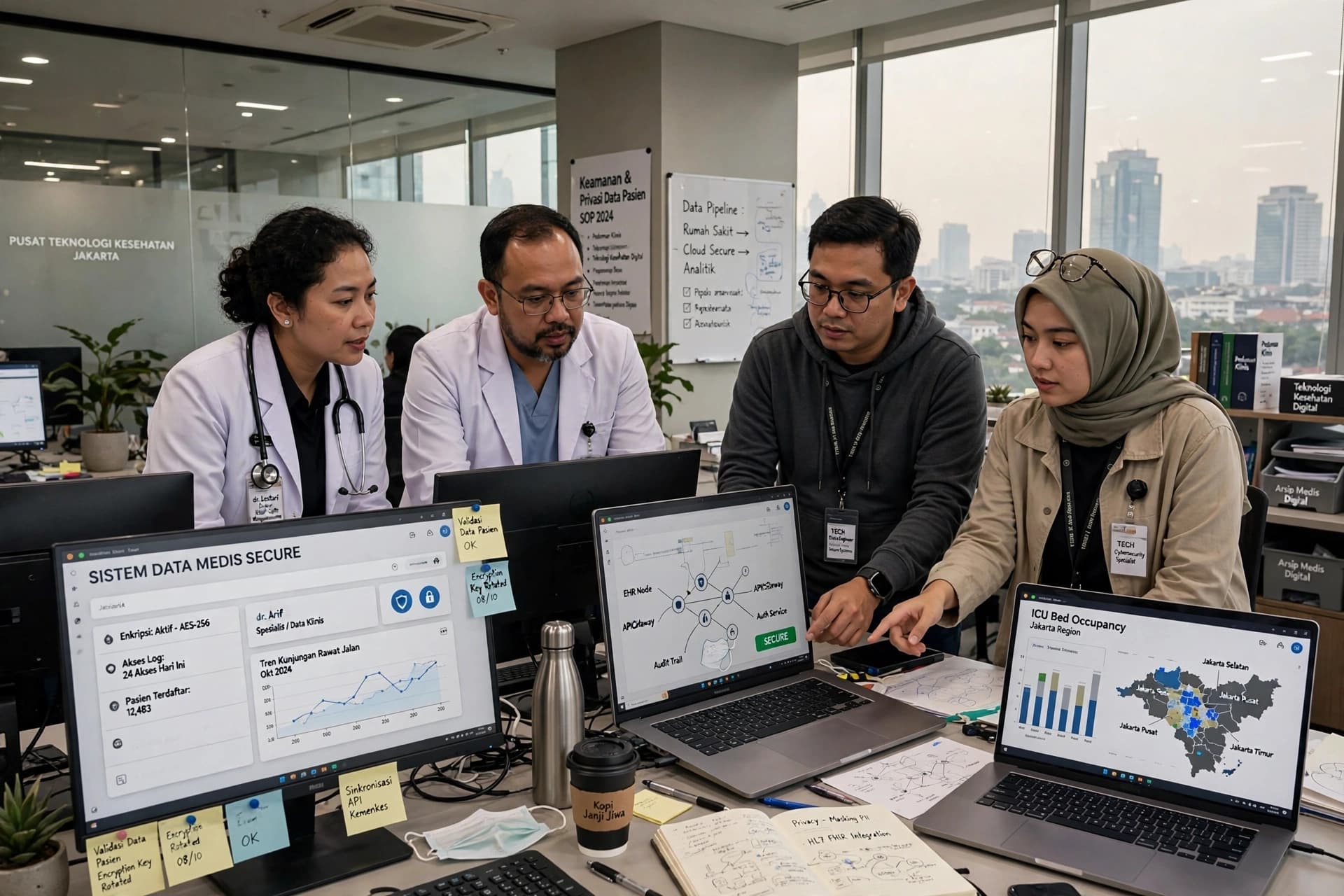
Medicine has always depended on information, but modern healthcare produces more of it than any single person can easily organize. Laboratory results, imaging, medical records and histories can exist in separate places, leaving clinicians to connect pieces of a much larger picture.
Jakarta-based healthcare technology platform Rhemedi Medical Services is developing an approach built around that problem. The company has been named an OpenAI Select Partner within the OpenAI Partner Network, with plans to apply AI across healthcare while keeping clinical responsibility with qualified professionals.
Rhemedi says its focus includes preventive medicine, precision diagnostics, medical imaging and what it describes as medical intelligence. The company is developing tools intended to organize and connect different types of health information for review by healthcare professionals.
One of its initiatives is the Rhemedi Medical Intelligence Assistant, known as RHE-INA. The platform is designed to structure fragmented clinical information, including laboratory data, medical documents, imaging and, progressively, genomic information.
The company emphasizes that the system is intended as a support tool rather than an autonomous medical decision-maker. Diagnosis, treatment decisions and clinical interventions remain under the responsibility of physicians and other qualified healthcare professionals.
That distinction becomes particularly important when AI is used in medicine. Healthcare information can be sensitive and complex, and an automated system must operate within appropriate clinical oversight, privacy safeguards and data-governance practices.
Rhemedi’s work also extends beyond a purely experimental environment. The company says an earlier deployment of its technology, known as RHE-NU, supported healthcare services during a large-scale gathering in Indonesia in August. The experience provided operational learning around patient intake, healthcare navigation and escalation to medical professionals.
The OpenAI Select Partner status places Rhemedi within a global network designed to help organizations build and deploy AI solutions using OpenAI technologies. For Rhemedi, the partnership is connected to its effort to develop healthcare-specific applications rather than treating AI as a general-purpose tool separated from clinical workflows.
The potential applications extend across different points of the patient journey. Organizing medical histories can help clinicians review information, while structured imaging and laboratory data may provide additional context for professional assessment. The technology, however, remains dependent on the quality, completeness and interpretation of the underlying information.
Rhemedi says it plans to continue developing multimodal health-data integration, imaging capabilities and clinical governance. The company’s own materials also emphasize privacy, consent and physician oversight as part of its approach to medical AI.
For Indonesia, the development arrives as healthcare providers and technology companies explore how digital tools can support a system spread across a vast geography. AI cannot by itself resolve every challenge of healthcare access, but systems that help organize complex information may become another component of how clinicians work.
The story around Rhemedi therefore sits at the intersection of two rapidly developing fields. Artificial intelligence is becoming more capable of handling complex information, while healthcare continues to search for ways to make that information more useful without removing the human responsibility at the center of medical care.
Published by Banx Network. This article is part of the Banx decentralized media programme, powered by the BXE token on the XRP Ledger.