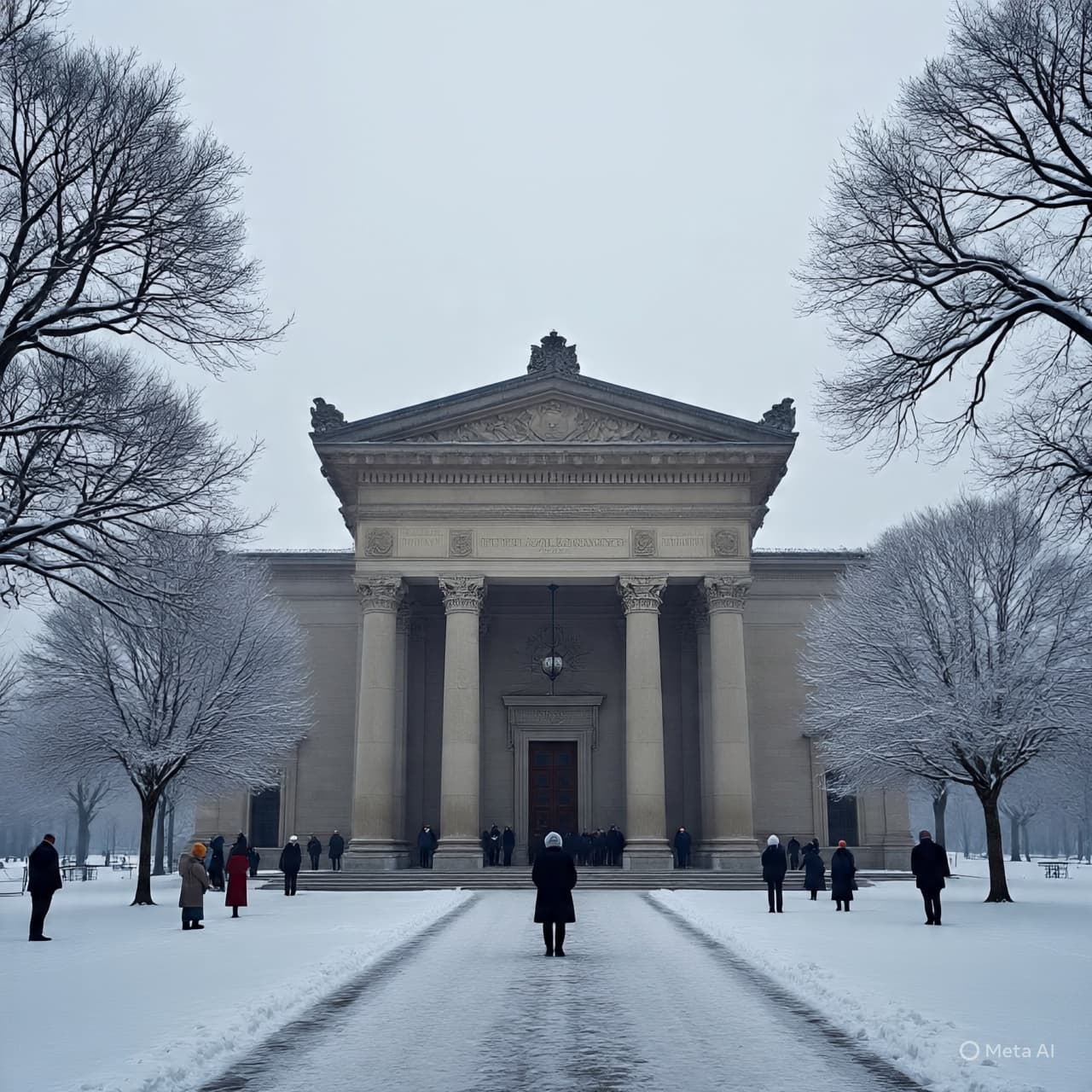
On a crisp winter morning in Pyongyang, where the hush of New Year’s dawn mingles with ritual and reflection, a young girl stood between her parents in a hall of marble and memory. The corridors of the Kumsusan Palace of the Sun are not just stone and solemnity they are the repository of a lineage that has shaped a nation. On January 1, the teenage daughter of North Korea’s leader stepped into that stillness, framed by the legacy of those who came before her, and in doing so stirred quiet questions about the future.
The palace, where Kim Il Sung and Kim Jong Il rest in perpetuity, has long been a place where symbols are as heavy as granite. For decades, the imprint of the Kim family has been woven into the rhythms of the state. When their daughter, believed to be around 13 years old, bowed deeply alongside Kim Jong Un and Ri Sol Ju, the gesture was more than a respectful nod to ancestry; to many observers it felt like a soft footstep into a long-guarded narrative of succession.
In this scene of ritual, narrative threads of leadership and legacy intersect. Over the past few years, the girl has appeared in state media at major events from military parades to a visit with her father in Beijing a pattern that analysts see as gently weaving her into the broader tapestry of North Korean public life. The silence of the mausoleum hall, echoing with history, became a kind of canvas for speculation.
Yet, for all the evocative imagery, there is softness around the edges of certainty. At about 13, she is far too young to hold formal party titles or executive power. South Korean intelligence and outside experts alike have noted that while her visibility seems intentional, the state has not declared any official successor. Within the rigid contours of North Korea’s political system, roles are often defined in whispers before they are spoken aloud.
The presence of the entire family that day father, mother, daughter also invited reflection on the story of a household as much as the architecture of power. In a society where public imagery is tightly calibrated, family moments may carry multiple meanings, blending personal warmth with political message. The stillness of the mausoleum, set against the rustle of state imagery, seemed in that moment to capture both a lineage of past leaders and the emerging outlines of what may come.
As the new year unfolds, the frames released by state media will likely be read not just as photographs but as subtle signposts gentle motifs in a larger narrative of continuity and change. In that quiet hall of ancestors, a young figure stood, bowing not only to the past but hinting at stories still unwritten in the nation’s future.
AI Image Disclaimer “Visuals are created with AI tools and are not real photographs.”
Sources (media names only):
• Associated Press
• Reuters
• Al Jazeera
• ABC News
• The Guardian
Published by Banx Network. This article is part of the Banx decentralized media programme, powered by the BXE token on the XRP Ledger.