The ocean often conceals its stories beneath layers of darkness and time. Occasionally, however, scientific exploration reveals extraordinary traces of life from the distant past. Deep beneath the waters of the Indian Ocean, researchers have uncovered one such remarkable discovery—a site that offers a rare glimpse into ancient marine ecosystems.
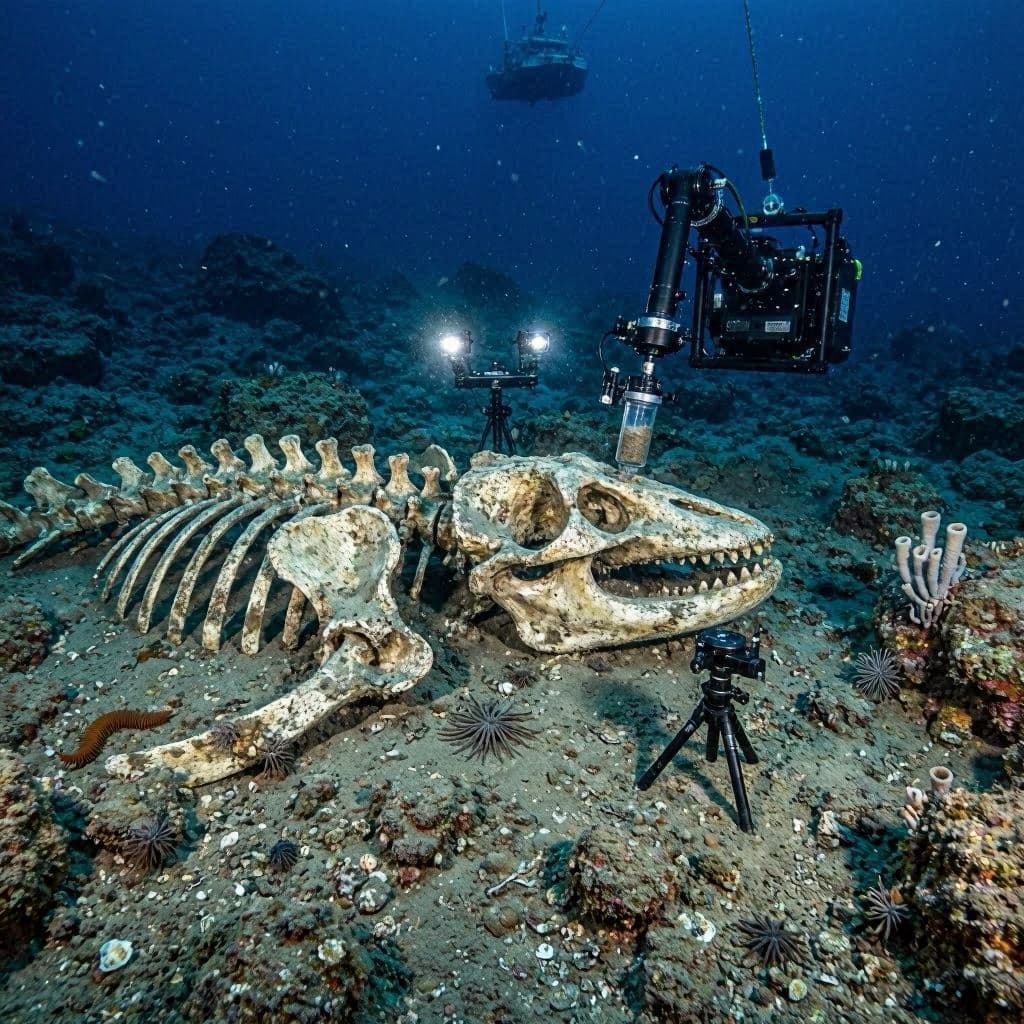
Scientists have identified what is believed to be the world's largest known whale graveyard on the floor of the Indian Ocean near Australian waters. The discovery contains an extensive accumulation of fossilized whale remains preserved over millions of years.
Researchers explain that whale falls occur when the carcasses of whales sink to the seafloor after death. These remains can sustain entire deep-sea ecosystems for decades, supporting diverse communities of organisms ranging from microbes to specialized scavengers.
The newly documented fossil site contains evidence of numerous whale remains concentrated within a relatively confined area. Scientists believe the accumulation may provide valuable information about ancient marine biodiversity and environmental conditions.
Detailed analysis of the fossils could help researchers better understand whale evolution, migration patterns, and historical ocean ecosystems. Such discoveries may also reveal how marine life responded to environmental changes over geological timescales.
Paleontologists note that whale fossil sites are comparatively rare because conditions favorable to long-term preservation do not occur everywhere. The exceptional preservation of this site therefore holds significant scientific value.
Researchers are continuing to examine sediment samples and fossil material recovered from the area. Advanced imaging techniques and geochemical analyses are expected to yield further insights into the age and ecological context of the assemblage.
The discovery highlights how much remains unknown about Earth's oceans. Even today, vast regions of the seafloor remain largely unexplored, suggesting that many scientific discoveries may still await beneath the waves.
AI-generated image disclaimer: The accompanying visuals are AI-generated representations created to support editorial storytelling.
Source Verification Check Sources verified from: ABC News Australia, marine science institutions, peer-reviewed paleontology research
Published by Banx Network. This article is part of the Banx decentralized media programme, powered by the BXE token on the XRP Ledger.